

Maddy summaryThis bill establishes a commission to study whether the Weitzman National Museum of American Jewish History in Philadelphia should be transferred to the Smithsonian Institution. The commission, composed of 8 members appointed by congressional leaders with expertise in Jewish American history and museum administration, will examine the museum's collections, financial status, governance, and feasibility of transfer within two years. The commission must submit a report detailing findings, a fundraising plan, and legislative recommendations for any potential transfer. The bill does not transfer the museum but creates a process to evaluate the possibility.
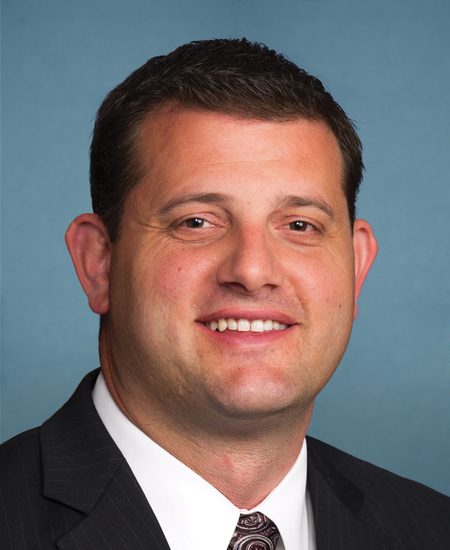
Rep. David G. Valadao
Sponsored bills
Maddy summaryHR 7438 directs the U.S. Treasury to mint commemorative coins for the 2026 FIFA World Cup, including 100,000 $5 gold coins, 500,000 $1 silver coins, and 750,000 half-dollar coins. The coins will be sold to the public at face value plus surcharges ($35, $10, and $5 per coin, respectively), with all surcharge revenue paid to FWC2026 US, Inc. for U.S. soccer programs. These funds must support soccer initiatives, particularly in underserved communities and youth development, as specified in the bill. The coins are legal tender but will only be issued during 2026, with no net cost to the U.S. government.
Maddy summaryThis bill reinstates a pre-American Rescue Plan Act (ARP) tax reporting rule for gig economy platforms. It requires third-party payment platforms (like Uber or DoorDash) to report transactions to the IRS only if a gig worker earns over $20,000 in total or completes more than 200 transactions in a year. This directly affects gig workers whose income falls below these thresholds, exempting them from the reporting requirement. The provision effectively reverses a change made by the ARP, reducing administrative burden for both platforms and lower-earning gig workers. The bill amends IRS Code Section 6050W to restore these specific de minimis payment thresholds.
Maddy summaryHR 7525, the Special District Grant Accessibility Act, requires the Office of Management and Budget (OMB) to issue guidance within 180 days clarifying how federal agencies recognize "special districts" as eligible recipients of federal grants. Special districts - state-created local entities like water districts or fire protection authorities that perform specific government functions - would directly benefit by gaining clearer pathways to access federal funding. Agencies must implement this guidance within one year and report on compliance to Congress within two years. The bill focuses on standardizing agency procedures, not creating new programs or altering grant eligibility criteria.
Maddy summaryThis bill amends the Regulatory Flexibility Act to require federal agencies to more thoroughly assess how proposed regulations impact small businesses, including indirect costs on businesses that aren't directly regulated but are affected by the rules (e.g., suppliers or partners). It creates a new process allowing small businesses or their representatives to petition the Small Business Administration's Chief Counsel to review an agency's claim that a rule won't significantly affect small entities, with strict timelines for agency responses. If an agency fails to cooperate with this review, the final rule cannot apply to small businesses. Agencies must also publish regulatory guidance online for small businesses to comment on, ensuring greater transparency in rulemaking.
Maddy summaryHR 5349, the "Crucial Communism Teaching Act," requires the Victims of Communism Memorial Foundation to develop a high school curriculum and oral history resources about communism. The bill directs this foundation to create materials for social studies, history, and government classes that teach students: (1) communism caused over 100 million deaths worldwide, (2) communism and similar ideologies pose dangers to democracy, and (3) 1.5 billion people still live under communist systems. The curriculum must include comparative discussions of political ideologies and feature personal stories from individuals who experienced communist regimes. This bill directly affects high school students and educators in public schools by mandating specific content for civic education.
Maddy summaryHR 6751 authorizes the U.S. Mint to produce commemorative coins honoring Roberto Clemente, a Hall of Fame baseball player and humanitarian, including 50,000 $5 gold coins, 400,000 $1 silver coins, and 750,000 half-dollar coins. The coins must feature Clemente's image and inscriptions like "Roberto Clemente" and "2027," with all sales including a surcharge ($5-$35 per coin) paid to the Roberto Clemente Foundation. The foundation, which supports youth sports, education, and disaster relief programs, will use these funds for its mission, while the U.S. Treasury must recover all production costs. The coins will be sold exclusively in 2027, with no net cost to the government.
Maddy summaryHR 758 aims to improve financial access in communities affected by bank branch closures, primarily targeting rural and underserved urban areas. It establishes a 3-year phase-in period for new financial institutions to meet federal capital requirements and reduces the leverage ratio for qualifying rural community banks (under $10 billion in assets) to 8% during this period. The bill also allows banks to request temporary deviations from approved business plans and expands agricultural loan authority for savings associations. Additionally, it mandates a federal study on barriers to new bank formation in underserved areas, with a report due to Congress within one year. The law directly affects community banks, their regulators, and residents in counties identified as "deeply affected" by branch closures.
Maddy summaryHR 3318 would allow commercial trucks transporting specific dry bulk goods (like grain or cement in purpose-built trailers) to exceed standard axle weight limits by up to 10%, while still adhering to the overall vehicle weight cap. This change directly affects trucking companies and shippers moving homogeneous nonliquid cargo in specialized trailers. The key provision amends federal law to establish this 110% axle weight tolerance for dry bulk transport, overriding previous axle-specific weight rules except for the maximum gross vehicle weight. It does not alter overall weight restrictions or apply to other types of cargo.
Maddy summaryThis bill names the U.S. Postal Service building at 333 West Broadway in Anaheim, California, as the "Dr. William I. 'Bill' Kott Post Office Building." It requires all federal documents, maps, and references to update the building's official name to honor Dr. Kott, a former Anaheim physician and community leader. The change applies immediately to all government records and communications involving the facility.