

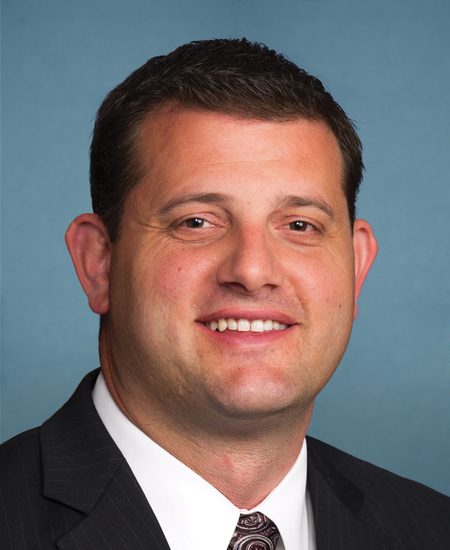
Photo of David G. Valadao
R United States House · District 22 · California On the 2026 ballot

Rep. David G. Valadao

Compare
Total votes
2,831
all sessions
Attendance
98%
53 missed
Near the chamber average
With party
90%
of cast votes
Near the chamber average
Bipartisan score
5%
crosses aisle rarely
Near the chamber average
Sponsored
1,229
bills & resolutions
Near the chamber average
Committees
8
assignments
1,229 bills and resolutions

Sponsored bills

Total
1,229
Primary
69
Co-sponsor
1,160
This page
1,229
matching current filters
Co-sponsor HR 3875
In committee · Indiana House · Co-sponsor
Expanded Telehealth Access Act

Maddy summaryHR 3875, the Expanded Telehealth Access Act, expands Medicare coverage for telehealth services by adding new healthcare professionals to the list of providers eligible for payment. It specifically includes licensed audiologists, occupational therapists (and their assistants under supervision), physical therapists (and their assistants under supervision), and speech-language pathologists. The bill ensures these providers are paid the same rate for telehealth services as they would be for in-person care under Medicare. This change directly affects Medicare beneficiaries seeking remote therapy services and the new provider types who can now offer these services via telehealth.

In committee Dec 17, 2024 1 co-sponsor
Co-sponsor HR 3842
In committee · Indiana House · Co-sponsor
Expanding Access to Diabetes Self-Management Training Act of 2023

Maddy summaryHR 3842, the Expanding Access to Diabetes Self-Management Training Act of 2023, would improve Medicare coverage for diabetes self-management training (DSMT) services for beneficiaries with diabetes. The bill expands provider eligibility to include nonphysician practitioners (like nurse practitioners), increases available training hours (initial 10 hours plus up to 2 hours annually), and requires 100% Medicare coverage with no out-of-pocket costs for beneficiaries. It also mandates a new demonstration project starting in 2025 to test virtual DSMT services, evaluating impacts on health outcomes (like A1c levels), hospitalizations, and program costs. This legislation directly affects Medicare beneficiaries with diabetes and healthcare providers offering DSMT services.

In committee Dec 17, 2024 1 co-sponsor
Co-sponsor HR 3730
In committee · Indiana House · Co-sponsor
Rural Health Clinic Burden Reduction Act

Maddy summaryThis bill simplifies regulations for rural health clinics (RHCs) by reducing administrative burdens. It allows RHCs to contract with physician assistants and nurse practitioners (instead of requiring direct employment), updates the definition of "rural" to exclude areas with 50,000+ residents, and removes outdated lab service requirements by requiring only "prompt access" to clinical labs. These changes directly affect RHCs, enabling them to more flexibly staff and operate while complying with state practice laws. The amendments take effect January 1, 2024, applying to services provided on or after that date.

In committee Dec 17, 2024 1 co-sponsor
Co-sponsor HR 3599
In committee · Indiana House · Co-sponsor
DIGNIDAD (Dignity) Act of 2023

Maddy summary# Comprehensive Immigration Reform Bill Summary This document appears to be a draft of a comprehensive immigration reform bill with significant changes to U.S. immigration policy, particularly focusing on employment verification and asylum processing. ## Key Provisions ### Employment Eligibility Verification (E-Verify) System - **Replaces the current E-Verify system** with a new "Employment Eligibility Verification" system under Section 274A - **Phased implementation schedule** for different employer sizes (10,000+ employees, 500-10,000 employees, 20-500 employees, and fewer than 20 employees) - **New penalties** for violations, including: - Civil penalties ranging from $2,500 to $25,000 per violation - Criminal penalties of up to $5,000 per unauthorized alien - **Good faith defense** for employers who comply with verification requirements - **Repeal of Subtitle A of Title IV of the Illegal Immigration Reform and Immigrant Responsibility Act of 1996** ### Asylum Reform - **Establishment of 5 "Humanitarian Campuses"** along the southern border for processing asylum seekers - **Expedited asylum procedures** including: - Mandatory 72-hour rest period after arrival - Initial screening within 15 days - Expedited asylum decisions within 45 days for approved cases - Case management for those referred to immigration judges - **5 Western Hemisphere facilities** for asylum pre-screening and family reunification - **New requirements** for recording credible fear interviews and expedited removal proceedings - **Stricter penalties** for asylum fraud, including permanent ineligibility for asylum benefits ### Additional Provisions - **Criminal background checks** for sponsors of unaccompanied children - **Fraud prevention measures** for Social Security numbers and identity verification - **New verification system** with requirements for biometric checks, medical screenings, and legal orientation - **Provisions for vulnerable populations** including pregnant women, victims of violence, and people with disabilities The bill contains detailed implementation timelines (with many provisions taking effect within 1-5 years), specific numerical requirements for staffing, and extensive procedural requirements for processing immigrants and asylum seekers. This appears to be a comprehensive proposal that would significantly change U.S. immigration enforcement, asylum processing, and employer verification requirements.

In committee Dec 17, 2024 1 co-sponsor
Co-sponsor HR 3432
In committee · Indiana House · Co-sponsor
Telemental Health Care Access Act of 2023

Maddy summaryHR 3432, the Telemental Health Care Access Act of 2023, expands Medicare coverage for mental and behavioral health services delivered via telehealth. It removes geographic restrictions that previously limited telehealth coverage to rural areas and explicitly adds "behavioral health services" to the list of covered telehealth services under Medicare Part B. The bill requires the Secretary of Health and Human Services to submit a report within one year on utilization of these services, including recommendations on fraud prevention and funding needs for oversight. This change directly affects Medicare beneficiaries seeking remote mental/behavioral health care and the providers who deliver it.

In committee Dec 17, 2024 1 co-sponsor
Co-sponsor HR 3029
In committee · Indiana House · Co-sponsor
Primary Care Enhancement Act of 2023

Maddy summaryThis bill changes tax rules to treat direct primary care (DPC) membership fees as deductible medical expenses. It defines DPC as a fixed monthly fee (capped at $150 per person, $300 for families) for primary care services only, excluding procedures requiring anesthesia, prescription drugs (except vaccines), or lab tests. The law ensures these fees can be claimed on tax returns like other medical costs, while clarifying DPC arrangements aren’t considered health insurance plans. It applies to fees paid for DPC services provided through employment or directly to patients, effective for 2024 tax years.

In committee Dec 17, 2024 1 co-sponsor
Co-sponsor HR 2940
In committee · Indiana House · Co-sponsor
PASTEUR Act

Maddy summaryThe PASTEUR Act establishes a new subscription payment model to incentivize development of new antimicrobial drugs for resistant infections. It creates a Committee on Critical Need Antimicrobials and a Subscription Contract Office to manage payments based on specific drug characteristics like treating multi-drug resistant infections, novel mechanisms of action, and oral administration. Under this model, the government would pay drug developers up to $3 billion over 10 years for qualifying drugs, with payments tied to requirements like ensuring drug availability, reporting resistance data, and developing appropriate use plans. The bill aims to address the lack of new antimicrobial drugs by changing the funding model to reward drugs that meet specific clinical and public health needs.

In committee Dec 17, 2024 1 co-sponsor
Co-sponsor HR 2880
In committee · Indiana House · Co-sponsor
Protecting Patients Against PBM Abuses Act

Maddy summaryThis bill regulates pharmacy benefit managers (PBMs) working with Medicare Part D prescription drug plans. It prohibits PBMs from earning income based on drug prices or rebates (requiring flat fees instead), mandates equal reimbursement for all network pharmacies, and requires PBMs to report how much of drug rebates they pass through to Medicare plans. The law also mandates annual compliance certifications and requires the government to publish aggregated transparency data (without revealing specific plan details) starting in 2024. These changes directly affect Medicare Part D plans and the seniors who rely on them for prescription drug coverage.

In committee Dec 17, 2024 1 co-sponsor
Co-sponsor HR 2474
In committee · Indiana House · Co-sponsor
Strengthening Medicare for Patients and Providers Act

Maddy summaryHR 2474, the "Strengthening Medicare for Patients and Providers Act," changes how Medicare pays physicians for services. It replaces the previous two-part payment system (used through 2025) with a single annual payment rate update starting in 2024. This update will be based on the Medicare Economic Index (MEI), which tracks costs for medical providers. The change directly affects Medicare-certified doctors and clinics who receive payments under the physician fee schedule.

In committee Dec 17, 2024 1 co-sponsor
Co-sponsor HR 2407
In committee · Indiana House · Co-sponsor
Nancy Gardner Sewell Medicare Multi-Cancer Early Detection Screening Coverage Act

Maddy summaryThis bill would require Medicare to cover FDA-approved blood tests that screen for multiple cancers simultaneously (like breast, lung, or colorectal cancer) for beneficiaries. It directly affects Medicare recipients aged 65+ who could access these new screenings once per year, without prior authorization. The key provision adds "multi-cancer early detection screening tests" to Medicare's covered services under Part B, defining them as blood tests analyzing cell-free DNA, while maintaining existing coverage for standard screenings like mammograms. The bill does not change current coverage for individual cancer screenings but ensures Medicare keeps pace with new medical technology.

In committee Dec 17, 2024 1 co-sponsor
Showing 411 to 420 of 1,229 bills
Previous 1 … 41 42 43 … 123 Next