

Maddy summaryHRES 413 is a non-binding House resolution condemning Hamas for its October 7, 2023, attacks on Israel, which killed over 1,200 people and took more than 250 hostages. It specifically demands that Hamas immediately release the 58 remaining hostages (including four U.S. citizens: Edan Alexander, Itay Chen, Omer Neutra, Judi Weinstein, and Gad Haggai) and return them to safety. The resolution also recognizes that hostage-taking violates international law and calls on the White House to continue efforts to secure all hostages' release. As a symbolic resolution, it does not create new laws or policies but formally expresses the House's stance.
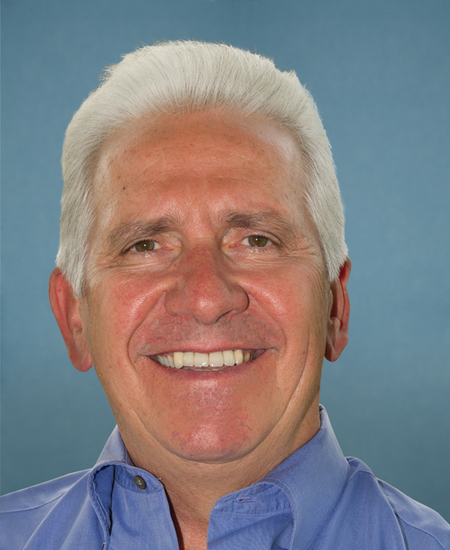
Rep. Jim Costa
Sponsored bills
Maddy summaryHR 3405 requires the Secretary of State to provide Congress with all documents and a detailed report within 30 days regarding negotiations between the U.S. and Qatar about transferring an aircraft to the U.S. government for eventual transfer to an entity controlled by former President Donald Trump. The report must detail any promises made to Qatar, potential private contracts, and legal reviews related to the transfer. The bill also prohibits federal funding for any action supporting the transfer of foreign-owned aircraft to the U.S. government, the President, or Trump’s presidential library. This applies specifically to aircraft transfers involving Qatar and Trump-controlled entities, focusing on transparency and funding restrictions.
Maddy summaryHR 2492, the Fire Safe Electrical Corridors Act of 2025, allows electrical utilities to cut trees near power lines on National Forest System and Bureau of Land Management lands without needing a separate timber sale, provided the work follows existing land management plans and environmental laws. Utilities must provide any proceeds from selling removed vegetation (minus transportation costs) to the federal government, though the bill does not require them to sell the material. This applies specifically to agreements for power line maintenance on federal lands managed by the Agriculture Secretary (Forest Service) or Interior Secretary (BLM). The bill focuses on streamlining vegetation management near power lines while ensuring federal land management rules and environmental protections are followed.
Maddy summaryHR 3333, the MORE Nurses Act, mandates a federal study to address the nursing shortage. It requires the National Advisory Council on Nurse Education to examine nursing workforce trends, education capacity, causes of the shortage, and existing federal policies - like support for nursing programs and diversity efforts - within one year. The Council must then submit a public report with specific recommendations to policymakers on solutions, including potential legislative or regulatory changes. This bill does not directly fund programs or change current laws but sets the stage for future policy decisions affecting nurses, healthcare systems, and underserved communities.
Maddy summaryHR 3304, the Providing Child Care for Police Officers Act of 2025, establishes a federal grant program to help law enforcement agencies provide child care for officers' minor children during nonstandard shifts. The program awards competitive 3-year grants to state or local "lead agencies" (like state child care offices) to fund child care services through eligible law enforcement agencies or consortia, with 20% of funds reserved for small agencies (under 200 officers). Grants cover startup costs, provider training, sick child care, facility construction, and other needs, requiring local matching funds (10% to 33% over three years). The program is authorized for $24 million annually from 2026-2030 and includes studies to evaluate its impact on child care access for officers and other first responders.
Maddy summaryHR 3243, the Therapeutic Fraud Prevention Act of 2025, bans the provision of paid conversion therapy aimed at changing a person's sexual orientation or gender identity, and prohibits advertising such therapy as effective, safe, or without risk. It directly affects LGBTQ+ individuals and their families who might be targeted by these practices, as professionals have determined conversion therapy is ineffective and harmful. The law treats violations as deceptive acts under consumer protection laws, empowering the Federal Trade Commission and state attorneys general to enforce it through civil actions. It explicitly excludes legitimate gender transition support and non-discriminatory counseling from the ban.
Maddy summary# Summary of Farm Workforce Modernization Act of 2025 (Electronic Verification and Labor Recruiter Provisions) This legislation establishes a new electronic verification system (Section 274E) for employment eligibility verification, replacing the previous E-Verify program. Key provisions include: 1. **Electronic Verification System**: - Requires employers to verify identity and employment authorization through an electronic system - Establishes processes for tentative nonconfirmations and appeals - Creates an Electronic Verification Compensation Account to pay lost wages for individuals wrongly denied employment due to government error 2. **Phased Implementation for Agricultural Employers**: - Larger agricultural employers (500+ employees) must comply 6 months after implementation - Smaller employers (20-100 employees) must comply 12 months after implementation - Smallest employers (1-19 employees) must comply 15 months after implementation 3. **Foreign Labor Recruiter Accountability**: - Requires electronic registration of foreign recruiters - Prohibits recruiters from charging workers fees - Mandates required disclosures to workers about their rights and employment terms - Establishes bond requirements and enforcement mechanisms - Creates penalties for violations, including fines up to $25,000 per violation 4. **Key Protections**: - Prevents employers from terminating employment based on tentative nonconfirmations - Ensures individuals can contest verification issues within 10 business days - Requires notification of final nonconfirmations to employees - Protects against unfair immigration-related employment practices 5. **Transition Provisions**: - Repeals the E-Verify program from the Illegal Immigration Reform and Immigrant Responsibility Act - Establishes coordination between Department of Homeland Security, Social Security Administration, and Department of Agriculture - Includes rural access to assistance for individuals contesting verification issues The legislation aims to modernize employment verification while protecting workers' rights and preventing exploitation in the agricultural workforce.
Maddy summaryThis bill creates annual emergency grants for farm workers affected by covered disasters. It directly helps migrant and seasonal farm workers who lose income or cannot work due to events like hurricanes, wildfires, pandemics, or extreme weather. Grants fund immediate relief (food, shelter), rebuild community capacity, and support long-term resilience against future disasters. Eligible organizations, including farm worker groups or qualified nonprofits, receive funds to distribute aid without time limits.
Maddy summaryThis bill establishes the Last Acre Program to provide grants and loans to broadband providers to deliver high-speed internet (minimum 100 Mbps downstream, 20 Mbps upstream) to agricultural land that is unserved or underserved. It directly affects farmers, ranchers, and agricultural producers on eligible land (including cropland, grassland, and farm sites) who lack sufficient broadband access, with priority for limited resource farmers and ranchers. The program requires providers to meet cybersecurity standards, use a competitive bidding process to determine recipients, and prioritize remote areas and unserved land, with $20 million authorized annually from 2026-2030. It also mandates the National Agricultural Statistics Service to collect detailed broadband usage data through updated agricultural surveys.
Maddy summaryHR 3206, the Protecting America's Property Rights Act, requires Fannie Mae and Freddie Mac (the "Enterprises") to use third-party insurance products regulated by state authorities for mortgage lien and title protection. It mandates that any mortgage purchased by these entities must involve products regulated by state insurance or financial authorities, as defined in existing federal law. To enforce this, the bill adds a 1.00% capital requirement on the unpaid principal balance of mortgages that don’t meet this standard. The Director of the Federal Housing Finance Agency must issue implementing regulations within 180 days of the bill’s enactment.