

Maddy summaryThis bill updates the TRICARE Young Adult Program to make healthcare coverage more accessible for military dependents. It directly affects young adults (ages 21-26) who are children of active-duty service members, by eliminating a separate premium they previously paid for coverage. Key changes include removing an extra cost for young adults and adjusting eligibility rules to simplify enrollment. These amendments aim to reduce out-of-pocket expenses and streamline access to health insurance under the program.
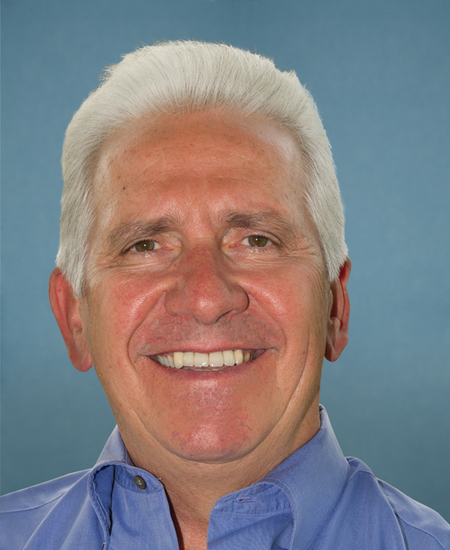
Rep. Jim Costa
Sponsored bills
Maddy summaryThe Biochar Research Network Act of 2025 establishes a national network of up to 20 research sites to study how biochar (a charcoal-like substance) improves soil health, carbon sequestration, and farming practices. It directs the Agriculture Department to fund research testing biochar across diverse soils, climates, and agricultural systems to assess its impact on crop yields, climate mitigation, and profitability for farmers, ranchers, foresters, and land managers. The bill authorizes $50 million annually from 2026 to 2030 for this research, focusing on practical, science-based guidance for sustainable biochar use. The network will generate data to help land managers adopt biochar for soil health, carbon reduction, and resilience to extreme weather.
Maddy summaryHR 4667, the VISIBLE Act, requires U.S. Immigration and Customs Enforcement (ICE), U.S. Customs and Border Protection (CBP), and other authorized immigration officers to visibly display their agency name and either their last name or unique badge number during all public immigration enforcement activities (such as stops, arrests, raids, or checkpoints). This identification must be clearly legible from 25 feet away on outer clothing, not obscured by gear, and officers cannot wear face coverings that hide their face during public interactions unless for covert operations or hazardous conditions. The bill mandates DHS to discipline non-compliant officers and submit annual reports to Congress detailing enforcement activities, violations, and disciplinary actions. It also directs DHS’s Civil Rights Office to investigate public complaints about noncompliance.
Maddy summaryHRES 603 is a symbolic resolution (not a law) that reaffirms core constitutional principles like separation of powers, judicial independence, and Congress's authority over funding. It specifically condemns public officials who ignore court orders, undermine congressional oversight, or attempt to consolidate power across branches of government. The resolution emphasizes that congressional appropriations are binding law, not suggestions, and urges all officials to uphold the constitutional order. It does not create new legal requirements but serves as a formal statement of these principles.
Maddy summaryHR 4696 amends Section 249 of the Immigration and Nationality Act to update eligibility for a registry program that provides a pathway to legal status for long-term residents. It changes the requirement from entering the U.S. before January 1, 1972, to entering at least 7 years before the application date. This adjustment bases eligibility on a rolling 7-year window instead of a fixed historical cutoff, allowing more recent long-term residents to qualify. The bill directly affects individuals who entered the U.S. after 1972 but maintained continuous residence for at least seven years prior to applying.
Maddy summaryThis bill adds "spotted lanternfly control" as a priority research area under federal agricultural funding, authorizing grants to develop and share tools for combating the invasive spotted lanternfly pest (Lycorma delicatula). It directly affects farmers, agricultural communities, and state departments of agriculture in states like Pennsylvania where the pest causes significant crop damage. The key provision amends existing law to allow research grants focused on creating effective treatments and management strategies for the pest. The bill also extends the funding period for all high-priority research initiatives through 2030.
Maddy summaryThe Healthy H2O Act creates a federal grant program to help rural households and small facilities (like child-care centers) install certified water filtration systems that remove health contaminants such as lead, arsenic, and PFAS. Eligible recipients must live in rural areas, have tested water containing contaminants, and meet income limits (under 150% of their state’s median nonmetropolitan household income). Grants cover the cost of purchasing, installing, maintaining, and testing certified point-of-use or point-of-entry filtration systems. The program requires annual reports to Congress analyzing water quality trends, filter effectiveness, and emerging needs in affected communities. This initiative addresses immediate drinking water safety gaps where long-term infrastructure projects cannot yet provide solutions.
Maddy summaryHR 345, the Fire Department Repayment Act of 2025, requires federal agencies (Agriculture, Interior, Homeland Security, and Defense) to establish clear procedures for reimbursing local fire departments under existing fire suppression cost share agreements. The bill mandates that agencies review and update current agreements within one year to align with cooperative fire protection agreements and set specific payment timelines. It requires federal agencies to reimburse fire departments promptly after a fire when they submit proper invoices, with Congress urging repayment within one year of the fire suppression event. This directly affects local fire departments that participate in federal reimbursement programs for firefighting costs.
Maddy summaryH.J. Res. 108 proposes a constitutional amendment to remove legal immunity for federal officials, including the President, from criminal prosecution for actions taken while performing official duties. It would prohibit the President from granting pardons to themselves and eliminate the defense that "official authority" excuses violations of federal or state law (with limited exceptions for certain congressional actions). If ratified, this amendment would require Congress to pass implementing laws to enforce these changes. The proposal is currently in the House Judiciary Committee and requires approval by three-fourths of state legislatures to become part of the Constitution.
Maddy summaryThis bill prohibits life, disability, and long-term care insurers from denying coverage, canceling policies, or increasing premiums based solely on a person's status as a living organ donor. It directly protects living organ donors by preventing insurance discrimination unrelated to actual health risks. The bill also requires the Health and Human Services Secretary to update public educational materials about organ donation benefits, risks, and insurance impacts within six months of enactment. These materials will include information on the new insurance protections established by the bill. The law relies on state insurance regulators for enforcement of the insurance provisions.