

Maddy summaryThis bill establishes the Caribbean and Latin America Maritime Security Initiative to combat illegal, unreported, and unregulated (IUU) fishing in the region. It requires cooperation between the Departments of Defense, Homeland Security, and State to strengthen maritime security partnerships with Caribbean and Latin American countries. The initiative focuses on enhancing partner countries' capabilities for fisheries management, promoting vessel tracking systems on fishing vessels, and documenting unauthorized fishing activities. The bill also authorizes sanctions against foreign entities involved in IUU fishing, including blocking property, denying U.S. entry, and prohibiting access to U.S. ports. These measures aim to protect marine resources, support sustainable fisheries, and uphold international maritime law.
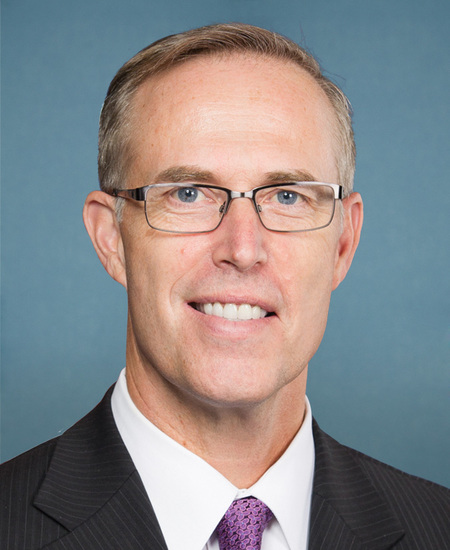
Rep. Jared Huffman
Sponsored bills
Maddy summaryHR 7127, the FAIR Act, establishes pay adjustments for federal employees in 2025. It increases base pay by 4% for most federal workers under statutory pay systems and for "prevailing rate" employees (like those in specific geographic areas), while raising locality pay rates by 3.4%. The bill directly affects all federal employees receiving pay under these systems, as it modifies their 2025 salary calculations. These changes are based on statutory formulas under Title 5 of the U.S. Code, with no new policy mechanisms beyond the specified percentage increases. The adjustments apply to pay rates in effect as of the end of fiscal year 2024.
Maddy summaryThe SWIMS Act of 2024 bans the captivity of orcas, beluga whales, false killer whales, and pilot whales for public display in the United States. It prohibits exporting, importing, or taking these animals for display - except for relocation to a sanctuary meeting specific welfare standards or release into the wild. The bill also makes it illegal to breed these species for public display. This directly affects marine parks and aquariums that currently display these animals, preventing them from acquiring new animals for exhibits or breeding them for that purpose.
Maddy summary# Summary of the Clean Electricity and Transmission Acceleration Act of 2023 This comprehensive legislation establishes significant reforms across environmental policy, energy infrastructure, and community engagement frameworks. Key provisions include: 1. **Environmental Justice Framework**: - Creates an Office of Environmental Justice and External Civil Rights at EPA - Establishes a White House Environmental Justice Interagency Council - Prohibits disparate impact discrimination under Title VI of the Civil Rights Act - Requires community impact reports for Federal actions affecting environmental justice communities 2. **NEPA Reforms**: - Mandates 90-day public comment periods for environmental justice communities - Requires translation of documents into languages spoken by 5%+ of affected communities - Requires assessment of cumulative impacts, including historical pollution - Requires climate change impact assessments using social cost of carbon - Establishes searchable digital archives of NEPA documents 3. **Community Engagement Requirements**: - Creates "Senior Community Engagement Officers" and "Tribal Community Engagement Officers" at all federal agencies - Requires community benefits agreements for major projects - Establishes grants for capacity building in environmental justice communities - Creates an E-NEPA permitting portal for public access to documents 4. **Energy Policy Provisions**: - Includes reforms for FERC (Federal Energy Regulatory Commission) environmental justice liaison - Establishes requirements for intervenor funding at FERC - Contains provisions for transmission planning and infrastructure 5. **Tribal Consultation**: - Strengthens tribal consultation requirements for projects affecting tribal lands - Requires government-to-government relationships with tribal nations The legislation represents a significant shift toward integrating environmental justice considerations throughout the federal permitting and review process, with specific requirements for meaningful community engagement, transparency, and consideration of cumulative impacts on vulnerable populations. It also establishes new funding mechanisms and administrative structures to support these environmental justice goals.
Maddy summaryHR 6525, the Wildfire Resilient Communities Act, allocates $30 billion in federal funding to reduce wildfire risks on public lands. It requires agencies like the Forest Service and National Park Service to prioritize hazardous fuels reduction projects - such as clearing flammable vegetation - near at-risk communities, high-value watersheds, or areas with high wildfire potential. The bill also adds $3 billion for community wildfire defense grants (2027-2031) and establishes a County Stewardship Fund, directing 25% of federal contract receipts to counties for local wildfire resilience efforts. These provisions directly affect communities in wildfire-prone areas, federal land managers, and local governments receiving funds.
Maddy summaryHR 7056, the Access to Family Building Act, establishes federal rights for individuals to access assisted reproductive technology (ART) like IVF without unreasonable restrictions, directly affecting patients seeking fertility treatments and health care providers offering ART services. The bill prohibits states from imposing limitations on ART that are more burdensome than those for comparable medical procedures, fail to advance safety, or unduly restrict access, while allowing health and safety regulations that are necessary and least restrictive. It creates federal enforcement mechanisms, including lawsuits by the Attorney General or affected individuals to challenge violating state laws, and preempts conflicting state regulations. The bill explicitly preserves state authority over health/safety regulations and does not alter existing state insurance coverage laws for ART.
Maddy summaryThe LAKES Act (HR 6906) allows local governments and nonprofit organizations to collect and retain user fees for managing lakes and recreation facilities under Army Corps of Engineers projects. It requires that at least 80% of fees collected at a specific site be used for that site's maintenance, while permitting entities to keep up to 100% of fees for related operations. The bill modifies existing laws to ensure these fees supplement, not replace, regular federal funding for recreation facilities. It directly affects local public entities and nonprofits managing Corps-managed water resources. The key change is enabling these groups to retain and use user fees they collect, improving local funding for facility upkeep.
Maddy summaryHR 6884, the Fair Compensation for Truck Crash Victims Act, increases the minimum insurance requirement for trucking companies transporting property from $750,000 to $5,000,000. It directly affects motor carriers (truck companies) by raising their financial responsibility threshold and ensures crash victims receive higher compensation. The bill mandates that the minimum insurance level be adjusted every five years for medical cost inflation using data from the Bureau of Labor Statistics. This change updates the 1980 standard to reflect current economic conditions, with the new requirement taking effect one year after the bill's enactment.
Maddy summaryHR 7041, the Tax Excessive CEO Pay Act of 2024, imposes a corporate tax penalty on large companies where the CEO's pay exceeds 50 times the average worker's pay. The penalty adds 0.5% to 5% to the corporate tax rate, depending on how much higher the CEO's pay is relative to workers (e.g., 50-100:1 ratio adds 0.5%, over 500:1 adds 5%). It applies only to corporations with over $100 million in average annual revenue, exempting smaller businesses. The law aims to address extreme pay disparities by increasing taxes on companies with the highest CEO-to-worker pay ratios, effective for tax years after 2024.
Maddy summaryThe Stronger Communities through Better Transit Act establishes a new federal grant program to improve public transportation service. It provides funding to urban areas, states, and Indian tribes to cover up to 50% of public transit operating costs (up to 80% in persistent poverty areas and 100% for Indian tribes), with requirements to report on service frequency, access to jobs, and conduct community surveys. The program mandates that a majority of funds must benefit underserved communities and areas of persistent poverty, defined as census tracts with high poverty rates or minority populations. Recipients must maintain their transit funding levels and report on improvements in access to essential services. The bill authorizes $20 billion annually for fiscal years 2024-2027.