

Maddy summaryThis bill establishes a Federal Advisory Panel to analyze climate change risks to federal retirement investments and advise on transitioning toward low-carbon portfolios. It directly affects the Federal Retirement Thrift Investment Board (which manages retirement funds for over 5 million federal employees) by requiring the panel to assess fossil fuel investments, examine other pension funds' climate strategies, and produce a report within one year. Key mechanisms include creating a new "Climate Choice Stock Index Fund" that excludes fossil fuel companies (if the Board determines fossil fuel investments aren't financially sound), and mandating annual climate cost reports from the Federal Reserve and SEC. The bill focuses on aligning retirement fund investments with climate risk management while maintaining financial responsibility, without mandating immediate divestment.
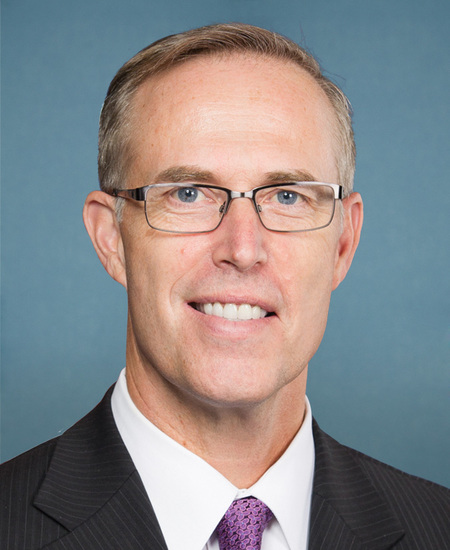
Rep. Jared Huffman
Sponsored bills
Maddy summaryHR 886, the Save Our Seas 2.0 Amendments Act, updates administrative and structural provisions of the Marine Debris Foundation and its programs. It clarifies that "tribal organization" refers to entities defined under the Indian Self-Determination Act, enabling direct tribal participation in marine debris initiatives. The bill modifies board appointment rules (requiring Commerce Secretary approval for some roles), reclassifies the Foundation as a corporation, and sets a 24-month limit on using federal funds for salaries. It also expands eligible grant recipients to include Indian tribes, international NGOs, and foreign governments, while requiring the Foundation to develop tribal outreach best practices. These changes streamline operations and broaden collaboration without altering core marine debris reduction programs.
Maddy summaryThe ZEVs Act of 2024 requires automakers selling over 100 new passenger vehicles annually in the U.S. to gradually increase sales of zero-emission vehicles (ZEVs), starting with 43% of new passenger vehicle sales in 2027 and reaching 100% by 2035. Manufacturers must meet these targets using a credit system: they earn credits for each ZEV sold or can purchase credits from others, with unused credits bankable for up to five years. The bill sets annual, increasing percentage targets (e.g., 51% in 2028, 88% in 2033) and imposes civil penalties for noncompliance, including fines equal to twice the value of missing credits. After 2035, manufacturers must sell only ZEVs, with the EPA enforcing these requirements through penalties and potential injunctions.
Maddy summaryHR 7518, the SUN Act, streamlines the approval process for placing specific infrastructure in highway rights-of-way. It directs that electric vehicle charging stations, renewable energy facilities, electrical transmission lines, and broadband infrastructure be treated as "covered facilities" under existing federal regulations for highway accommodation. This means states can approve these projects under current rules (Section 109(l) of Title 23 U.S. Code) without needing separate federal permits. The bill directly affects infrastructure developers and state transportation departments by simplifying deployment along federal-aid highways.
Maddy summaryHR 6195, the Wildland Firefighter Fair Pay Act, modifies federal pay rules for wildland firefighters and related personnel employed by the Forest Service, Department of the Interior, and National Weather Service. It establishes that premium pay earned during wildfire suppression activities (excluding prescribed fires) will be disregarded when calculating total pay for certain pay limits, preventing these employees from exceeding the Executive Schedule Level II pay cap. The bill requires the Secretaries of Agriculture, Interior, and Commerce to submit a hiring plan by March 2024 to ensure sufficient staffing without triggering pay caps. The changes take effect in January 2024 for most provisions and October 2023 for premium pay adjustments.
Maddy summaryHR 6148, the Advancing Tribal Parity on Public Land Act, requires federal agencies to consult with Native American tribes before selling public land that contains culturally significant sites. The bill creates a "tribal right of first refusal," allowing tribes with cultural or historical connections to the land to purchase it at fair market value within 60 days of notification. If multiple tribes bid, the sale is deferred for up to 180 days to allow for negotiation, and land purchased by tribes must be held in trust by the Department of the Interior. The bill defines "cultural sites" to include sacred sites, historic properties, and traditional gathering areas, and amends federal land management laws to require tribal consultation in land disposal decisions. This legislation directly affects Native American tribes with connections to specific public lands and federal agencies managing those lands.
Maddy summaryThe Tribal Cultural Areas Protection Act would establish a system to permanently protect Tribal cultural sites on public land by designating them as Tribal cultural areas, directly affecting Indian Tribes, federal land management agencies (Interior and Agriculture), and the public. Federal agencies must manage these areas in consultation with Tribal commissions, limiting new development that would disturb the land while preserving existing traditional practices like religious ceremonies and gathering of medicinal plants. The law requires management plans that incorporate Native knowledge and traditional practices, with special protections for sacred sites including restrictions on public disclosure of their locations. This bill ensures existing treaty rights are preserved while preventing commercial development that would harm cultural resources, without affecting existing water rights or federal environmental laws.
Maddy summaryThe Connect the Grid Act modifies federal energy regulations to improve grid connectivity, primarily affecting ERCOT (Texas' grid) and neighboring transmission organizations like SPP and MISO. It repeals exemptions for ERCOT under the Federal Power Act and establishes minimum power transfer requirements between ERCOT and other grids (e.g., 4.3-12.6 gigawatts to SPP). The bill requires joint planning by grid operators to build or upgrade transmission facilities by 2035, prioritizing grid-enhancing technologies, existing infrastructure corridors, environmental justice communities, and renewable energy access. Projects must follow environmental reviews under NEPA and the Endangered Species Act, with mandatory community outreach to tribal, Indigenous, and low-income groups.
Climate and Health Protection Act This bill provides statutory authority for the Climate and Health Program within the Centers for Disease Control and Prevention.
Maddy summaryThis bill establishes new federal performance measures requiring states to reduce transportation-related greenhouse gas emissions, decrease vehicle miles traveled, and improve transit accessibility. It directly affects states and metropolitan areas receiving federal transportation funds, mandating analysis of projects that increase traffic capacity and demonstrating cost-effectiveness compared to public transit alternatives. States failing to meet emissions targets face penalties requiring them to allocate more federal funds toward emissions-reducing projects like transit expansion and active transportation infrastructure. The bill also creates national standards for measuring transit accessibility, stop distance, and mode share to improve public transportation access and usage.