

Maddy summaryHR 3583 requires funeral honors details presenting a folded U.S. flag to military members or veterans at funerals to recite the 13 specific "Folds of Honor" with their symbolic meanings (e.g., "The 1st fold is a symbol of life"). This applies to flag presentations under federal law for deceased service members or veterans, directly affecting military funeral honors teams. Families may opt out of the recitation if they choose, per the bill's exception clause. The bill adds this requirement to U.S. Code without changing existing funeral procedures.
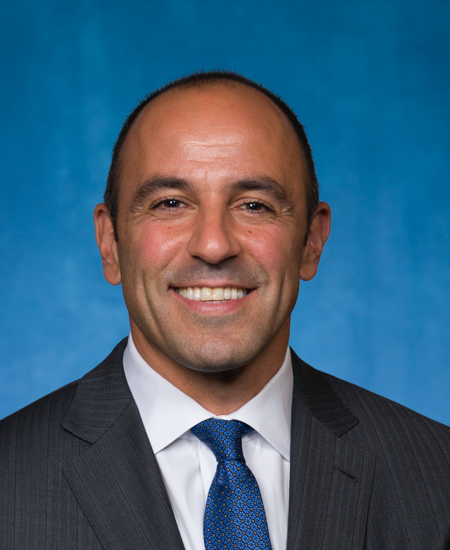
Rep. Jimmy Panetta
Sponsored bills
Maddy summaryHR 3604, the *Reducing Waste in National Parks Act*, requires National Park Service (NPS) units to reduce and eliminate the sale of disposable plastic products (including water bottles, bags, and food containers) where feasible, considering operational factors like cost, waste reduction, and concessioner impacts. Park officials must develop visitor education plans, implement refill stations, and weigh 13 specific factors before eliminating sales, such as infrastructure costs, revenue effects, and public health safety. The program must be evaluated every two years to measure visitor satisfaction, waste collection rates, and safety outcomes. This bill directly affects NPS operations, concessioners, and park visitors who use park facilities.
Maddy summaryHR 3600, the LOOTER Act of 2025, adds federal penalties for theft committed during declared natural disaster emergencies. It makes it a federal offense to commit petty larceny (small theft) or grand larceny (large theft) in any county where a disaster emergency has been declared under the Stafford Act. Offenders face up to 1 year in prison for petty larceny or up to 5 years for grand larceny, using state definitions of these crimes. The law directly affects individuals who steal from vulnerable communities during active disaster response efforts. It applies only during federally declared emergencies, not regular circumstances.
Maddy summaryThis bill prohibits the U.S. military from discriminating against service members or applicants based on gender identity. It bans policies that would deny service, involuntarily separate members, deny medically necessary healthcare, or require service in a gender different from one's identity. The law defines "gender identity" broadly to include a person's internal sense of gender, appearance, and mannerisms, regardless of sex assigned at birth. It directly affects transgender and gender-diverse individuals currently serving or seeking to serve in the Armed Forces.
Maddy summaryThe DEFIANCE Act of 2025 creates a new civil legal remedy for victims of non-consensual intimate digital forgeries (synthetic images or videos manipulating real people into sexual contexts without consent). It allows affected individuals to sue perpetrators in federal court for damages up to $250,000, injunctions to remove content, and privacy protections like pseudonyms. The bill specifically covers cases where forgeries are created or shared with intent to disclose, including scenarios involving sexual assault or harassment. It expands existing federal protections under 15 U.S.C. 6851 to address digital forgeries while ensuring state laws remain in effect.
Maddy summaryThis bill prohibits the President, Vice President, Members of Congress, and their immediate family members from engaging in specific digital asset activities. It bans them from owning digital assets where they could unilaterally alter them, serving as officers for crypto issuers, receiving compensation for crypto sales/marketing, or trading with non-public information while in office. The law also prevents these individuals from using trusts, companies, or other entities to secretly participate in digital asset markets, requiring full disclosure of indirect ownership. Violations could trigger criminal penalties under existing federal law, mirroring restrictions on other financial conflicts of interest.
Maddy summaryThis bill establishes a federal demonstration program to address high school graduation gaps by funding additional school counselors in struggling schools. It targets secondary schools with a four-year graduation rate of 60% or lower, providing competitive 4-year grants to hire counselors focused on students at risk of not graduating. Grants require maintaining a 1:250 counselor-to-student ratio for at-risk youth, covering new counselors and related resources like professional development, while ensuring funds supplement - rather than replace - existing counseling staff. Schools must show at least a 10% graduation rate improvement to renew funding for up to three cycles. The program aims to directly support historically underserved student groups with lower graduation rates, including students of color, those with disabilities, and English learners.
Maddy summaryHR 3520, the STAND Against Emerging Opioids Act, adds tianeptine and its similar compounds (including salts, isomers, and analogues) to Schedule III of the federal Controlled Substances Act. This change directly affects individuals who use, distribute, or manufacture tianeptine, placing it under federal regulation similar to other controlled substances. The bill amends the Controlled Substances Act to require federal oversight of tianeptine, effective 90 days after the bill's enactment. This policy change shifts tianeptine from unregulated status to a controlled substance category, impacting its legal availability and use.
Maddy summaryThe AGRITOURISM Act (HR 3470) creates a new Office of Agritourism within the U.S. Department of Agriculture (USDA) to support farm-based tourism businesses. The Office, led by a Director appointed by the Secretary, will coordinate USDA programs and provide technical assistance to help small and family-run farms diversify income through activities like farm tours, on-farm sales, accommodations, and farm-related events. It will update USDA programs to reflect best practices, share resources with agritourism businesses, and facilitate partnerships to promote rural economic development. This bill directly affects rural agricultural businesses and the USDA’s approach to fostering sustainable tourism in rural communities.
Maddy summaryHR 1286, the Simplifying Forms for Veterans Claims Act, requires the Department of Veterans Affairs (VA) to simplify forms sent to veterans filing claims. Within 30 days of enactment, the VA must hire an independent research center (FFRDC) to assess these forms, working with veterans' groups, legal experts, and the VA itself. The VA must then report the assessment to Congress within 90 days and implement approved changes - like clearer language or better organization - within two years. This directly affects veterans navigating VA claims by aiming to reduce confusion in the application process.