

Maddy summaryHRES 526 designates June 15-22, 2025, as "National Pollinator Week" to raise public awareness about pollinators' role in ecosystems and agriculture. The resolution encourages Americans to observe the week with educational activities and conservation efforts. It does not create new laws or affect specific groups, but acknowledges pollinators' importance to food production, biodiversity, and ecosystem health. The resolution focuses on symbolic recognition rather than policy changes.
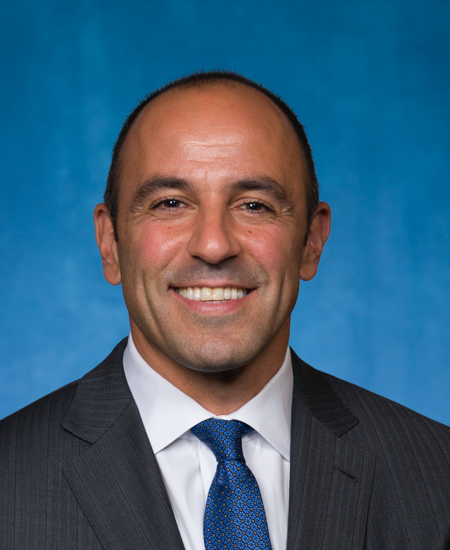
Rep. Jimmy Panetta
Sponsored bills
Maddy summaryThe MONARCH Act of 2025 establishes the Western Monarch Butterfly Rescue Fund to address the critical decline of western monarch butterflies, which have dropped 99% over 30 years and reached a low of 1,914 in 2020. It authorizes $12.5 million annually for fiscal years 2026-2030 to fund grants for conservation projects led by eligible entities like local governments, tribal agencies, nonprofits, and research institutions within the butterflies' range (California, Arizona, Nevada, Washington, Oregon, Idaho, and Utah). Projects must focus on restoring milkweed, nectar plants, and habitat while coordinating with wildlife authorities and avoiding conflicts with food safety practices. Recipients must report project progress to the Secretary of the Interior and make reports publicly available, with annual updates to Congress on conservation efforts and outcomes.
Maddy summaryHR 4047, the Coastal Communities Ocean Acidification Act of 2025, amends the 2009 Federal Ocean Acidification Research and Monitoring Act to improve collaboration on ocean acidification issues. The bill requires the National Oceanic and Atmospheric Administration (NOAA) to establish ongoing input mechanisms for affected industries, coastal stakeholders, fishery councils, Indigenous groups (including Indian Tribes and Native Hawaiian organizations), and non-Federal scientists. It mandates specific tribal representation on the Advisory Board, directs NOAA to coordinate with tribes on vulnerability assessments and research planning, and prioritizes underserved coastal communities in resource allocation. These changes aim to integrate community and tribal knowledge into federal research and management efforts related to ocean acidification impacts on coastal economies and ecosystems.
Maddy summaryHR 3941 would repeal Section 5123 of Public Law 118-159, which is part of the Caesar Syria Civilian Protection Act of 2019. This bill specifically targets one provision within the larger 2023 law, removing that particular section from federal law. It does not affect the rest of the Caesar Act or its core sanctions framework. The bill's direct effect is solely on the repealed section of the existing law. This is a procedural change focused on eliminating a specific legal provision.
Maddy summaryThe Disaster Relief Medicaid Act creates a new Medicaid program to provide medical assistance to individuals affected by disasters. It establishes a "relief coverage period" of two years beginning when a disaster is declared, during which survivors can receive Medicaid benefits without meeting standard income requirements. The bill simplifies the application process by removing documentation requirements and provides 100% federal funding for these services. It includes special provisions for pregnant individuals, those with pending applications, and individuals requiring home and community-based services. The program applies to individuals who were residents of the disaster area or lost employment due to the disaster, with benefits available to survivors regardless of their home state.
Maddy summaryHR 3989, the Fluent Forces Act, requires the Secretary of Defense to submit annual reports starting in 2025 through 2030 on recruiting efforts to increase enrollment at the Defense Language Institute Foreign Language Center (DLIFLC). These reports must track which high schools military recruiters target, how many students from those schools join the military and attend DLIFLC, and challenges like access to schools or follow-up with students. The bill mandates recommendations for improving recruitment awareness of linguist careers and systematic documentation of school engagement. It directly affects military recruiters, high schools, and future linguists in the Armed Forces by focusing on measurable progress in building language skills for national security. The legislation aims to strengthen military language training through structured recruitment data, not by creating new programs.
Improving Access to Medicare Coverage Act of 2025 This bill deems an individual receiving outpatient observation services in a hospital as an inpatient for purposes of satisfying the three-day inpatient hospital-stay requirement with respect to Medicare coverage of skilled nursing facility (SNF) services. (Generally, individuals must have been an inpatient at a hospital for at least three days in order to qualify for SNF services. An individual's time spent under observation at a hospital for purposes of determining whether the individual should be admitted does not count towards this requirement.)
Maddy summaryThis resolution (HRES 503) is a non-binding expression of support for designating June 11, 2025, as "World Franchise Day." It does not create new laws or directly affect any individuals or businesses; instead, it symbolically recognizes franchising's economic role. The resolution cites franchising's history (tracing to Benjamin Franklin and Isaac Singer), its current scale (830,876 U.S. establishments supporting 8.8 million jobs), and its contribution to the economy (nearly 3% of GDP). It is a procedural resolution, not a policy change, meant to acknowledge franchising's significance as a business model.
Maddy summaryHRES 502 is a House resolution requesting transparency about a potential federal database project. It directs the President and three Cabinet Secretaries (Treasury, Labor, Health and Human Services) to provide documents to the House within 14 days regarding a proposed centralized database developed with Palantir Technologies Inc. The resolution seeks information about the database’s scope - compiling sensitive personal data like tax records, health information, financial accounts, and Social Security details across federal agencies - and its purpose, including potential uses like tax audits or benefit restrictions. This is a procedural inquiry (not a policy change) focused on obtaining documents for congressional review of the project’s development and contracts.
Maddy summaryThis bill codifies existing protections for designated roadless areas within the National Forest System by prohibiting new road construction, road reconstruction, and logging in these areas. It directly affects National Forest lands already identified as "inventoried roadless areas" under the current Roadless Rule, which covers roughly 58 million acres. The key mechanism requires the Secretary of Agriculture to enforce these prohibitions, maintaining current protections without expanding restrictions to other lands or altering existing multiple-use management. The bill does not create new protected areas but legally solidifies the existing regulatory framework to preserve ecological and recreational values.