

Maddy summaryHR 4187, the Stop Hate Crimes Act of 2025, amends federal hate crime law to clarify how bias motivation is proven. It changes the standard so that a protected characteristic (like race, religion, disability) only needs to be "a contributory motivating factor" for a crime, not the sole reason. This directly affects federal hate crime prosecutions by making it easier for prosecutors to prove bias was involved. The bill modifies Section 249(a) of Title 18, U.S. Code, to update the legal language defining hate crimes.
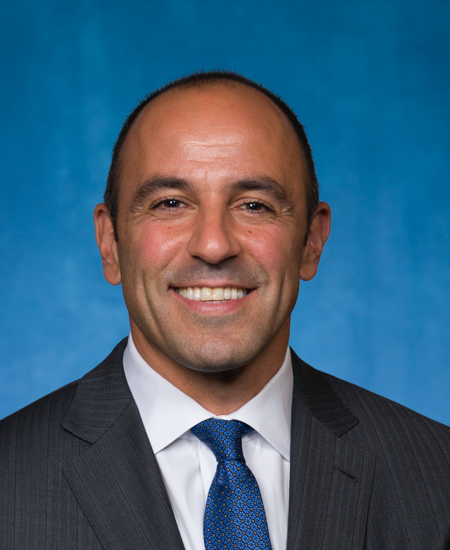
Rep. Jimmy Panetta
Sponsored bills
Maddy summaryThis bill amends the Older Americans Act of 1965 to better serve LGBTQI older adults (ages 60+). It adds specific definitions for "LGBTQI" and "HIV" in the law, redesignates "minority" to explicitly include LGBTQI individuals, and creates an Office of LGBTQI Inclusion within the Administration on Aging. The bill establishes a National Resource Center on LGBTQI Aging to provide training, technical assistance, and educational resources to organizations serving this community. It also requires the collection and analysis of data on discrimination against LGBTQI older adults in long-term care settings.
Maddy summaryThe PRIDE Act of 2025 updates the Internal Revenue Code by replacing gender-specific terms like "husband and wife" with gender-neutral terms such as "married couple" or "spouse" across over 30 tax code provisions. This change affects all married couples filing federal taxes and the IRS, as it modernizes tax law language to be inclusive of all married individuals regardless of gender. The bill makes specific textual amendments to sections dealing with filing status, deductions, credits, and estate tax provisions without creating new tax benefits. It ensures tax law language does not assume the gender of spouses, making the tax code more equitable for all married couples. This is a language update to existing tax law, not a change in tax policy or benefits.
Maddy summaryThe Women's Health Protection Act of 2025 would protect access to abortion services across the United States by prohibiting states from imposing restrictions that are more burdensome than those on comparable medical procedures. The bill directly affects people seeking abortion care and health care providers by banning restrictions such as mandatory in-person visits, requirements for specific tests, limitations on telemedicine, and rules based on a patient's reason for seeking abortion. It prohibits state laws that single out abortion for unnecessary restrictions while allowing post-viability abortions when necessary to protect a patient's life or health. The bill preempts conflicting state laws and provides enforcement mechanisms through private lawsuits and actions by the Attorney General.
Maddy summaryHR 4119 requires the U.S. State Department to submit a detailed report within 180 days of enactment on the Polisario Front’s leadership, military activities, and ties to Iran, Russia, Hezbollah, the IRGC, and the PKK. It also mandates that the State Department and Treasury submit within 90 days whether the Polisario Front meets criteria for designation as a foreign terrorist organization or for sanctions under existing laws. The bill establishes a process for potential sanctions but includes a waiver if the Polisario Front engages in good-faith negotiations toward Morocco’s 2007 autonomy plan for Western Sahara. This legislation focuses on gathering evidence for future designations rather than immediately imposing sanctions. It directly affects U.S. foreign policy decisions regarding the Polisario Front and Western Sahara.
Maddy summaryThis bill prohibits state officials from blocking abortion access for patients traveling from other states, including restricting providers who offer legal abortions in their state to out-of-state patients. It protects people traveling across state lines for legal abortions, those assisting such travel, and the interstate transport of FDA-approved abortion medication. Violations can be challenged by the Justice Department or affected individuals through civil lawsuits seeking injunctions and damages. The law applies broadly across all states, territories, and tribal nations, defining "abortion service" to include both medical procedures and related care.
Maddy summaryHR 4104 would expand access to Medicaid, CHIP, and Affordable Care Act (ACA) health coverage for immigrants lawfully present in the U.S., including those with deferred action or pending immigration applications. It removes state-level barriers to Medicaid/CHIP eligibility for lawfully present individuals, treats Federally authorized presence as "lawfully present" for ACA subsidies, and allows states to choose to cover undocumented individuals through Medicaid or CHIP. The bill also extends these changes to Medicare Part A and Part B, ensuring lawfully present immigrants qualify for coverage and subsidies under existing programs. These provisions apply to all federally funded health programs and take effect in 2026 for most ACA-related changes.
Maddy summaryThis bill creates federal funding for community-based violence intervention programs in high-violence areas, targeting communities with 35+ homicides annually or 20+ homicides with rates double the national average. It establishes grants for community organizations to implement trauma-informed violence interruption strategies, hospital-based programs for injured patients, and job training for "opportunity youth" (16-25 year olds not in school or work). The legislation authorizes $300 million in 2026, increasing to $700 million annually through 2033, with requirements for evidence-based approaches that reduce violence without contributing to mass incarceration. It creates a National Community Violence Response Center to coordinate data collection, research, and best practices for these programs. The focus is on prevention through economic opportunity, trauma care, and community-driven interventions rather than traditional law enforcement approaches.
Maddy summaryHR 1713, the Agricultural Risk Review Act of 2025, requires the Secretary of Agriculture to join the Committee on Foreign Investment in the U.S. (CFIUS) when reviewing transactions involving U.S. agricultural land, biotechnology, or agriculture-related infrastructure (like transportation or processing). It specifically targets acquisitions of agricultural land by foreign entities from China, North Korea, Russia, or Iran, mandating that the Secretary of Agriculture first assesses these transactions before CFIUS decides whether to proceed with a full review. The law includes a sunset provision, ending these requirements for a specific country once it is removed from the federal list of foreign adversaries.
Maddy summaryHRES 523 is a symbolic resolution designating June 21, 2025, as National ASK (Asking Saves Kids) Day. It does not create new laws but encourages parents and guardians to ask two specific questions before children visit other homes: "Is there a gun in your house?" and "Is it locked and unloaded?" The resolution directly supports families and aims to promote secure gun storage practices, referencing the ASK Campaign administered by the Brady Campaign since 2000. It cites statistics about child firearm injuries to highlight the campaign's focus on preventing accidental harm through simple, proactive conversations.