Ukraine Human Rights Policy Act of 2022 This bill provides for congressional oversight of sanctions on foreign persons associated with human rights abuses in territory controlled by Russia and requires reports on human rights abuses related to Ukraine.
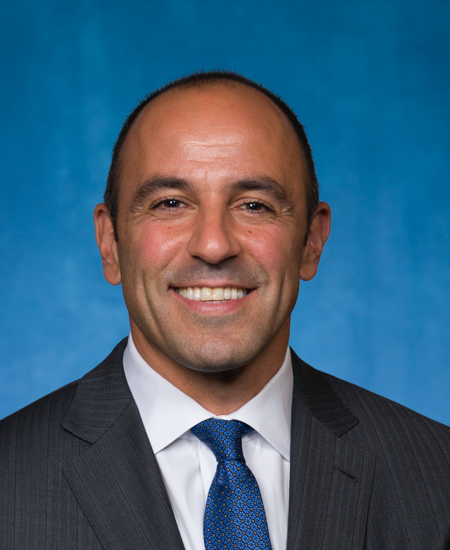
Rep. Jimmy Panetta
Sponsored bills
Afghan Adjustment Act This bill expands eligibility for special immigrant visas to certain Afghan nationals (and accompanying spouse and children) and addresses related issues. The Department of Homeland Security may provide such visas to Afghan nationals who provided qualifying service as a member of the Afghan Air Force or other specified entities and meet eligibility requirements, such as passing a background check. Currently, special immigrant visas for Afghan nationals are generally only available to those who were employed by or on behalf of the U.S. government in Afghanistan. Such visas shall also be available to an Afghan national who is a qualifying relative of a veteran or member of the U.S. Armed Forces. The bill also modifies procedures for providing lawful permanent resident status to certain classes of Afghan nationals, such as by (1) providing a streamlined process with specified vetting requirements for certain individuals, including those who provided support to the U.S. government in Afghanistan; and (2) preserving the eligibility of certain battered spouses whose eligibility for such status stemmed from a marriage that has terminated. Furthermore, the Department of State (1) must respond to inquiries from Members of Congress about specific applications from Afghan nationals seeking special immigrant or refugee status; and (2) establish an office in Afghanistan to perform certain tasks, such as issuing visas, if no U.S. embassies are operational in Afghanistan. The President must establish a task force to develop and implement a strategy to assist Afghan nationals who qualify for admission to the United States.

Protecting Families from Fertility Fraud Act of 2022 This bill establishes a new federal criminal offense for knowingly misrepresenting the nature or source of DNA used in assisted reproductive technology or assisted insemination. The term assisted reproductive technology includes any treatment or procedure that involves the handling of human oocytes or embryos, such as in vitro fertilization, gamete intrafallopian transfer, and zygote intrafallopian transfer. The term assisted insemination includes any procedure that involves the handling of sperm including intrauterine insemination. A violation is subject to a fine, a prison term of up to 10 years, or both. Additionally, the bill makes the violation a predicate offense (i.e., an underlying offense) for prosecutions under the federal racketeering statute.
Body Armor Safety Act of 2022 This bill requires body armor (for use by law enforcement) to comply with certain safety requirements in order to be imported into the United States. It also establishes new criminal offenses related to fraud in connection with such body armor.
Combating Harmful Actions with Transparency on Social Act of 2022 or the CHATS Act of 2022 This bill directs the Department of Justice to modify the Uniform Crime Reporting Program in the Federal Bureau of Investigation to include data on any internet platform used in connection with criminal offenses.
Renewing Immigration Provisions of the Immigration Act of 1929 This bill expands eligibility for a program that authorizes the Department of Homeland Security to, at its discretion, provide lawful permanent resident status to certain long-term residents of the United States, including individuals who are unlawfully present. Currently, this program, sometimes referred to as the Registry program, is only available to eligible non-U.S. nationals ( aliens under federal law) who entered the United States before January 1, 1972. The bill removes this entry cutoff date and opens up the program to eligible individuals who have resided in the United States for at least seven years. Existing requirements (e.g., the individual must not be inadmissible or deportable due to certain grounds related to crime or terrorism) continue to apply.
Backlog Justice Act of 2022 This bill requires certain actions to address the backlog of untested sexual assault kits. For example, the bill (1) directs the Bureau of Justice Assistance to establish a publicly accessible online database regarding untested kits, and (2) requires the Department of Justice to provide an increased amount of certain grant funding for states that have in place electronic evidence tracking systems for these kits.
Default Proceed Sale Transparency Act This bill establishes new requirements in the case of a firearm transfer by a licensed dealer, manufacturer, or importer to an unlicensed person prior to the completion of a background check. Current law permits such transactions—default proceed transactions—if a submitted background check remains incomplete after three business days.
Pathways to Policing Act This bill authorizes the Office of Community Oriented Policing Services within the Department of Justice to award grants to states, local governments, and law enforcement agencies to support recruitment of law enforcement officers. In particular, these grants may be used for (1) marketing and recruitment campaigns to encourage candidates to seek careers in law enforcement; and (2) developing, operating, or expanding Pathways to Policing programs (e.g., programs that facilitate entry into full-time law enforcement positions for certain candidates).
Strengthen and Tackle Opportunities to Prevent Violence Act of 2022 or the STOP Violence Act of 2022 This bill allows funds under the Antiterrorism and Emergency Assistance Program to be used for efforts to prepare against mass violence and protect public assembly facilities.