Maddy summaryThe "You Earned It, You Keep It Act" (HR 2909) would exempt wages above $250,000 from Social Security taxes after 2025 and include income over $250,000 in Social Security benefit calculations. It applies to high-wage earners and self-employed individuals whose income exceeds this threshold, with special provisions for those receiving wages from multiple employers. The bill modifies how Social Security taxes are calculated by removing the tax on income above $250,000 and adjusts benefit formulas to count that income toward future payments. These changes would affect how Social Security taxes are paid and benefits are determined for high earners beginning in 2026.
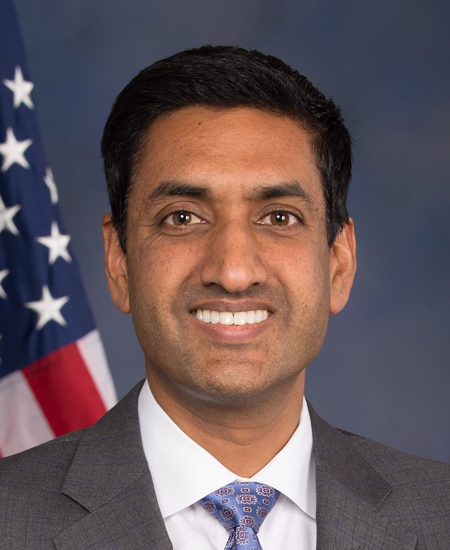
Rep. Ro Khanna
Sponsored bills
Maddy summaryThe DRIVE Act of 2025 requires the Department of Veterans Affairs (VA) to set mileage reimbursement rates for veterans at the federal government's current standard rate for employees using personal vehicles on official business, replacing the previous fixed rate of 41.5 cents per mile. It also mandates that the VA process and pay these reimbursements within 90 days of a veteran's valid request. This directly affects veterans who travel for VA medical appointments or services using their personal vehicles. The bill aligns veteran travel reimbursements with federal employee standards and ensures timely payments.
Maddy summaryHR 2880 provides due process protections for federal employees who are promoted to career positions (in the competitive service, excepted service, or Senior Executive Service) and serve under a probationary period. It requires these employees to be covered by existing federal employment laws, including special protections for Department of Veterans Affairs staff. The bill also allows employees removed from such positions between January 20, 2025, and the law's enactment to be reinstated to their former or equivalent role with backpay. Political appointees are excluded from these protections and reinstatement provisions.
Maddy summaryThe Neighborhood Homes Investment Act creates a new tax credit for developers who build or rehabilitate affordable homes in distressed communities. The credit is calculated as the lesser of (1) the difference between development costs and sale price, (2) 40% of development costs, or (3) 32% of the national median home price. It applies only to homes sold to qualified homeowners with income up to 140% of area median income in designated "qualified census tracts" (areas with high poverty rates, low median home values, and low median family income). Developers must meet quality standards and repay the credit if the home is sold within 5 years of the affordable sale. This credit aims to address the "value gap" that prevents housing development in distressed communities by incentivizing affordable home construction and rehabilitation.
Maddy summaryHR 2882 prohibits the U.S. Secretary of the Interior from issuing oil or gas leases for exploration, development, or production in the Central California Planning Area. This bill directly affects federal leasing decisions in that specific coastal region, preventing new fossil fuel extraction activities. The key provision amends the Outer Continental Shelf Lands Act to permanently ban such leasing in the defined area. The bill creates a clear policy change by eliminating future oil and gas development opportunities on federal waters along California's central coast.
Maddy summaryHR 2862 prohibits the federal government from leasing offshore areas in Southern California for oil and gas exploration or production. It directly affects oil and gas companies seeking permits in the Southern California Planning Area, as defined in the federal 2024-2029 Outer Continental Shelf leasing program. The bill amends the Outer Continental Shelf Lands Act to block all future leases in this region, preventing new drilling projects in the specified offshore waters. This is a concrete policy change that halts federal leasing decisions in the area without altering existing leases or operations.
Working for Immigrant Safety and Empowerment Act or the WISE Act This bill expands eligibility for U nonimmigrant visas (victims of criminal activity) and prohibits immigration enforcement activities in specified areas. Generally, U visas are for victims of specified crimes (e.g., rape, trafficking, or domestic violence) who assist with the investigation or prosecution of the crime. The bill adds hate crimes, child abuse, and elder abuse as crimes that may qualify a victim for a U visa and removes criteria related to the victim's assistance with the investigation or prosecution of the crime. Furthermore, the Department of Homeland Security (DHS) must provide work authorization to U visa applicants, whereas currently DHS may grant work authorization but is not required to do so. The bill also eliminates the annual numerical cap on U visas. The bill establishes a rebuttable presumption that certain individuals, including U visa applicants and T visa (victims of human trafficking) applicants, shall not be detained while the application is pending. Additionally, the bill provides immigration-related protections, such as by extending the admission period and providing work authorization, to the spouse or child of a nonimmigrant visa holder who subjected that spouse or child to battery or extreme cruelty. Further, the bill prohibits, with some exceptions for exigent circumstances, U.S. Immigration and Customs Enforcement or U.S. Customs and Border Protection from conducting immigration enforcement actions within 1,000 feet of a school, health care facility, place of worship, or other location specified in the bill.

Maddy summaryHR 2837 establishes an Advisory Council under the Department of Health and Human Services to improve access to existing resources for victims of gun violence. The council, composed of federal agency heads and appointed victims/support professionals, will assess needs, identify effective programs, and compile a public resource hub with contact information for medical, financial, mental health, legal, and government support services. It requires a detailed report within 180 days of enactment and a follow-up report within two years, focusing on gaps in current assistance and coordination. The bill directly affects individuals defined as victims of gun violence (including those wounded, threatened, witnessing incidents, or related to victims) and aims to connect them to existing federal, state, and nonprofit resources without authorizing new funding. The council will sunset after five years.
Maddy summaryHR 2857, the "Drain the Swamp Act," makes Executive Order 13989 a permanent law requiring all executive branch employees to submit annual ethics commitments. This directly affects federal workers in the executive branch, including department heads and agency staff, by mandating formal ethics disclosures as a legal requirement. The key provision codifies an existing executive order - previously changeable by presidential decree - into binding law, ensuring these ethics rules persist across administrations. This change shifts the enforcement of ethics commitments from executive policy to statutory obligation without altering the content of the requirements.
Maddy summaryHR 2820, the California Clean Coast Act of 2025, prohibits new oil and gas leasing and related activities in federal waters off California's coast starting from its enactment date. This directly affects oil and gas companies seeking to develop new offshore resources in California’s outer Continental Shelf areas. The bill preserves existing leases issued before the law’s effective date but bans all future preleasing, leasing, and related activities in those waters. It represents a permanent federal policy change for California’s coastal offshore regions, with no impact on current leaseholders.