

Maddy summaryThe CHIPP Act (HR 4771) permanently extends federal funding for the Children's Health Insurance Program (CHIP), which provides health coverage to low-income children in families that earn too much to qualify for Medicaid but cannot afford private insurance. It removes previous expiration dates (like 2029) from CHIP funding provisions, ensuring continuous support for states administering the program. The bill also permanently extends related programs, including pediatric quality measures funding with automatic inflation adjustments, and modifies eligibility rules to allow states to expand coverage for children in higher-income households. This affects all 50 states that run CHIP programs and the millions of children and families who rely on this coverage.
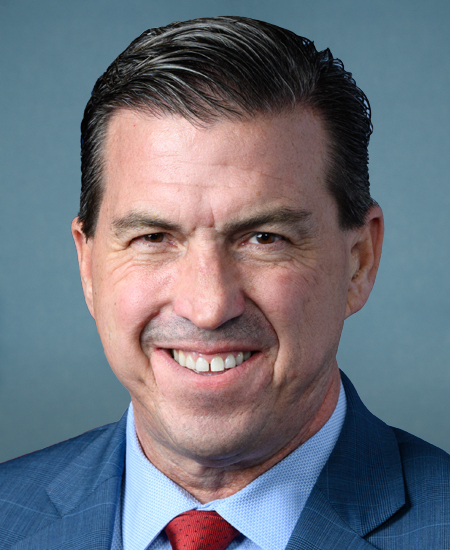
Rep. Kevin Mullin
Sponsored bills
Maddy summaryHR 4733 provides EPA grants to local air quality agencies to help communities prepare for wildfire smoke and extreme heat. Funds support concrete actions like monitoring air quality, installing air filtration in public buildings, distributing masks and protective equipment, and community outreach in areas vulnerable to poor air quality. The bill prioritizes communities with high wildfire smoke exposure or extreme heat risks, particularly those already facing air quality challenges. It also establishes research centers and planning grants, but the primary mechanism is direct funding for local preparedness efforts.
Maddy summaryHR 4663, the Federal Mechanical Insulation Act, defines "mechanical insulation" (insulation around pipes and equipment in federal buildings) as an eligible energy efficiency measure. It requires federal agencies to include mechanical insulation in their required energy and water evaluations, specifically mandating that evaluations identify this insulation as a potential efficiency measure. The bill specifies that such insulation must meet minimum standards under Reference Standard 90.1 to qualify. This change directly affects federal building managers and contractors by formally recognizing mechanical insulation as a standard efficiency option in compliance with existing energy conservation laws.
Maddy summaryThis bill requires the Department of Justice and Health and Human Services to translate key gun violence prevention materials - including extreme risk protection orders and safe storage resources - into the 10 most common non-English languages in the U.S. (like Spanish, Mandarin, and Korean) for limited English proficient communities. It mandates that community-based organizations with ties to these language groups review translations for cultural appropriateness before publication. The bill also prioritizes grant applications that include targeted outreach plans for limited English proficient populations when funding gun violence prevention programs. These changes aim to improve access to evidence-based safety strategies for communities where language barriers might otherwise limit participation.
Maddy summaryH.J.Res. 25 would remove the 1979 deadline for states to ratify the Equal Rights Amendment (ERA), which was originally proposed in 1972. This bill directly affects states that ratified the ERA after the deadline (such as Nevada, Illinois, and Virginia in 2017-2018) by making their ratifications legally valid. The key provision states that the ERA is valid as part of the Constitution if ratified by three-fourths of states, regardless of the original deadline. The bill does not create new rights but aims to finalize the constitutional amendment process by eliminating the time limit.
Maddy summaryThis bill, HR 1282 (Major Richard Star Act), expands benefits for certain military retirees by allowing them to receive both veterans' disability compensation and military retirement pay simultaneously. It specifically affects combat-related disabled retirees under Chapter 61 of the military retirement system who have fewer than 20 years of service. The key change removes the automatic reduction of military retirement pay when these retirees also receive disability compensation, as amended in Section 1413a(b)(3) of Title 10. Technical updates to the law’s structure and effective date (starting after enactment) complete the provisions.
This resolution expresses support for the government of the United Kingdom's continued determination to bring about the restoration of the devolved institutions in Northern Ireland as set out in the Good Friday Agreement. The resolution also calls on all participants to honor their obligations under the agreement.
Maddy summaryHCONRES 56 is a non-binding congressional resolution recognizing that climate change disproportionately harms children's health, economic opportunities, and rights. It expresses Congress's view that U.S. leadership is urgently needed to address the climate crisis and calls for a national climate recovery plan. The resolution specifically demands a science-based plan to phase out fossil fuels, protect natural carbon sinks, and reduce atmospheric CO2 to below 350 parts per million by 2100. This resolution does not create new laws or allocate funds but formally states congressional support for a comprehensive climate strategy prioritizing children's well-being.
Maddy summaryHJRES 82 is a non-binding resolution stating that the Equal Rights Amendment (ERA) has been validly ratified by the required 38 states (including Virginia's 2020 ratification) and should be certified as the 28th Amendment to the U.S. Constitution. It directs the Archivist of the United States to fulfill their statutory duty under Title 1, U.S. Code, to certify and publish the ERA without delay. The resolution argues Article V of the Constitution has no ratification deadline, citing precedents like the 27th Amendment. It does not change the Constitution itself but urges the Archivist to complete the certification process. The bill affects the Archivist’s office, requiring them to act on the ERA’s ratification status.
Maddy summaryHRES 580 is a symbolic resolution expressing the House's support for designating "Journeyman Lineworkers Recognition Day." It honors lineworkers who work in hazardous conditions (such as at heights near live wires) and respond to disasters like hurricanes and wildfires, while recognizing their contributions and the legacy of Henry Miller, an early electrical worker who died on the job. The resolution has no legal effect - it solely encourages public recognition and reflection on these workers' service.