

Maddy summaryHR 4987, the Democracy Restoration Act of 2023, would restore voting rights for people with felony convictions who are living in their communities (not incarcerated), directly affecting approximately 4.6 million disenfranchised Americans. The bill requires states to automatically restore voting rights upon completion of sentences, including probation or parole, without requiring payment of fines or fees. It mandates notification to individuals about their restored voting rights and prohibits states from conditioning voting rights on payment of legal financial obligations. The legislation addresses the disproportionate impact of voting restrictions on racial minorities, particularly Black and Latino communities, who face significantly higher rates of disenfranchisement. This bill would apply to all federal elections held on or after its enactment date.
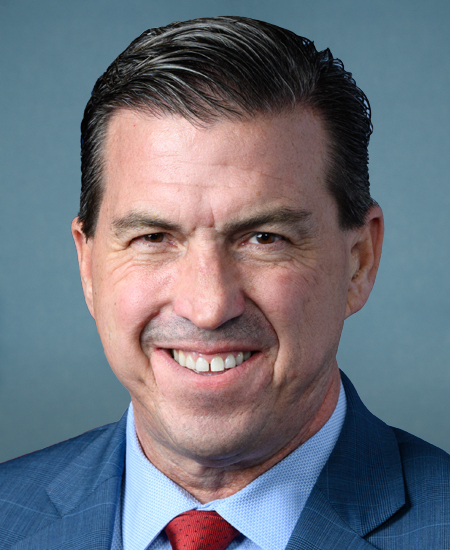
Rep. Kevin Mullin
Sponsored bills
Maddy summaryHR 4983, the Equal Employment for All Act of 2023, prohibits most employers from using credit reports in hiring decisions or employment-related adverse actions. The bill amends the Fair Credit Reporting Act to ban employers from considering credit history when making job offers, promotions, or other employment decisions, except for positions requiring national security clearances or when specifically required by law. It applies directly to all employers and job applicants nationwide, eliminating the common practice of credit checks during hiring. The law requires employers to stop using credit reports for employment purposes, with limited exceptions, and maintains existing disclosure requirements for other permissible uses of consumer reports.
Maddy summaryHR 4963, the Tax Fairness for Workers Act, would restore tax deductions for certain employee expenses. It creates an above-the-line deduction for union dues and expenses paid by wage-earning employees, and allows miscellaneous itemized deductions for other work-related expenses (like uniforms or supplies) that were previously disallowed after 2017 tax law changes. These provisions directly affect employees who pay union dues or incur qualifying job-related costs. The bill amends specific sections of the Internal Revenue Code to make these deductions available for taxable years beginning after December 31, 2022. It does not change tax rates or provide new benefits, only reinstating previously eliminated deductions for eligible workers.
Maddy summaryHRES 578 is a non-binding House resolution calling for the immediate release of Eyvin Hernandez, a U.S. citizen and Los Angeles County public defender wrongfully detained by Venezuela since March 2022. The resolution urges U.S. officials, including the President and Secretary of State, to press Venezuela for his release and condemns Venezuela’s practice of detaining U.S. citizens for political purposes. It specifically references Hernandez’s wrongful detention without evidence or fair trial, noting his status as a Department of State-designated wrongfully detained individual. The resolution expresses support for Hernandez and other Americans detained abroad, without creating new legal requirements or funding.
Maddy summaryHR 4911 establishes a 3-year pilot program to improve law enforcement responses to mental health crises. It provides grants of up to $300,000 each to community mental health centers (in each of four U.S. census regions) to place licensed social workers with small law enforcement agencies (under 100 officers). These social workers will coordinate on calls involving mental health issues, aiming to enhance safety for both officers and community members. The program, funded by $2.5 million over three years, expires after three years, requiring the Attorney General to report on outcomes to Congress.
Maddy summaryThis bill establishes new federal requirements for employers to prevent heat-related illness and injury among workers. It mandates that employers provide safe work environments by implementing specific measures, including access to cool water, scheduled rest breaks in shaded areas, employer-paid cooling equipment, and training for employees and supervisors on recognizing heat illness symptoms. The Secretary of Labor must create these standards within one year, requiring employers in high-heat occupations (like construction, agriculture, and outdoor labor) to adopt engineering controls, administrative schedules, and health protocols. Key provisions include ensuring hydration, rest, and language-accessible training, while preserving existing safety protections and allowing for updates as scientific evidence evolves.
Nonrestrictive Offshore Wind Act or the NOW Act This bill repeals certain requirements that the Department of the Interior must meet before issuing a lease for offshore wind development. Under the Inflation Reduction Act of 2022, Interior may not issue a lease unless (1) an offshore oil and gas lease sale has been held in the year prior to issuing the lease, and (2) Interior offers a specified minimum acreage for offshore lease sales in the previous year. The bill repeals those requirements.
Comprehensive Legislation for Expanding and Advancing Nonrestrictive Energy Act or the CLEAN Energy Act This bill repeals certain requirements that the Department of the Interior must meet before issuing an onshore wind or solar right-of-way for wind or solar energy development on federal land. Under the Inflation Reduction Act of 2022, Interior may not issue a right-of-way for such development unless (1) an onshore oil and gas lease sale has been held in the 120 days prior to issuing the right-of-way, and (2) Interior offers a specified minimum acreage for oil and gas lease sales in the previous year. The bill repeals those requirements.
Maddy summaryThis bill amends the Child Nutrition Act to require school food service training programs to be scheduled during regular paid work hours whenever possible. If training must occur outside work hours, schools must compensate staff for attending, explain the necessity, and not penalize staff for missing it. Training must also be offered in-person with hands-on components when appropriate. The law directly affects school food service workers and their employers, mandating specific scheduling and compensation practices for required training.
Maddy summaryHR 4889, the Raise the Wage Act of 2023, would gradually increase the federal minimum wage for most workers to $15.50 per hour by 2027, with specific annual targets: $9.50 starting in 2023, rising to $11.00 after one year, $12.50 after two years, and $15.50 after four years. It would also phase out the separate lower minimum wage for tipped employees (starting at $6.00/hour) by aligning their pay with the regular minimum wage by 2028, while requiring employers to let workers keep all tips. The bill includes similar phased increases for workers under 20 and transitions toward fairer wages for workers with disabilities under special certificates, which would sunset after 2028. Future annual increases after 2028 would tie the minimum wage to the median hourly wage of all workers.