

Maddy summaryHR 5783, the Blue Collar and Green Collar Jobs Development Act, establishes a federal program to improve training and education for workers in energy-related industries, directly affecting educational institutions, energy employers, and individuals seeking jobs in these sectors. The bill requires the Secretary of Energy to create a nationwide workforce development program that prioritizes disadvantaged communities and minority-serving institutions, provides grants to cover training costs for eligible workers, and establishes a public clearinghouse with regional workforce data on energy job needs. Key provisions include developing voluntary STEM education guidelines for energy careers, creating a grant program to cover up to 45% of training wages for small businesses, and requiring collaboration with state workforce boards and energy industries. The program authorizes $15 million annually for workforce development and $50 million for the grant program through 2028. This legislation aims to connect job seekers with training opportunities in sectors like renewable energy, energy efficiency, and advanced manufacturing without mandating adoption by states or schools.
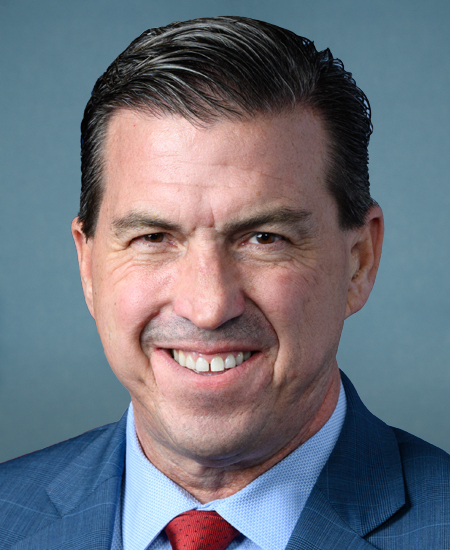
Rep. Kevin Mullin
Sponsored bills
Maddy summaryThis bill requires websites and applications used by public entities, businesses, and employers to be accessible to people with disabilities. It directs the Department of Justice and Equal Employment Opportunity Commission to establish accessibility standards within 24 months, with special consideration for small businesses. The law defines accessibility as websites that are perceivable, operable, understandable, and robust for people with disabilities. It also creates a technical assistance center to help entities comply and provides grants to small businesses to fix inaccessible websites. The bill aims to ensure equal digital access for people with disabilities, building on existing ADA protections.
Maddy summaryThe Oleksander Ivanov Act of 2023 establishes U.S. sanctions authority targeting individuals and entities responsible for Russia’s forced displacement and illegal adoption of Ukrainian children. It authorizes the President to block property and deny visas to foreign persons involved in forcibly transferring Ukrainian children to Russia, illegally assimilating them, or facilitating trafficking. The bill also directs the U.S. to support Ukraine through programs for trauma care, rebuilding education systems, creating a multilingual registry for missing children, and establishing emergency call centers to combat trafficking. These measures aim to address documented violations of international law, including Russia’s detention of over 6,000 Ukrainian children in occupied territories, with sanctions set to expire after six years.
Maddy summaryHR 5784 would provide federal grants to public schools (including Bureau of Indian Education schools) to make them more environmentally sustainable and equitable. It prioritizes schools in the most vulnerable communities (based on CDC Social Vulnerability Index) for full funding to become "healthy zero-carbon schools" through energy-efficient retrofits and new construction, while offering reduced funding for less vulnerable schools. The grants require community engagement in planning, mandate hiring from local communities with specific diversity goals, fund social services and mental health support, and include strict energy efficiency standards for all projects. The bill also includes funding for educational equity planning and climate resiliency programs to help schools serve as community centers during disasters.
Maddy summaryThe Alice Cogswell and Anne Sullivan Macy Act amends the Individuals with Disabilities Education Act to better serve children and youth who are deaf, hard of hearing, deafdisabled, blind, visually impaired, or deafblind. It requires states to identify and provide appropriate services to these students regardless of how they're classified in disability categories, ensures access to language instruction in the student's primary language (including American Sign Language), and mandates improved data collection about these students. The bill establishes the Anne Sullivan Macy Center on Visual Disability and Educational Excellence to support research, training, and program development for blind and visually impaired students. These changes aim to improve educational outcomes by addressing the unique language, communication, and learning needs of students with sensory disabilities through concrete policy changes to IDEA.
Guaranteed Income Pilot Program Act of 2023 This bill directs the Department of Health and Human Services (HHS) to establish and implement a three-year pilot program to provide a guaranteed monthly income to individual taxpayers between the ages of 18-65. HHS must consult with the Internal Revenue Service and certain nonpartisan and nonprofit agencies or academic institutions with expertise in social science experimentation to develop and award income subsidies to eligible taxpayers and to conduct a study on the outcomes of the program.
Maddy summaryThe WIC for Kids Act expands eligibility for the Special Supplemental Nutrition Program for Women, Infants, and Children (WIC) by adding new qualifying pathways. It allows children to qualify if they live in households where someone receives Head Start, Indian reservation food assistance, or Puerto Rico/Northern Mariana Islands nutrition block grants, and streamlines documentation by permitting states to use existing records. The bill extends certification periods for children from one to two years and automatically enrolls infants born to current WIC participants. This directly affects low-income families with children who qualify for related assistance programs but previously faced barriers to WIC access.
Maddy summaryThis bill establishes a new Office of Fossil Energy and Carbon Management within the Department of Energy to coordinate federal research on carbon dioxide removal (CDR) technologies. It authorizes over $2 billion in funding for research, development, and demonstration projects focused on direct air capture, soil carbon management, forest restoration, and other CDR approaches across multiple federal agencies. The legislation requires lifecycle analyses of environmental impacts, considers social and economic factors, and mandates cross-agency coordination. It creates a framework for competitive demonstration projects with cost-sharing requirements for private sector participation. The bill aims to advance CDR technologies to help address climate change by removing carbon dioxide from the atmosphere through federally funded research and development.
Maddy summaryHR 5097 establishes new federal funding programs to support the development of alternative proteins - foods that mimic animal meat using plants, cell cultivation, or fermentation. It allocates $15 million annually (2024-2028) for Centers of Excellence focused on research and workforce training, $10 million for USDA research, $50 million for manufacturing grants to U.S. companies and institutions, and $25 million for workforce development programs. The bill requires the USDA to create a national strategy coordinating multiple federal agencies to advance this sector. These provisions directly affect U.S. businesses, universities, and workers in the alternative protein industry by providing targeted funding for research, production, and job training.
Maddy summaryHR 5686 authorizes $30 million in U.S. humanitarian aid for Armenians in Armenia and Nagorno-Karabakh affected by recent conflicts and blockades, and $12 million in foreign military financing to support Armenia's sovereignty and security cooperation. The bill requires the State Department to develop a strategy protecting Nagorno-Karabakh residents' rights, including cultural heritage and security, and mandates a 90-day report on Azerbaijani military actions during 2022-2023 attacks. It also directs the U.S. to push for International Criminal Court investigations into alleged atrocities and imposes sanctions on Azerbaijani officials involved in blockades or attacks. The legislation focuses on concrete U.S. policy actions - aid, accountability measures, and diplomatic efforts - without prescribing specific outcomes.