

Maddy summaryThis bill, HR 5920 (Student Loan Marriage Penalty Elimination Act of 2023), changes how married couples can deduct student loan interest on their federal taxes. It amends the tax code to allow each spouse to claim a separate $2,500 deduction limit for student loan interest, instead of a single combined limit for the couple. This directly affects married couples filing jointly who pay student loan interest and qualify for the deduction. The change applies to tax years beginning after December 31, 2022, and ensures the deduction aligns with the tax treatment for individual filers.
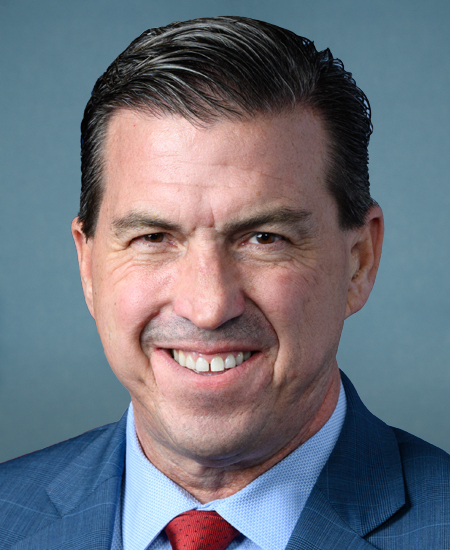
Rep. Kevin Mullin
Sponsored bills
Maddy summaryThis bill requires Medicaid to cover non-invasive prenatal genetic screening for all pregnant women, regardless of age, expanding current coverage. It mandates that providers give specific, detailed informed consent before offering the screening, including disclosure of test limitations, potential interferences, predictive values based on individual risk factors, and the need for follow-up diagnostic testing. Medicaid payments will not be made for screenings conducted without this required consent. The law directly affects pregnant Medicaid beneficiaries and healthcare providers offering prenatal genetic screening services.
Maddy summaryHRES 754 is a symbolic House resolution recognizing the heritage, culture, and contributions of Latinas in the United States. It highlights Latinas' roles in business (owning over 2 million businesses), military service (45,710 active duty), arts (Oscar-winning artists like Rita Moreno), and public service, while noting persistent challenges like the 57-cent pay gap. The resolution does not create new laws or policies but formally honors these contributions and acknowledges the need for further progress toward equality. It was introduced by multiple representatives and referred to the Committee on Oversight and Accountability.
Maddy summaryThis resolution commemorates October 2023 as Filipino American History Month, honoring the contributions and cultural heritage of Filipino Americans to the United States. It directly recognizes the Filipino American community - now the third-largest Asian American and Pacific Islander group - with a population of approximately 4.5 million - and highlights their historical roles, including WWII service and community leadership. The resolution has no legal effect or funding provisions; it is purely ceremonial, urging the public to observe the month through educational programs and activities. It follows prior congressional recognitions of Filipino American History Month since 2009.
Maddy summaryThis resolution designates the week of September 25-29, 2023, as "National Clean Energy Week" to recognize the growing role of clean energy in the U.S. economy. It expresses support for clean energy jobs and innovation, noting the sector employed about 8.1 million people in 2022. The resolution encourages federal, state, and local investment in affordable clean energy technologies and promotes "commonsense solutions" for energy needs. As a symbolic gesture, it has no legal force or funding implications - it simply urges recognition of clean energy's economic and environmental contributions.
Maddy summaryHR 5667, the Pay Our Military Act, ensures continued pay and allowances for active-duty military members, reservists, Department of Defense civilians, and qualifying contractors during any government funding gap in fiscal year 2024. It appropriates funds from the Treasury to cover these payments if regular appropriations bills aren't passed before the end of the fiscal year. The funding automatically terminates once regular appropriations are enacted or by January 1, 2025, whichever comes first.
Maddy summaryThis bill adds a new student loan deferment option for individuals who experienced sex-based harassment. It allows eligible students to pause loan payments for up to 3 years (in periods of 3-12 months) if they reduced their course load due to harassment and submitted documentation to a covered individual (like a Title IX coordinator or healthcare provider). It also waives requirements for students to return federal grants or loans if they withdrew due to harassment and are using the new deferment. The policy directly affects students enrolled in institutions covered under the Higher Education Act who report harassment under defined terms, including sexual harassment, dating violence, domestic violence, stalking, or sexual assault.
Maddy summaryThis bill replaces "Columbus Day" with "Indigenous Peoples’ Day" as the official federal holiday observed on the second Monday in October. It directly affects federal government operations and all federal documents, rules, or laws that previously referenced "Columbus Day" by automatically updating those references to "Indigenous Peoples’ Day" upon enactment. The key mechanism is a simple amendment to federal law (5 U.S.C. § 6103(a)) to change the holiday name and a provision ensuring all existing federal references to Columbus Day are legally treated as referring to Indigenous Peoples’ Day instead. This is a procedural change to federal holidays and references, not a new policy or program.
Maddy summaryThe Eviction Protection Act of 2023 establishes a new Office of Eviction Prevention within the Department of Housing and Urban Development (HUD). This office, led by a career-appointed Director, will administer a new Eviction Protection Grant Program, coordinate eviction prevention strategies across federal agencies, and develop a national eviction database while protecting tenant privacy. The bill directly affects renters (including those in federally subsidized housing), housing providers receiving HUD assistance, and local governments through its focus on preventing both court-ordered evictions and illegal "self-help" evictions like lockouts or utility shutoffs. It authorizes $100 million annually for fiscal years 2024-2028 to fund the grant program and the office's operations, including technical assistance for grantees and tenant education initiatives.
Maddy summaryThis bill expands access to Head Start services by raising the family income eligibility threshold to 138% of the federal poverty level and broadening the definition of "public assistance" to include programs like SNAP and Medicaid. It authorizes $36 billion annually for Head Start programs (2025-2030), plus $1 billion yearly for infrastructure grants to modernize aging facilities meeting specific safety and health criteria. Additionally, it creates $6.8 billion in annual funding for Head Start employee salary increases and offers student loan forgiveness for childcare workers employed full-time in Head Start/Early Head Start programs for three years. These changes directly affect low-income families seeking early childhood education and Head Start staff in over 1,000 agencies nationwide.