

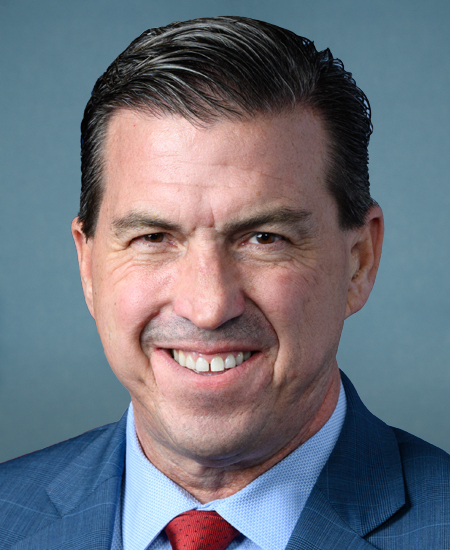
Photo of Kevin Mullin
D United States House · District 15 · California On the 2026 ballot

Rep. Kevin Mullin

Compare
Total votes
1,879
all sessions
Attendance
94%
117 missed
Lower than 87% of chamber peers
With party
98%
of cast votes
Near the chamber average
Bipartisan score
1%
crosses aisle rarely
Near the chamber average
Sponsored
1,194
bills & resolutions
Higher than 89% of chamber peers
Committees
4
assignments
1,194 bills and resolutions

Sponsored bills

Total
1,194
Primary
39
Co-sponsor
1,155
This page
1,194
matching current filters
Primary HR 3360
In committee · Indiana House · Lead sponsor
Driver Technology and Pedestrian Safety Act of 2025

Maddy summaryThis bill mandates a study on how driver-controlled technology (like touch screen infotainment systems) affects traffic safety, particularly for pedestrians and bicyclists. The U.S. Department of Transportation will commission the National Academies to examine touch screen systems versus tactile controls (e.g., knobs/switches), smartphone use while driving, and factors like weather or traffic conditions. The study must analyze how these technologies impact driver distraction, severe injuries, and fatalities, and will lead to a public report and recommendations for potential data collection improvements. The bill itself does not create new laws but sets the stage for future safety decisions based on the findings.

In committee Feb 10, 2026 0 co-sponsors
Co-sponsor HR 2110
In committee · Indiana House · Co-sponsor
Safe Vehicle Access for Survivors Act

Safe Vehicle Access for Survivors Act This bill requires providers of connected vehicle services, upon the request of a domestic violence survivor, to terminate or disable an identified domestic abuser’s access to a vehicle’s connected capabilities and data. Specifically, within two business days of receiving a request from a survivor, a covered provider must, if technically feasible (1) terminate or disable the connected vehicle account associated with the identified abuser or the relevant vehicle, or the vehicle’s connected capabilities; or (2) instruct the survivor on how to terminate or disable connected services directly. Covered providers may not make the termination of connected vehicle services or accounts contingent on any requirement other than the provision of specified information by the survivor. For example, a provider may not require a survivor to pay a fee or extend their contract with the provider. Under the bill, an abuser is an individual identified by a survivor who committed or allegedly committed certain acts against the survivor, including domestic violence, sexual assault, stalking, and sex trafficking. A survivor is an adult against whom such an act was committed. Further, a covered provider is a vehicle manufacturer, affiliate, or entity acting on behalf of a manufacturer that provides a connected vehicle service. Connected vehicle service is any capability that enables a person to remotely access data from or send commands to a vehicle. Finally, the Federal Communications Commission must prescribe regulations governing how covered providers address survivors’ requests related to connected vehicles.

In committee Feb 10, 2026 1 co-sponsor
Co-sponsor HR 1566
In committee · Indiana House · Co-sponsor
REPAIR Act

Maddy summaryThe REPAIR Act requires motor vehicle manufacturers to provide car owners and independent repair shops with full access to vehicle data and repair information, prohibiting technological or legal barriers that restrict this access. It mandates that manufacturers share vehicle-generated data, critical repair information, and tools on equal terms with dealers and authorized service providers, without requiring consumers to use specific brands of parts or tools. The law establishes an advisory committee to monitor implementation and ensure fair competition in vehicle repair, while giving the Federal Trade Commission authority to enforce these requirements as unfair or deceptive practices. This legislation directly affects car owners, independent repair facilities, aftermarket parts manufacturers, and motor vehicle manufacturers by shifting control of repair information and data from manufacturers to consumers.

In committee Feb 10, 2026 1 co-sponsor
Primary HR 7405
In committee · Indiana House · Lead sponsor
Rail and Highway Transmission Planning Act

Maddy summaryThis bill directs the federal government to conduct a study on co-locating high-voltage power lines on existing highway and rail corridors. The study, led by the Energy Secretary with input from transportation agencies and stakeholders, will assess technical feasibility, safety, costs, and benefits of building transmission infrastructure within these rights-of-way. It will identify suitable corridors, evaluate different line configurations (like overhead or underground), and analyze impacts on grid reliability, energy costs, and transportation operations. The study must produce public reports within three years, including data to help accelerate future transmission projects without requiring immediate construction. This focuses on planning and data-sharing to address grid capacity constraints, directly affecting federal agencies, utilities, and transportation infrastructure owners.

In committee Feb 5, 2026 0 co-sponsors
Co-sponsor HRES 1035
In committee · Indiana House · Co-sponsor
Condemning Federal workforce reductions that undermine preparedness, response, and recovery, and expressing concern regarding proposed future staffing cuts to the Federal Emergency Management Agency.

Maddy summaryHRES 1035 is a non-binding House resolution condemning recent and proposed workforce reductions at FEMA, which the resolution states endanger the agency's ability to prepare for, respond to, and recover from disasters. It specifically cites a 35% staffing shortage at FEMA (per GAO) and notes that over 2,000 permanent staff left FEMA in 2025, weakening disaster response during events like Hurricanes Helene and California wildfires. The resolution expresses concern that staffing cuts would delay aid, reduce assistance to vulnerable communities (including rural, coastal, and wildfire-prone areas), and undermine counterterrorism programs supporting first responders. It calls for a stable, adequately resourced FEMA workforce to ensure effective disaster management, without proposing new legislation or policy changes.

In committee Feb 4, 2026 1 co-sponsor
Co-sponsor HR 7340
In committee · Indiana House · Co-sponsor
Rebuild America’s Schools Act of 2026

Maddy summaryThe Rebuild America's Schools Act of 2026 authorizes $20 billion annually from 2027 to 2031 to improve public school facilities nationwide. The bill provides grants to states to fund school construction, renovation, and modernization projects that focus on safety, energy efficiency, and accessibility, with priority given to schools serving high percentages of students eligible for free or reduced-price lunch. Funds cannot be used for routine maintenance, athletic facilities, or vehicles, and must meet specific environmental, safety, and energy efficiency standards. The bill also includes specific provisions for repairing school foundations affected by pyrrhotite, a mineral that causes concrete deterioration, and requires use of American-made materials for construction projects.

In committee Feb 4, 2026 1 co-sponsor
Co-sponsor HR 7346
In committee · Indiana House · Co-sponsor
Drain ICE Act of 2026

Maddy summaryHR 7346, the Drain ICE Act of 2026, repeals specific funding provisions (sections 90003 and 100052) from the "One Big Beautiful Bill Act" and cancels all unspent funds allocated under those sections. This bill directly affects ICE’s detention budget by removing existing financial authority for detention operations. It does not change immigration enforcement practices or directly impact individuals; it solely modifies budgetary allocations. The bill focuses on eliminating funding mechanisms, not on policy changes for migrants or enforcement. (Procedural bill; summary limited to 2 sentences as specified.)

In committee Feb 4, 2026 1 co-sponsor
Co-sponsor HR 7335
In committee · Indiana House · Co-sponsor
Humanitarian Standards for Individuals in ICE and CBP Custody Act

Maddy summaryHR 7335 establishes comprehensive humanitarian standards for individuals held in U.S. Immigration and Customs Enforcement (ICE) and U.S. Customs and Border Protection (CBP) custody. The bill requires facilities to provide immediate health screenings within 12 hours (6 hours for high-risk individuals like children, pregnant people, or those with medical conditions), ensure access to adequate water, sanitation, food (with 2,000+ calories daily for adults), and age-appropriate shelter. It mandates specific facility standards including separate housing for males and females, accessible accommodations for people with disabilities, daily outdoor access for those detained over 48 hours, and proper medical equipment and personnel on-site. The bill also requires regular inspections, staff training on humanitarian protocols, and public reporting of sexual abuse complaints. These standards directly affect all individuals detained by ICE or CBP, with special protections for vulnerable groups like children, pregnant people, and those with medical needs.

In committee Feb 4, 2026 1 co-sponsor
Co-sponsor HR 7265
In committee · Indiana House · Co-sponsor
Vote by Mail Tracking Act

Maddy summaryHR 7265, the Vote by Mail Tracking Act, requires all government entities sending mail-in ballots for federal elections to use a standardized Postal Service barcode on ballot envelopes. This barcode enables tracking of each individual ballot, while also mandating specific envelope designs and machineability standards set by the Postal Service. The bill applies to all mail-in ballots for federal office elections starting in 2026, but excludes Federal write-in absentee ballots under the Uniformed and Overseas Citizens Absentee Voting Act. The Postmaster General must provide compliance guidance to government entities by June each year to implement the tracking system.

In committee Feb 4, 2026 1 co-sponsor
Co-sponsor HR 5658
In committee · Indiana House · Co-sponsor
Child Care for Every Community Act

Maddy summaryHR 5658, the Child Care for Every Community Act, establishes a federal framework to create universal, high-quality child care and early learning programs available to all young children not yet required to attend school. The bill requires that covered children (children below compulsory school age) be entitled to participate in these programs, with no fees for low-income families and sliding-scale fees for others based on family income. Key provisions include requiring full-working-day, full-calendar-year care; setting national quality standards for staff qualifications and facilities; mandating comprehensive services including health, nutrition, and family support; and requiring coordination with schools to support children's transitions to kindergarten. The bill directly affects families seeking child care, child care providers, and local communities that would administer these programs through designated "prime sponsors."

In committee Feb 4, 2026 1 co-sponsor
Showing 151 to 160 of 1,194 bills
Previous 1 … 15 16 17 … 120 Next