

Maddy summaryHR 693, the VACANT Act, requires the VA Secretary to notify Congress when a medical center director is temporarily reassigned to another VA role. Specifically, the Secretary must provide details (like location, position, and expected absence duration) within 90 days of the detail, appoint an acting director within 120 days, and update Congress every 30 days while the position remains vacant. The bill mandates that directors return to their medical center role or a new director is hired within 180 days (with limited 540-day waivers for specific reasons), ensuring leadership continuity at VA medical centers. This directly affects VA medical center operations and Congress through mandated reporting.
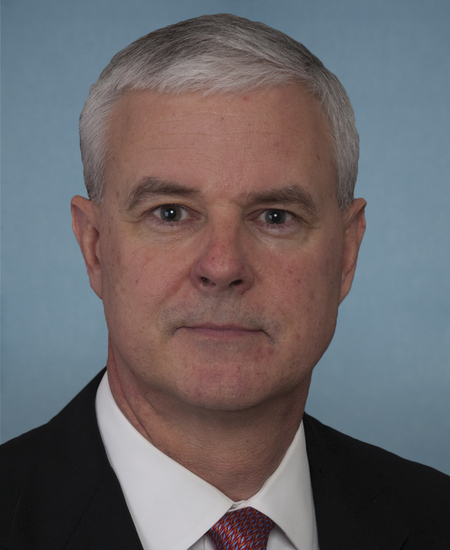
Rep. Steve Womack
Sponsored bills
Maddy summaryThis bill amends tax law to allow charitable organizations to fund collegiate housing projects without losing their tax-exempt status. Specifically, it permits 501(c)(3) charities to make grants for building, improving, or maintaining housing properties where full-time students live, as long as the housing is connected to a college or university. Grants cannot fund fitness facilities, and the bill clarifies that housing must primarily serve students (not incidental social activities). It directly affects charitable organizations and universities seeking tax-qualified funding for student housing infrastructure.
Maddy summaryHR 2630, the Safe Step Act, requires group health plans and health insurance issuers to establish a clear, transparent process for patients or their doctors to request exceptions to medication step therapy protocols. These protocols typically force patients to try cheaper drugs first before covering more expensive alternatives. The bill mandates that plans must approve exceptions when prior treatments failed, delay would cause serious harm, a treatment is unsafe, or a patient is stable on a previously approved drug, with strict 72-hour (or 24-hour in emergencies) decision timelines. It also requires plans to publish the exception process online and limit documentation requests to only necessary medical information. This law directly affects health insurers, employers offering health plans, and patients using step therapy for prescription drugs.
Maddy summaryHR 2620, the Federal Firearms Licensee Protection Act of 2023, increases penalties for crimes targeting firearms licensees. It amends Section 924 of Title 18 to impose mandatory minimum sentences of 3 years for burglaries or 5 years for robberies committed at the business premises of licensed firearms dealers, manufacturers, or importers. The bill specifically targets violations of Section 922(u), which prohibits unauthorized access to these premises, and adds "attempts to do so" to the penalties. This directly affects licensed firearms businesses by strengthening legal protections against theft or violence at their locations. The law creates clearer, harsher consequences for crimes committed during burglaries or robberies at these specific business sites.
Maddy summaryHR 1839, the Combating Illicit Xylazine Act, makes the illicit use and distribution of xylazine a federal crime by adding it to the Controlled Substances Act. The bill broadly defines xylazine to cover numerous chemical variants and prohibits human use or non-licit distribution, while preserving legitimate veterinary and pharmaceutical uses. It requires tracking xylazine in drug supply chains and mandates two reports to Congress within 1 and 4 years on its prevalence, sources, and whether it should be rescheduled. The bill directly affects individuals distributing or using xylazine illicitly, including as an additive to drugs like fentanyl, and aims to address its public health risks. Congress declared illicit xylazine an "emerging drug threat" under existing law.
Maddy summaryHR 2539 permanently extends the New Markets Tax Credit (NMTC) program, which incentivizes private investment in low-income communities. The bill directly affects community development financial institutions (CDFIs) and investors who fund projects in designated low-income areas by ensuring the credit remains available beyond 2025. Key provisions include automatically adjusting the credit amount annually for inflation starting in 2024 and clarifying that the credit can be used to offset alternative minimum tax liability. This maintains the program’s effectiveness in channeling capital to underserved neighborhoods without changing eligibility or funding levels.
Maddy summaryThis bill, HR 2451 (Freedom of Association in Higher Education Act of 2023), prevents colleges receiving federal funds from punishing students or single-sex social organizations (like fraternities/sororities) solely because of their single-sex membership policies. It prohibits actions such as denying housing, scholarships, or leadership roles, or forcing students to waive these protections as a condition of enrollment. The law does not require colleges to recognize such groups, nor does it block disciplinary action for misconduct unrelated to membership (e.g., academic issues). It directly affects students in single-sex organizations and institutions participating in federal student aid programs under Title IV.
Maddy summaryHR 1818, the Aviation Workforce Development Act, expands tax-advantaged savings plans (529 plans) to cover costs for specific aviation training programs. It allows funds from these plans to pay for tuition, fees, and required materials at FAA-certified aviation maintenance technician schools (Part 147) or commercial pilot training programs (Part 61 or 141). This directly affects students pursuing careers as aircraft maintenance technicians or commercial pilots by making these training costs more affordable through existing tax-advantaged savings. The bill amends the tax code to include these programs under "qualified higher education expenses" for 529 plan distributions.
Purple Heart Freedom to Work Act This bill increases the monthly income limit that is used to determine whether certain Purple Heart recipients are eligible for Social Security Disability Insurance (SSDI) benefits. Specifically, when making such determinations with respect to Purple Heart recipients who are entitled to SSDI benefits based on combat-related injuries, the Social Security Administration must use the limit that applies to individuals who are blind rather than the lower limit that applies to other SSDI recipients. In addition, the bill phases out SSDI benefits for these Purple Heart recipients, with benefits reduced by $1 for every $4 of earnings in excess of the limit.
Maddy summaryHR 314, the FORCE Act, prohibits the President or Secretary of State from removing Cuba from the U.S. list of state sponsors of terrorism. It requires the President to first make a specific determination under the 1996 LIBERTAD Act before Cuba can be removed. The bill directly affects Cuba (by maintaining its current designation) and the executive branch (by restricting their authority to remove the designation). This is a procedural bill focused on preserving Cuba's current status on the terrorism list until the specified conditions are met.