

Maddy summaryThis bill creates a new tax credit for expenses related to "qualified access technology for the blind" under the Internal Revenue Code. It allows taxpayers to claim a credit of up to $2,000 per year (adjusted for inflation) for costs paid for hardware, software, or IT that converts visual information into formats usable by blind individuals, covering the taxpayer, their spouse, or a dependent who is blind. The credit is limited to $2,000 over any three consecutive tax years per blind individual and expires after 2028. It directly affects blind individuals and their families who purchase qualifying assistive technology. The credit cannot be claimed for expenses already covered by other tax deductions or credits.
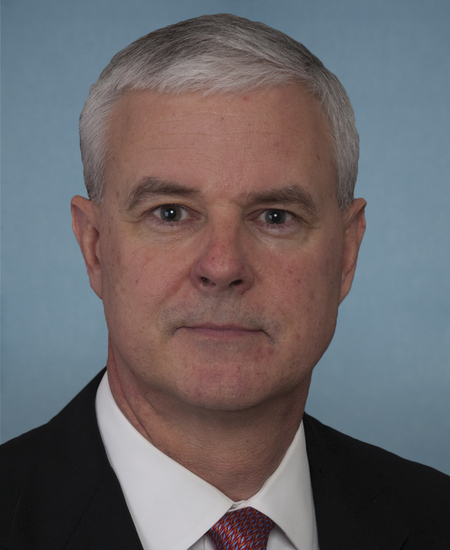
Rep. Steve Womack
Sponsored bills
Maddy summaryHR 3408, the DRIVE Safe Integrity Act of 2023, establishes reporting requirements for a pilot program allowing 18- to 20-year-old drivers to gain experience in interstate trucking. The bill requires the Transportation Secretary to provide quarterly reports to Congress on program participation, including numbers of applicants, approved participants, and reasons for removals or withdrawals. It outlines specific apprenticeship requirements including 120-hour and 280-hour probationary periods with performance benchmarks for driving skills, and mandates that apprentices drive vehicles equipped with specific safety technologies while accompanied by experienced drivers. The bill ensures employers cannot allow drivers under 21 to operate commercial vehicles in interstate commerce without participating in the approved apprenticeship program. This legislation aims to address the truck driver shortage by creating a structured pathway for younger drivers while maintaining safety standards.
Maddy summaryThis bill requires that AM radio receivers be included as standard equipment in all new motor vehicles (such as cars and trucks) sold in the United States, with a rule to be issued by the Department of Transportation within one year. The rule must ensure AM radio is easily accessible on the dashboard and allows manufacturers to use digital AM radio technology instead of traditional AM. During the one-year period between the bill's enactment and the rule's effective date, manufacturers must clearly label vehicles without AM radio. The bill also directs a study to evaluate whether an alternative system could deliver emergency alerts as reliably as AM radio across the country, especially during crises.
Maddy summaryHR 3442, the America’s CHILDREN Act of 2023, creates a pathway to permanent residency for certain college graduates who entered the U.S. as children on specific work visas. It directly affects individuals who were lawfully present as dependents of nonimmigrant visa holders (like H-4 or L-2) for at least 8 years, graduated from a U.S. college, and have lived in the U.S. for 10+ years total. Key provisions include protecting applicants from "aging out" of eligibility by basing age calculations on when their parent’s visa petition was filed (not current age), and allowing them to retain their original visa application date ("priority date") if they later switch to a different visa category. The bill aims to provide stability for young adults who grew up in the U.S. but face immigration barriers due to visa status.
Maddy summaryThe ACRE Act of 2023 amends the tax code to exclude interest income from certain rural and agricultural loans from taxable income for eligible lenders. It directly affects banks, savings associations, and their wholly-owned entities that provide qualified loans secured by rural or agricultural real estate, including single-family homes in designated rural areas (with a $750,000 loan balance cap) or aquaculture facilities. The key provision allows these lenders to exclude interest earned on qualifying loans from their gross income, effectively reducing their tax liability on such lending activity. The bill applies to loans made after its enactment date and aligns with existing definitions of rural property from the Agricultural Credit Act of 1987.
Maddy summaryThis bill establishes a Space National Guard as part of the organized militia in states, territories, Puerto Rico, and D.C. where the Space Force operates, creating two distinct components: state-level "Space National Guard" forces and a federal "Space National Guard of the United States" that serves as the Space Force's reserve component. It defines these terms in federal law, clarifies their structure (including personnel requirements and status when not on active duty), and requires implementation within 18 months, with annual congressional briefings on progress. The bill does not create new missions or funding but formalizes existing National Guard roles within the Space Force framework.
Maddy summaryHR 3011 establishes a 15-member task force within the Department of Defense to review and assess mental health services for active-duty military members, reservists, and their families. The task force, requiring half DOD personnel (including service surgeons and family members) and half external experts (like VA and SAMHSA staff), must submit a report within 12 months detailing improvements needed in areas like access to care, telehealth, reducing stigma, and transitioning care to veterans' services. The report will include specific recommendations for legislative or administrative changes, followed by annual progress reports to Congress over five years on implementing those recommendations. This bill creates a review mechanism but does not directly change existing mental health programs or funding.
Maddy summaryThe Employee Rights Act (HR 2700) amends key labor laws to strengthen employee rights in collective bargaining and privacy. It requires employers to use secret ballot elections for selecting bargaining representatives and to provide labor organizations with voter lists containing employee names and one form of contact information (chosen by the employee) within two business days of an election. The bill prohibits employers from using employee personal information for non-organizing purposes and mandates written authorization for using union dues on non-bargaining activities, with authorizations expiring after one year. Additionally, it clarifies joint employment standards to prevent misclassification and adds tribal sovereignty protections to labor law definitions.
Maddy summaryHR 2826, the Save Local Business Act, clarifies when multiple businesses can be held jointly responsible for labor laws. It amends the National Labor Relations Act and Fair Labor Standards Act to state that a business is only a joint employer if it directly controls key employment terms like hiring, pay, schedules, or discipline for another business's workers. This directly affects franchisors, contractors, and similar business models that might previously have been deemed joint employers under broader interpretations. The bill aims to limit joint employer liability to cases where one business has clear, day-to-day control over essential worker conditions.
Contact Lens Prescription Verification Modernization Act This bill revises the requirements for the verification of prescriptions related to the purchase of contact lenses. Specifically, online sellers of prescription contact lenses must provide consumers with a method to transmit a digital copy of their prescriptions to such sellers. Online sellers also must encrypt protected health information they send by email. Additionally, the bill prohibits any seller of prescription contact lenses from using telephone calls with an artificial or prerecorded voice (i.e., robocalls) to verify a consumer's prescription.