

Maddy summaryHR 5995, the "Have You Served Act," provides grants to states and tribes with veteran suicide prevention plans to fund "Ask the Question Campaigns." These campaigns train human services professionals, local governments, and community providers to respectfully ask clients if they or a loved one served in the military, then connect them to VA resources. The bill authorizes $6 million annually (2026-2030) for up to 25 grants of $200,000 each to support this training and outreach. It directly affects veterans and their families by improving access to VA services through community-based referrals, without changing eligibility for benefits.
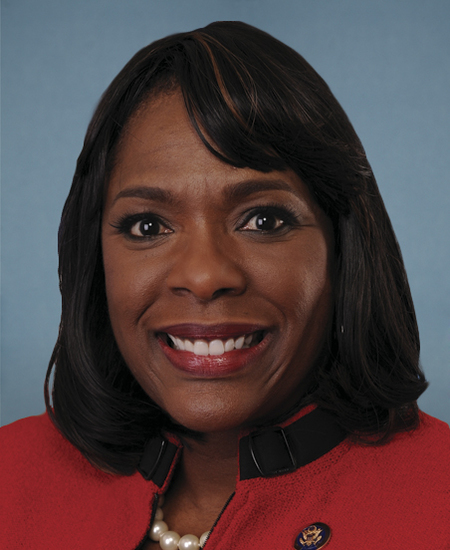
Rep. Terri A. Sewell
Sponsored bills
Maddy summaryHRES 930 is a symbolic resolution designating December 8, 2025, as "Jimmy Lai Day" to honor Jimmy Lai's advocacy for free press, religious freedom, and democracy in Hong Kong. It calls on the People's Republic of China and Hong Kong authorities to release Jimmy Lai and other Hong Kong prodemocracy advocates detained under Hong Kong's National Security Law. The resolution does not create new laws or policies but expresses congressional support for Lai's work and condemns the imprisonment of those advocating for Hong Kong's freedoms. It directly affects U.S. diplomatic messaging toward China, not Hong Kong's legal system or residents.
Maddy summaryHR 6446 modifies how U.S. customs officials investigate suspected evasion of antidumping and countervailing duty orders on imported goods. It allows the Commissioner to start an investigation independently if they have evidence of evasion, not just when a complaint is filed. Additionally, importers found to have evaded duties must pay all owed customs fees before they can challenge the decision in court. These changes streamline enforcement and clarify the process for addressing duty evasion.
Maddy summaryHR 6407, the RCORP Authorization Act, authorizes $165 million annually (2026-2030) to fund the Rural Communities Opioid Response Program. This program provides grants to states, tribes, rural health offices, and other eligible entities to expand prevention, treatment, and recovery services for opioid and substance use disorders in rural areas. Funds can support planning, evidence-based service models, and coordination with local communities but cannot be used for real property acquisition. The bill directly affects rural communities facing opioid crises and the organizations delivering care through these grants.
Maddy summaryHRES 919 is a non-binding resolution commemorating World AIDS Day (December 1) and supporting global efforts to end the HIV/AIDS epidemic. It encourages achieving "zero new HIV transmissions, zero discrimination, and zero AIDS-related deaths" by 2030, promotes awareness of U=U (Undetectable=Untransmittable) treatment, and urges continued U.S. funding for HIV prevention, treatment, and research programs domestically and globally. The resolution does not create new laws but symbolically affirms support for existing initiatives like PEPFAR and the Ryan White CARE Act, while highlighting disparities affecting communities of color, transgender individuals, and people in the Southern U.S.
Maddy summaryHR 6358, the Veteran Education Empowerment Act, creates a federal grant program to help colleges establish or improve dedicated Student Veteran Centers. These centers provide veterans, active-duty service members, and their families with lounge space, benefits counseling, academic support, and mental health services. Institutions must serve significant numbers of veterans and have sustainability plans to qualify for grants, with funding capped at $500,000 per institution over four years. The bill directly affects colleges serving veterans and aims to address challenges like isolation and transition difficulties through centralized campus support.
Maddy summaryThis bill creates a pilot program providing development loans to beginning farmers and ranchers for long-term capital investments that benefit their operations for more than one year, such as equipment, soil health improvements, or business setup. Loans are capped at $100,000 with interest rates of 0-3% and repayment terms of 3-10 years, requiring borrowers to complete training on farm management, bookkeeping, and risk planning. The program aims to address current limitations where beginning farmers face under-investment due to existing annual operating loans. The Secretary of Agriculture must evaluate the pilot and report biennially to Congress on its outcomes.
Maddy summaryThis bill updates procedures at the U.S. Tax Court. It gives judges more power to issue subpoenas before hearings to help settle tax disputes, allows special trial judges to handle additional cases and address contempt (with penalties limited to Class C misdemeanor fines), and requires judges to recuse themselves if conflicts arise. It also clarifies that the court can delay filing deadlines when physical or online filing locations are inaccessible, extending deadlines by 14 days beyond the period of unavailability. These changes apply to current and future tax cases heard by the Tax Court.
Give Kids a Chance Act of 2025 This bill expands the Food and Drug Administration’s (FDA’s) authority with respect to research on rare pediatric diseases, including by permitting the FDA to take enforcement action against drug sponsors that fail to satisfy pediatric study requirements and by reauthorizing programs that support pediatric research. Specifically, the bill modifies requirements relating to molecularly targeted pediatric cancer investigations to permit research on new drugs in combination with active ingredients that have already been approved, provided certain conditions are met; permits the FDA to take enforcement action against drug sponsors that fail to comply with pediatric study requirements, if such sponsors demonstrated a lack of due diligence in satisfying the requirement; renews the FDA’s authority to award priority review vouchers to sponsors of new products intended to treat rare pediatric diseases through September 30, 2029; and reauthorizes through FY2027 certain funding for the National Institutes of Health to support priority pediatric research. The bill also provides statutory authority for the FDA’s interpretation of the orphan drug exclusivity period. The bill specifies, consistent with FDA regulations, that the seven-year market exclusivity period for drugs for rare diseases or conditions (i.e., orphan drugs) prohibits the approval of the same drug for the same approved use or indication with respect to the disease or condition. (In Catalyst Pharmaceuticals, Inc. v. Becerra , a court rejected the FDA’s interpretation and held that orphan drug exclusivity extends to all uses or indications for the disease or condition.)
Maddy summaryHR 6323, the Taxpayer Protection and Preparer Proficiency Act, strengthens requirements for tax return preparers by establishing stricter identification number rules and penalties for violations. The bill increases penalties for preparers who fail to use valid identification numbers from $50 to $250 per violation, with annual caps of $50,000 to $75,000. It requires preparers to complete educational programs on ethics, professional responsibility, and tax law, and gives the IRS authority to deny, revoke, or suspend preparer identification numbers for misconduct or incompetence. The bill also establishes a program to help preparers avoid penalties by correcting identification number errors before returns are processed, and requires the IRS to publish annual reports on common errors and reasons preparers face penalties.