Maddy summaryHR 976, the "1071 Repeal to Protect Small Business Lending Act," would repeal data collection and reporting requirements for small business loans under Section 704B of the Equal Credit Opportunity Act. This specifically removes the mandate for financial institutions - especially community banks and credit unions - to track and submit loan data by business characteristics like race or gender. The bill aims to reduce compliance costs for lenders, which its findings argue limit small business access to credit. The repeal would eliminate these reporting obligations and remove references to the requirement from related federal laws.
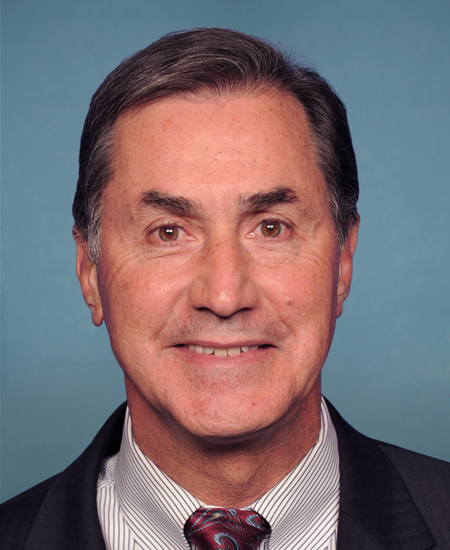
Rep. Gary J. Palmer
Sponsored bills
Maddy summaryThis bill provides a 3-year transition period for newly insured banks to meet federal capital requirements, easing compliance for institutions that recently became federally insured. It allows these banks to request temporary deviations from approved business plans, with regulators required to respond within 30 days (or the request is automatically approved). Small rural banks with less than $10 billion in assets located in rural areas receive a lower 8% leverage ratio requirement during this transition. Additionally, the bill expands lending authority for certain banks to include agricultural loans and requires a federal study on increasing new bank formations in underserved areas.
Maddy summaryThe MEGOBARI Act (HR 36) is a U.S. legislative proposal that aims to strengthen Georgia's democratic development and Euro-Atlantic integration. It directs the U.S. Secretary of State to suspend the U.S.-Georgia Strategic Partnership Commission until Georgia meets specific democratic standards, including respecting citizens' democratic wishes and advancing EU/NATO membership. The bill establishes potential sanctions against Georgian officials who block Euro-Atlantic integration or undermine Georgia's sovereignty, requiring the President to determine if officials have engaged in significant corruption or actions against Georgia's territorial integrity. Additionally, it mandates reports on Russian intelligence assets in Georgia and a 5-year U.S. strategy for bilateral relations, with the Act set to sunset after 5 years from enactment.
Maddy summaryThe SALUTE Act establishes a 5-year pilot program to provide supplemental insurance for military members and their TRICARE-eligible dependents who face uncovered cancer-related costs. It requires the Secretary of Defense to partner with up to two insurance companies to offer fixed indemnity plans that pay direct cash benefits for cancer screening, diagnosis, and treatment expenses not covered by standard military health benefits. These plans must operate separately from existing coverage, be available through TRICARE's online portal, and be funded entirely by enrollee premiums with no government subsidies. The program targets active-duty service members (Army, Navy, Marine Corps, Air Force, Space Force) and their TRICARE-enrolled dependents facing out-of-pocket cancer costs.
Maddy summaryHR 2953, the ALERT Act, requires federal agencies to submit monthly reports to the Office of Information and Regulatory Affairs (OIRA) detailing upcoming rules. Agencies must include summaries, cost estimates (categorized in $50 million increments), job impact assessments, and scientific information for rules expected to be finalized within 12 months. OIRA publishes this data monthly online and annually in the Federal Register, including a yearly analysis of agency rulemaking costs and job effects. Rules cannot take effect until 6 months after the required information is publicly available, with limited exceptions for emergencies or national security.
Maddy summaryThis resolution (HRES 330) honors Volkert, Inc. for its 100th anniversary and century of engineering service to Alabama and the U.S. It recognizes the company’s historical contributions, including designing major infrastructure like the Mobile Bay Causeway, Lake Pontchartrain Causeway, and Alabama’s Cochrane Africatown Bridge, as well as its role in economic development. The resolution directs the House to send a copy to Volkert’s leadership (CEO Thomas Hand and COO Leon Barkan). As a ceremonial resolution, it has no legal effect or policy changes.
Maddy summaryThis bill phases out federal tax credits for electricity generated from wind and solar power over a four-year period. It reduces the clean electricity production credit to 80% in the first year after enactment, 60% in the second, 40% in the third, and 20% in the fourth, ending at 0% after that. Similarly, it phases out the clean electricity investment credit for qualifying solar and wind facilities based on when they begin operation. These changes directly affect renewable energy producers and developers who currently claim these tax credits under the Internal Revenue Code. The bill takes effect for electricity produced or facilities placed in service after enactment.
Safeguard American Voter Eligibility Act or the SAVE Act This bill requires individuals to provide documentary proof of U.S. citizenship when registering to vote in federal elections. Specifically, the bill prohibits states from accepting and processing an application to register to vote in a federal election unless the applicant presents documentary proof of U.S. citizenship. The bill specifies what documents are considered acceptable proof of U.S. citizenship, such as identification that complies with the REAL ID Act of 2005 that indicates U.S. citizenship. Further, the bill (1) prohibits states from registering an individual to vote in a federal election unless, at the time the individual applies to register to vote, the individual provides documentary proof of U.S. citizenship; and (2) requires states to establish an alternative process under which an applicant may submit other evidence to demonstrate U.S. citizenship. Each state must take affirmative steps on an ongoing basis to ensure that only U.S. citizens are registered to vote, which shall include establishing a program to identify individuals who are not U.S. citizens using information supplied by certain sources. Additionally, states must remove noncitizens from their official lists of eligible voters. The bill allows for a private right of action against an election official who registers an applicant to vote in a federal election who fails to present documentary proof of U.S. citizenship. The bill establishes criminal penalties for certain offenses, including registering an applicant to vote in a federal election who fails to present documentary proof of U.S. citizenship.

Maddy summaryHR 2793, the Retirement Freedom Act, allows Medicare Part A beneficiaries to voluntarily opt out of the program. Individuals who choose to opt out can later rejoin Medicare Part A without penalty or additional requirements, and they will not be required to give up Social Security benefits (Title II) to make this choice. The bill also ensures beneficiaries won't have to repay Medicare Part A payments received before opting out. This change directly affects current Medicare Part A enrollees who wish to explore alternative health coverage options.
Maddy summaryHR 2777, the S-CAP Act of 2025, amends the Internal Revenue Code to increase the maximum number of shareholders allowed for a business to qualify as an S corporation from 100 to 250. This change directly affects small businesses that currently exceed the 100-shareholder limit, allowing them to maintain S-corporation tax status. The key provision modifies Section 1361(b)(1)(A) of the tax code, with the new limit applying to taxable years beginning after December 31, 2025. The bill makes no other changes to S-corporation rules and focuses solely on expanding the shareholder cap.