

Maddy summaryH.J.Res. 88 disapproves an Environmental Protection Agency (EPA) rule that would have allowed California to enforce its "Advanced Clean Cars II" vehicle emission standards. This rule, submitted by the EPA on January 6, 2025, sought to grant California a waiver to override federal preemption for its stricter vehicle pollution controls. The resolution, passed by Congress and signed into law on June 12, 2025, formally nullifies the EPA rule, preventing California from implementing its Advanced Clean Cars II program under this specific waiver. The bill directly affects California's ability to set its own vehicle emission standards for passenger cars and light trucks.
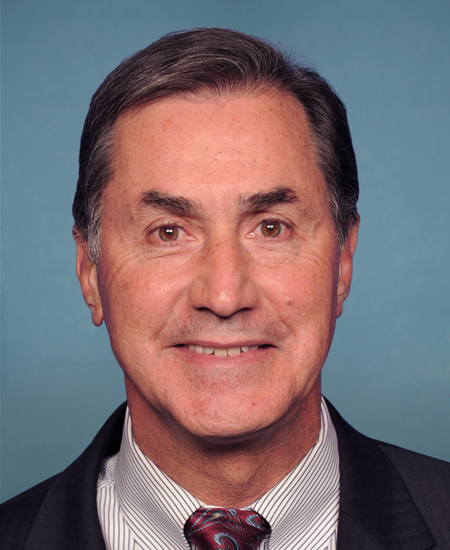
Rep. Gary J. Palmer
Sponsored bills
Maddy summaryHJRES 89 is a congressional disapproval resolution that blocks an Environmental Protection Agency (EPA) rule concerning California's vehicle and engine pollution standards. The resolution specifically targets the EPA's "Omnibus Low NOX Regulation" and waiver of preemption, which would have allowed California to enforce stricter emissions rules. By disapproving this rule under Chapter 8 of Title 5 U.S. Code, Congress has nullified the EPA's action, meaning the regulation will have no legal effect. This directly affects the EPA's authority to approve California's state-level pollution control standards for motor vehicles.
Maddy summaryThis bill prohibits male students from participating in athletic programs at the U.S. Military Academies (West Point, Annapolis, and Air Force Academy) designated exclusively for women or girls. It allows males to train with such teams only if no female athlete loses a roster spot, competition opportunity, scholarship, or other benefit. The bill defines "sex" as biological sex at birth and clarifies that "athletic programs" include all team-based activities requiring participation. It directly affects the women's sports teams at these three service academies and their eligibility rules.
Maddy summaryThis bill, titled "Make DOGE Permanent Act," amends the Federal Funding Accountability and Transparency Act of 2006 to provide Members of Congress (Senators and Representatives) with real-time access to federal award data. It requires the Office of Management and Budget to create a secure, separate online link for Congress to view updated information on federal spending, including payments to individual recipients and federal employees. The website must update in real time for this access, and the link must be established within six months of enactment. The bill directly affects congressional oversight capabilities but does not change public access to the same data.
Maddy summaryHR 3688, the Protecting Children from Experimentation Act of 2025, prohibits healthcare professionals from performing or aiding gender transition procedures on minors (under age 18) when the procedure involves interstate commerce (e.g., travel, payments, or communications across state lines). The bill defines "gender transition procedures" broadly to include hormonal treatments and surgeries like puberty blockers, hormone therapy, and genital reconstruction, but excludes medically necessary care for disorders of sex development, precocious puberty, or life-threatening conditions. Healthcare providers violating this prohibition face criminal penalties of up to five years in prison or fines, while minors cannot be prosecuted for receiving such procedures. The law explicitly targets providers, not parents or minors, and includes specific medical exceptions to avoid restricting standard care for qualifying health conditions.
Maddy summaryHJRES 61 is a congressional resolution that formally disapproves an Environmental Protection Agency (EPA) rule setting new air pollution standards for rubber tire manufacturing. It directly affects tire manufacturers by blocking the EPA’s proposed rule (published November 29, 2024), which would have required them to meet specific limits on hazardous air pollutants. The resolution’s key mechanism is a formal congressional vote to nullify the rule, making it legally ineffective under Title 5, U.S. Code. This action stops the EPA rule from taking effect without creating new regulations.
This joint resolution eliminates new, more stringent energy conservation standards for commercial refrigerators, freezers, and refrigerator-freezers. Under the joint resolution, such equipment is no longer required to comply with the new standards. Specifically, the joint resolution nullifies the rule titled Energy Conservation Program: Energy Conservation Standards for Commercial Refrigerators, Freezers, and Refrigerator-Freezers and published by the Department of Energy's Office of Energy Efficiency and Renewable Energy on January 21, 2025. Under the rule, the office adopted new energy conservation standards for commercial refrigeration equipment to achieve the maximum improvement in energy efficiency that is technologically feasible and economically justified. The rule required the equipment to comply with the those standards by January 22, 2029.
Maddy summaryH.J.Res. 24, enacted May 9, 2025, disapproves a Department of Energy (DOE) rule establishing energy efficiency standards for walk-in coolers and freezers. This resolution, passed under the Congressional Review Act, blocks the rule (published December 23, 2024) from taking effect, meaning the DOE’s proposed standards will have no legal force. The action directly affects commercial food equipment manufacturers and businesses using such cooling systems by preventing the implementation of new energy conservation requirements.
Maddy summaryThis resolution blocks a Department of Energy rule that would have set new energy efficiency standards for gas-fired instant water heaters. It prevents the rule from taking effect, meaning appliance manufacturers would not have to meet the proposed efficiency requirements. The rule, submitted in December 2024, directly affected manufacturers of these water heaters and consumers purchasing them. Congress approved this disapproval through a joint resolution passed on May 9, 2025.
Maddy summaryHR 3228, the Constitutional Hearing Protection Act, reclassifies firearm silencers as firearms under federal tax law and eliminates their separate registration under the National Firearms Act. It requires the Attorney General to destroy all existing federal silencer registration records within one year and preempts state laws that impose taxes, registration, or recordkeeping requirements on silencers. The bill defines "firearm silencer" and specifies that manufacturers must mark silencers on a "keystone part" with a serial number. This directly affects silencer owners, manufacturers, and state governments by standardizing federal regulation and removing state-level restrictions.