

Supplemental Oxygen Access Reform Act of 2025 or the SOAR Act of 2025 This bill establishes certain requirements with respect to the payment and provision of supplemental oxygen and related services under Medicare. For example, the bill provides for separate payments, indexed to inflation, of oxygen and related equipment, supplies, and services under Medicare (rather than under the competitive acquisition program). It also specifically covers services that are provided by respiratory therapists under Medicare and provides for an additional payment adjustment for these services. Additionally, the bill (1) requires the Centers for Medicare & Medicaid Services to develop an electronic template for providers to use when prescribing oxygen and related equipment, supplies, and services; and (2) establishes certain rights for beneficiaries receiving these items and services, such as the right to choose their suppliers and to receive clear communications and be informed about the services provided.
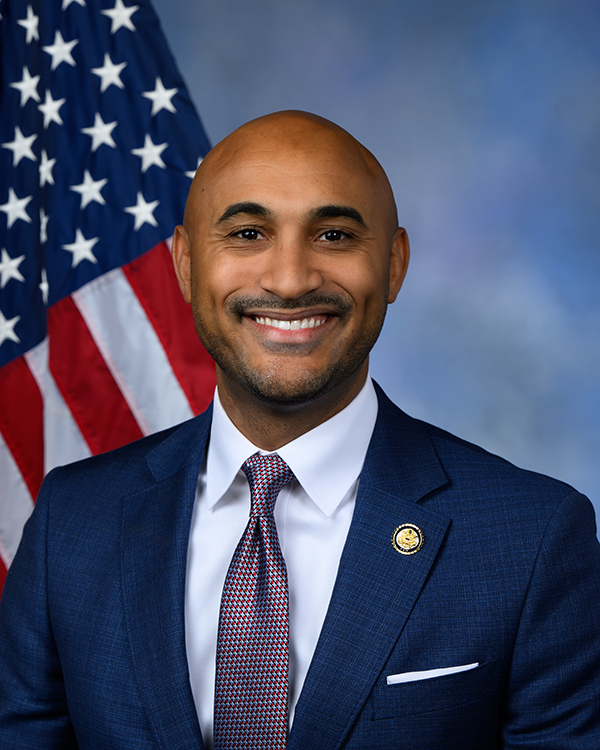
Rep. Shomari Figures
Sponsored bills
Maddy summaryThe Community First Act provides federal grants to local governments and community partnerships to reduce jail populations and shorten pretrial stays. It funds planning grants ($100,000 for 1 year) and implementation grants ($500,000-$3 million over 6 years) for evidence-based strategies like expanding pretrial services, reducing cash bail, and creating non-incarceration diversion programs. Grantees must achieve specific annual jail reduction targets (5% in year one, 50% by year six) while addressing racial/ethnic equity disparities in incarceration data. The bill directly affects communities with high local jail rates, particularly those disproportionately impacted by the justice system, by requiring data-driven reforms and community collaboration.
Maddy summaryThe Adult Education WORKS Act establishes "college and career navigators" who provide personalized guidance to help individuals access education, job training, and workforce development services. These navigators help people identify career paths, connect to financial aid, and develop digital literacy and information literacy skills needed for success in education and employment. The bill requires state and local workforce boards to collaborate with adult education providers to promote these navigator positions and authorizes $135 million annually for library-based and community-based navigator programs. It updates definitions to include digital and information literacy skills as essential components of adult education. The bill directly affects adult education providers, workforce development systems, and individuals seeking to improve their job skills or educational opportunities.
Maddy summaryThe GOSAFE Act prohibits the sale, manufacture, transfer, and possession of gas-operated semi-automatic firearms and large capacity ammunition feeding devices (those holding more than 10 rounds). It defines gas-operated firearms as those that use gas from fired cartridges to cycle the action, requiring the Attorney General to publish a list of prohibited firearms within 180 days. The bill establishes a process for manufacturers to seek approval for new firearm designs before selling to civilians and creates a "Firearm Safety Trust Fund" to cover related costs. Certain firearms are exempt, including single-shot, muzzle-loading, and firearms with permanently fixed magazines holding 10 or fewer rounds. Violations could result in fines up to $5,000 or up to 12 months in prison.
Maddy summaryThe American Family Act (HR 2763) establishes a new refundable child tax credit that provides monthly payments to eligible families with children. It would pay $300 per month for each child under age 6 and $360 per month (120% of $300) for each child age 6 or older, with income limits of $150,000 for joint filers and $112,500 for other filers. The bill creates a "period of presumptive eligibility" to determine eligibility for monthly payments, allowing families to receive advance payments based on information from previous tax returns. This would directly affect millions of families with children who meet the income requirements, providing more consistent financial support throughout the year rather than an annual tax credit.
Maddy summaryHR 2753, the Hands Off Medicaid and SNAP Act of 2025, is a procedural bill that would prevent Congress from using budget reconciliation to cut Medicaid or SNAP benefits. It amends the Congressional Budget Act to block reconciliation bills or amendments that reduce Medicaid enrollment/benefits (under Social Security Act Title XIX) or SNAP eligibility/benefits (under the Food and Nutrition Act of 2008). This rule would apply until January 20, 2029, and only affects the budget reconciliation process, not the programs themselves. The bill does not change current benefit levels or eligibility rules for Medicaid or SNAP recipients.
Maddy summaryThe Raise the Wage Act of 2025 gradually increases the federal minimum wage from $9.50 to $17.00 per hour over six years, with annual adjustments based on median wage growth. It raises the base wage for tipped workers from $6.00 to $17.00 per hour, phasing out their separate minimum wage structure by 2029. The bill also eliminates special minimum wage certificates for disabled workers after 2029, requiring employers to pay the standard minimum wage. These changes apply to most covered workers, including tipped employees and those under 20, with specific transition timelines for each group.
Maddy summaryHR 2740 modifies the boundaries of Talladega National Forest to include specific land shown on a map dated September 6, 2024. The bill authorizes the Secretary of Agriculture to acquire this land through voluntary means - such as purchase, donation, or exchange - using existing land acquisition authorities like the Weeks Law, and requires funds to be used without undue delay. The newly acquired land must be managed as part of the National Forest System under applicable laws and regulations. This change directly affects the forest's geographic scope and landowners within the designated boundary who may sell or donate property.
Maddy summaryThis bill establishes federal minimum standards for collective bargaining rights for public employees and supervisors. The Federal Labor Relations Authority would determine if state laws provide these rights, and if not, would establish them for affected employees. The bill guarantees public employees the right to form unions, bargain collectively, and engage in concerted activities, while requiring public employers to recognize unions and put agreements in writing. It also prohibits strikes or lockouts that would disrupt emergency services. This would apply to public employees in states that don't meet the federal standards for collective bargaining rights.
Maddy summaryHR 2668, the DART Act of 2025, expands federal funding under the Edward Byrne Memorial Justice Assistance Grant (JAG) program to support state and local diversion and rehabilitation programs instead of incarceration. It allows JAG funds to cover pre-arrest diversion, specialty courts, and post-release rehabilitation services, directly affecting local justice systems and individuals facing the criminal justice system. The bill creates a National Diversion and Rehabilitation Clearinghouse to share evidence-based practices, provide technical assistance, and promote trauma-informed approaches. These changes aim to reduce recidivism by addressing root causes like addiction and mental health, shifting focus from incarceration to treatment and community-based solutions.