

Maddy summaryThis joint resolution designates October 2025 as Head Start Awareness Month to symbolically recognize the program's 60-year impact. It highlights Head Start's service to over 40 million children and families nationwide, emphasizing its role in early childhood development, health screenings, and educational support. The resolution serves as a ceremonial acknowledgment of the program's legacy and achievements, not as a policy change or funding measure. It was introduced by multiple representatives to honor Head Start's contributions to child well-being and educational outcomes.
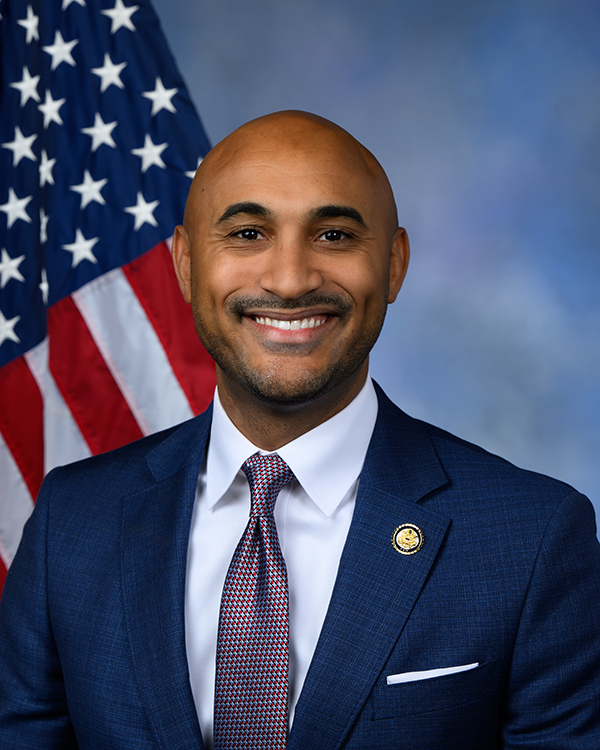
Rep. Shomari Figures
Sponsored bills
Maddy summaryHRES 846 is a symbolic resolution designating October 2025 as National Domestic Violence Awareness Month. It expresses the House's support for raising awareness about domestic violence and its impacts, and calls for continued congressional attention to ending domestic violence through existing programs. The resolution does not create new laws, allocate funding, or directly affect any specific groups - it is purely a statement of support. It references statistics on domestic violence prevalence but focuses on awareness rather than policy changes.
Maddy summaryHR 5876, the Keep America Building Act, prevents federal agencies from using funds to halt construction work under government contracts during budget gaps. It directly affects federal contractors and agencies managing construction projects by requiring them to continue work without interruption if a government funding lapse occurs. The key provision bans the use of federal money to suspend, delay, or stop any part of a project covered by a contract during an appropriations lapse. This ensures continuity for ongoing construction projects without requiring new funding approvals during temporary budget shortfalls.
Maddy summaryHR 5843, the "Shutdown Student Loans for Feds Act," would pause federal student loan payments for eligible federal employees and certain contractors during any government shutdown lasting 14+ days. It prevents interest from accruing on these loans during the pause and counts the paused months toward loan forgiveness eligibility under existing programs. The bill also requires credit agencies to treat paused payments as if they were made on time. This applies to shutdowns occurring in fiscal year 2026 or later, with retroactive effect covering shutdowns starting September 30, 2025, and potential refunds for payments made during those periods.
Maddy summaryHR 5849, the USCP Act, ensures Capitol Police officers continue receiving pay during government shutdowns. It directs funds from the Treasury to cover Capitol Police salaries and expenses if discretionary funding lapses after the bill's enactment. This directly affects U.S. Capitol Police employees, guaranteeing they are paid even when the federal government is partially closed. The bill provides a specific funding mechanism to prevent pay interruptions during shutdowns. It does not alter Capitol Police duties or create new requirements.
Maddy summaryThis bill amends the tax code to allow businesses to claim charitable tax deductions for donating specific food-related equipment to hunger-relief organizations. It creates a new category called "qualified property," covering fully functional food storage equipment (like industrial freezers), transportation vehicles (delivery trucks), and meal preparation tools (industrial ovens, packing machinery). Donors can deduct up to 25% of the equipment's fair market value, with annual limits of $500 for transport equipment and $15,000 for preparation equipment. The changes apply to tax years beginning after December 31, 2025, and only affect donations to organizations whose primary mission is distributing food to people in need.
Maddy summaryThe GRAD Act (HR 5850) prevents colleges from changing or ending a student's enrollment status if federal financial aid under Title IV is delayed due to a government shutdown. It directly affects students receiving federal aid and the institutions that award it. The bill amends the Higher Education Act to require schools to maintain enrollment status during disruptions caused by lapses in government funding. This ensures students aren’t penalized for aid delays beyond their control during shutdowns.
Maddy summaryHR 5816, the HELP FEDs Act, protects federal employees from student loan penalties during government shutdowns. It prevents late fees, additional interest, and credit damage on qualified education loans (like federal student loans) when employees miss payments due to a funding lapse causing government operations to halt. The law requires the Department of Education to coordinate with loan servicers and credit agencies to remove any inaccurate negative credit reports from these missed payments, applying retroactively to shutdowns after October 1, 2025. The bill does not eliminate the need to repay loans but pauses penalties and credit impacts during covered disruptions.
Head Start Shutdown Protection Act of 2025 This bill requires the Department of Health and Human Services to reimburse a state, local government, or school district that uses its funds to maintain participation in the Head Start program or the Early Head Start program during a government shutdown in which there is a lapse in federal appropriations for the programs. The Head Start programs provide comprehensive early childhood education and development services to low-income children. The programs seek to promote school readiness through the provision of educational, health, nutritional, social, and other services.
Maddy summaryHR 5791, the BLOOD Centers Act, creates a 30-day expedited approval process for blood centers seeking to add apheresis collection devices to existing biologics licenses. It directly affects blood centers operating under FDA biologics licenses that already manage multiple locations or hold accredited status. The bill requires the FDA to approve such applications within 30 days unless safety concerns exist at the specific location or the center has systemic safety failures elsewhere. This streamlines the process for expanding blood collection capabilities without compromising safety standards.