

Maddy summaryHR 6575, the CommonGround for Affordable Health Care Act, extends enhanced premium tax credits for health insurance through 2026, directly benefiting millions of lower and middle-income Americans purchasing coverage through the ACA marketplace. The bill modifies income thresholds for premium subsidies, creating new income tiers that maintain or increase financial assistance for households earning up to 1,000% of the poverty level. It includes provisions to prevent fraud in health insurance exchanges by imposing civil penalties on agents and brokers who provide false information, and requires transparency in pharmacy benefit manager contracts to improve drug pricing accountability. The legislation also extends the annual open enrollment period for health insurance exchanges for the 2026 plan year, allowing more time for people to enroll or change coverage.
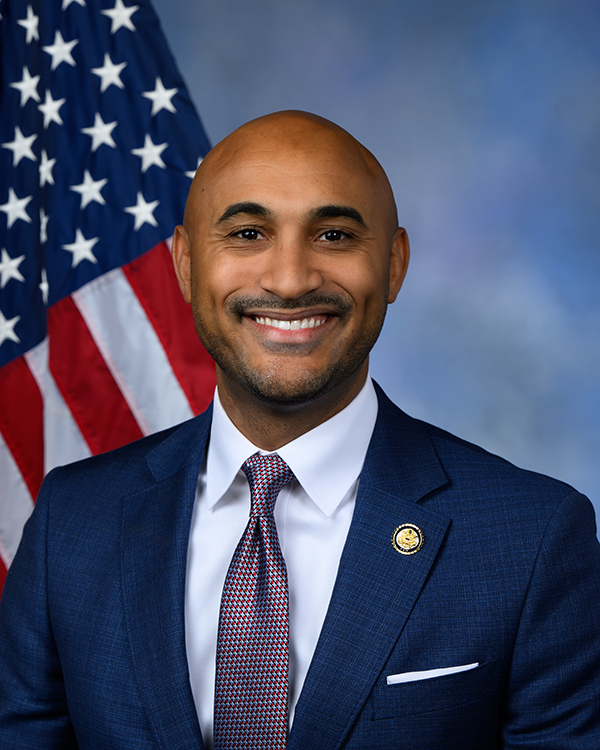
Rep. Shomari Figures
Sponsored bills
Right to Read Act of 2025 This bill expands access to school libraries and literacy skills support for elementary and secondary school students. It also outlines certain constitutional rights and liability protections related to school libraries. Specifically, the bill reauthorizes through FY2030 (1) the Comprehensive Literacy State Development Program, which provides grants to ensure high-quality instruction and effective strategies in reading and writing for children through 12th grade; and (2) the Innovative Approaches to Literacy Program, which provides grants to support the development of literacy skills in low-income communities. Additionally, the bill allows Supporting Effective Instruction State Grants to be used to assist local educational agencies (LEAs) and schools in recruiting, hiring, and retaining state-certified school librarians. Further, the bill authorizes states and LEAs to use Student Support and Academic Enrichment grants for programs and activities that promote the development of digital literacy and information literacy skills. The Department of Education (ED) must direct the National Center for Education Statistics to biennially collect data on school libraries. ED must require an assurance from each state and LEA receiving certain funds confirming that it will (1) protect the First Amendment rights of students in school libraries, and (2) provide equal protection in the conduct of school libraries in compliance with the requirements of the Fourteenth Amendment and nondiscrimination laws. The bill also provides liability protection to teachers, school librarians, school leaders, paraprofessionals, and other staff for actions that conform with state or local policies regarding the right to read.
Maddy summaryThis bill creates two federal grant programs to support medical residency training in rural areas. The first program provides grants to eligible organizations (like rural hospitals, health centers, and medical schools) to establish or expand residency programs where doctors train in rural settings for over half their residency time, focusing on primary care, high-need specialties, or maternal health. The second program funds technical assistance grants to help these organizations apply for and run the training programs. The bill authorizes $12.7 million annually from 2026 to 2030, with grants for the training programs lasting up to 3 years and technical assistance grants up to 4 years.
Maddy summaryHR 6407, the RCORP Authorization Act, authorizes $165 million annually (2026-2030) to fund the Rural Communities Opioid Response Program. This program provides grants to states, tribes, rural health offices, and other eligible entities to expand prevention, treatment, and recovery services for opioid and substance use disorders in rural areas. Funds can support planning, evidence-based service models, and coordination with local communities but cannot be used for real property acquisition. The bill directly affects rural communities facing opioid crises and the organizations delivering care through these grants.
Maddy summaryThe Kidd's Stuttering Act requires Medicaid and CHIP to screen children aged 2-6 for stuttering and speech fluency during routine well-child visits starting January 1, 2027. It also mandates that Medicaid and CHIP cover specified speech therapy services for childhood stuttering (defined as "specified speech therapy services") with coverage rules no more restrictive than those for other speech disorders like language delays. The bill ensures these services include telehealth options and applies to all states administering Medicaid or CHIP. This directly affects children with stuttering who qualify for Medicaid or CHIP, aiming to improve early detection and access to treatment.
Maddy summaryHR 5731, the School Food Modernization Act, provides funding to help schools upgrade facilities and equipment for healthier meal programs. It authorizes $300 million in loan guarantees (covering up to 80% of costs) and $35 million annually for grants to support kitchen renovations, equipment purchases, and food safety improvements for local schools and tribal organizations. The bill also allocates $10 million yearly to fund training programs for school food service staff, developed by third-party organizations, to meet nutrition standards. These provisions directly affect public school districts, tribal schools, and their food service operations by enabling infrastructure upgrades and staff training.
Maddy summaryHR 5716, the FARM SAFE Act, ensures that USDA employees administering key agricultural disaster programs cannot be furloughed or laid off during government shutdowns. It directly affects USDA staff working on programs like crop insurance, livestock aid, and other federal disaster assistance authorized under the Agricultural Credit Act of 1978 and the Agricultural Act of 2014. The bill requires these employees to be treated as "excepted" under federal law during funding gaps, guaranteeing program continuity without requiring new appropriations. This provides immediate stability for farmers relying on disaster relief during federal budget disruptions.
Maddy summaryThis bill creates a pilot program providing development loans to beginning farmers and ranchers for long-term capital investments that benefit their operations for more than one year, such as equipment, soil health improvements, or business setup. Loans are capped at $100,000 with interest rates of 0-3% and repayment terms of 3-10 years, requiring borrowers to complete training on farm management, bookkeeping, and risk planning. The program aims to address current limitations where beginning farmers face under-investment due to existing annual operating loans. The Secretary of Agriculture must evaluate the pilot and report biennially to Congress on its outcomes.
Give Kids a Chance Act of 2025 This bill expands the Food and Drug Administration’s (FDA’s) authority with respect to research on rare pediatric diseases, including by permitting the FDA to take enforcement action against drug sponsors that fail to satisfy pediatric study requirements and by reauthorizing programs that support pediatric research. Specifically, the bill modifies requirements relating to molecularly targeted pediatric cancer investigations to permit research on new drugs in combination with active ingredients that have already been approved, provided certain conditions are met; permits the FDA to take enforcement action against drug sponsors that fail to comply with pediatric study requirements, if such sponsors demonstrated a lack of due diligence in satisfying the requirement; renews the FDA’s authority to award priority review vouchers to sponsors of new products intended to treat rare pediatric diseases through September 30, 2029; and reauthorizes through FY2027 certain funding for the National Institutes of Health to support priority pediatric research. The bill also provides statutory authority for the FDA’s interpretation of the orphan drug exclusivity period. The bill specifies, consistent with FDA regulations, that the seven-year market exclusivity period for drugs for rare diseases or conditions (i.e., orphan drugs) prohibits the approval of the same drug for the same approved use or indication with respect to the disease or condition. (In Catalyst Pharmaceuticals, Inc. v. Becerra , a court rejected the FDA’s interpretation and held that orphan drug exclusivity extends to all uses or indications for the disease or condition.)
Maddy summaryThis bill ensures FEMA can continue disaster relief operations during government funding gaps by authorizing the agency to use existing Disaster Relief Fund balances. It allows FEMA to process claims and payments for both current and future disasters (including individual and public assistance) without interruption, while maintaining necessary staff and contracts. The bill prohibits diverting Disaster Relief Fund money during shutdowns (except for mandatory legal requirements) and explicitly designates FEMA operations as "essential" under the Anti-Deficiency Act to protect life and property. It directly affects disaster victims by preventing aid delays during budget disputes.