

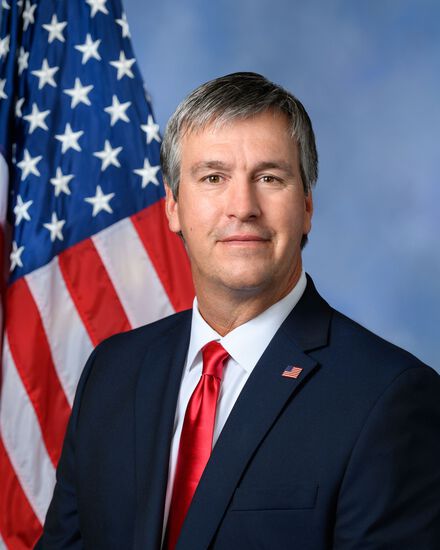
Photo of Barry Moore
R United States House · District 1 · Alabama

Rep. Barry Moore

Compare
Total votes
2,837
all sessions
Attendance
99%
39 missed
Near the chamber average
With party
90%
of cast votes
Lower than 89% of chamber peers
Bipartisan score
5%
crosses aisle rarely
Higher than 87% of chamber peers
Sponsored
1,245
bills & resolutions
Higher than 82% of chamber peers
Committees
8
assignments
1,245 bills and resolutions

Sponsored bills

Total
1,245
Primary
63
Co-sponsor
1,182
This page
1,245
matching current filters
Co-sponsor HR 10248
In committee · Indiana House · Co-sponsor
Weldon Angelos Presidential Pardon Expungements Act

Maddy summaryThis bill would allow individuals who have received a full, unconditional presidential pardon for their criminal offenses to have their official criminal records expunged (removed from public view). It specifically targets people like Weldon Angelos, who was pardoned after serving 13 years for nonviolent marijuana offenses with no prior criminal record. The law would require federal courts to review and expunge records for eligible individuals within two years of enactment, with specific procedures for notification and handling of records. It aims to help pardoned individuals overcome barriers to employment and other opportunities that persist due to their criminal records.

In committee Nov 22, 2024 1 co-sponsor
Co-sponsor HR 10251
In committee · Indiana House · Co-sponsor
End Endless Criminal Statutes Act

Maddy summaryThis bill repeals outdated and rarely enforced federal criminal statutes that impose penalties for trivial or obsolete actions, such as writing a check under $1, wearing postal uniforms, or sledding on Capitol grounds. It specifically targets provisions in the U.S. Code covering offenses like removing postage stamps, selling colored margarine without triangular packaging, or discarding produce without cause. The bill eliminates these specific legal provisions, directly affecting individuals who might otherwise face prosecution under these archaic laws, though such prosecutions are extremely uncommon today. The change streamlines the criminal code by removing provisions with no modern enforcement relevance.

In committee Nov 22, 2024 1 co-sponsor
Co-sponsor HR 10217
In committee · Indiana House · Co-sponsor
Visa Integrity Preservation Act of 2024

Maddy summaryThis bill requires in-person interviews with consular officers for certain non-citizens seeking visas who are currently unlawfully present in the United States. It amends immigration law to explicitly include these individuals under the category requiring such interviews. The key mechanism adds a new provision (subparagraph G) to the existing interview requirement, specifying that applicants who are inadmissible due to prior violations (under sections 212(a)(6) or (9)) must attend an in-person interview. This directly affects non-citizens who entered or remained in the U.S. without authorization and are applying for visas. The bill does not create new inadmissibility grounds but modifies the interview process for this specific group.

In committee Nov 21, 2024 1 co-sponsor
Co-sponsor HR 10186
In committee · Indiana House · Co-sponsor
Protecting Women’s Private Spaces Act

Maddy summaryHR 10186, the Protecting Women’s Private Spaces Act, prohibits access to single-sex facilities (like restrooms, locker rooms, or changing rooms) on federal property unless the user's biological sex matches the facility's intended use. It defines "biological sex" based on reproductive anatomy and function, requiring facilities to correspond with an individual's assigned sex at birth. The bill directly affects users of federal buildings, including those who identify as transgender, by restricting access to facilities aligned with their gender identity rather than their biological sex. Exceptions apply only for emergency medical personnel responding to medical emergencies or law enforcement during active investigations.

In committee Nov 20, 2024 1 co-sponsor
Co-sponsor HR 8706
In committee · Indiana House · Co-sponsor
Dismantle DEI Act of 2024

Maddy summaryHR 8706, the "Dismantle DEI Act of 2024," would prohibit federal agencies from maintaining diversity, equity, and inclusion (DEI) offices, programs, or training by requiring the closure of existing DEI offices within 90 days and banning federal funding for DEI-related activities. The bill defines "prohibited diversity, equity, and inclusion practices" as those that discriminate based on race, color, ethnicity, religion, biological sex, or national origin, or require training that asserts a particular group is inherently superior or inferior. It would rescind several executive orders related to racial equity and gender inclusion, and prohibit the use of federal funds for DEI-related activities across all federal agencies, contractors, and grant recipients. The bill contains limited exceptions for Equal Employment Opportunity offices and disability rights enforcement offices as historically organized and operated.

In committee Nov 20, 2024 1 co-sponsor
Primary HR 8690
In committee · Indiana House · Lead sponsor
Stop Secret Spending Act of 2024

Maddy summaryThe Stop Secret Spending Act of 2024 requires federal agencies to assign unique identifiers to certain contracts (called "other transaction agreements") and post related data publicly within 90 days of the law's enactment. It mandates annual reports on unreported federal spending, detailing total amounts, spending categories (like national security work), and reasons for non-disclosure (e.g., classified projects or legislative branch contracts). These reports must be published on a public website, with the first report due one year after the law takes effect. The bill directly affects federal agencies responsible for managing these contracts, aiming to increase transparency around funding that currently lacks public visibility.

In committee Nov 20, 2024 0 co-sponsors
Co-sponsor HR 6951
In committee · Indiana House · Co-sponsor
College Cost Reduction Act

Maddy summary# Summary of Proposed Higher Education Act Amendments This document outlines significant proposed amendments to the Higher Education Act of 1965, primarily as part of the "College Cost Reduction Act." The key elements include: ## Accreditation Reform - Major overhaul of accreditation standards, requiring accrediting agencies to demonstrate independence from trade associations - New requirements for accrediting agencies to assess student achievement outcomes, including median value-added earnings relative to median total price charged - Introduction of an "Alternative Quality Assurance Experimental Site Initiative" to test non-accredited institutions - Protections for religious institutions, including a new process for appealing accreditation decisions related to religious mission - Removal of "litmus tests" that would require institutions to support specific political viewpoints ## Student Success Initiatives - Establishment of "Postsecondary Student Success Grants" to increase participation, retention, and completion rates for high-need students - Focus on evidence-based practices, with tiered requirements (tier 1, 2, and 3 reforms) - Mandatory inclusion of high-need student populations (low-income, first-generation, military-connected, etc.) - Requirements for institutions to report on completion rates, retention rates, and student demographics ## Regulatory Changes - Repeal of numerous existing regulations including: * Closed school discharges * Borrower defense to repayment * Pre-dispute arbitration * False certification requirements * Ability-to-benefit rules * Financial responsibility regulations - New restrictions on incentive compensation for recruiters - Changes to third-party servicer definitions and regulations ## Transfer and Credit Policies - New requirement that institutions cannot deny transfer credit based solely on the source of accreditation - Requirements for transparent transfer policies - Changes to reverse transfer policies ## Other Key Provisions - Modifications to the National Advisory Committee on Institutional Quality and Integrity (NACIQI) - New definitions for "total price" and "value-added earnings" - Changes to the process for institutions to change accrediting agencies - New requirements for institutions to report on student outcomes The overall focus of these proposed amendments is to reduce regulatory burden on institutions, promote transparency, improve student outcomes (particularly for high-need students), modernize accreditation processes, and protect religious institutions' rights in accreditation decisions.

In committee Nov 18, 2024 1 co-sponsor
Co-sponsor HR 10143
In committee · Indiana House · Co-sponsor
To direct the Administrator of the Federal Emergency Management Agency to transfer certain amounts to the Disaster Relief Fund.

Maddy summaryHR 10143 requires the FEMA Administrator to transfer unspent funds from COVID-19 relief acts and funds that have passed their initial performance period for past disaster declarations into the Disaster Relief Fund. This bill directly affects FEMA's budget management by redirecting leftover government funds that were originally allocated for specific purposes. The key mechanism is a mandatory transfer of these unobligated amounts to the central Disaster Relief Fund, which is used to respond to future disasters. The bill does not create new spending but reallocates existing, unused funds to strengthen the Disaster Relief Fund's available resources.

In committee Nov 15, 2024 1 co-sponsor
Co-sponsor HR 1279
In committee · Indiana House · Co-sponsor
Sunshine Protection Act of 2023

Maddy summaryThe Sunshine Protection Act of 2023 would end the practice of changing clocks twice a year for daylight saving time (DST) by making DST permanent nationwide, unless a state chooses to remain on standard time. It repeals the requirement to switch clocks back to standard time in the fall, directly affecting all U.S. states and territories that currently observe DST. The bill allows states that previously opted out of DST under the Uniform Time Act (like Arizona and Hawaii) to maintain their current time zone choices without further action. Key provisions include adjusting time zone offset language in existing law and granting states the authority to select either permanent DST or standard time based on their current arrangements. This change would eliminate seasonal time changes for most Americans, though states could still choose to stay on standard time if they prefer.

In committee Nov 14, 2024 1 co-sponsor
Co-sponsor HRES 1566
In committee · Indiana House · Co-sponsor
Honoring the service and sacrifice of America's veterans on Veterans Day, 2024.

Maddy summaryHRES 1566 is a symbolic House resolution honoring all U.S. veterans on Veterans Day 2024. It recognizes the service and sacrifice of the estimated 15.8 million veterans living in the U.S. as of 2023, including those who served in conflicts from World War II to post-9/11. The resolution calls on the American public to observe Veterans Day to acknowledge veterans' role in preserving national freedom. As a non-binding resolution, it has no direct policy impact but formally expresses congressional recognition of veterans' contributions.

In committee Nov 8, 2024 1 co-sponsor
Showing 541 to 550 of 1,245 bills
Previous 1 … 54 55 56 … 125 Next