

Maddy summaryHR 6857 requires all colleges and universities receiving federal funds to prominently display a link to the Department of Education’s civil rights complaint portal on their website homepage and to post annual Title VI awareness materials in high-traffic campus locations (like student centers) and on campus websites. The bill mandates these institutions to annually report discrimination complaints (based on race, color, or national origin) to the Department of Education’s Inspector General. It also requires the Department to provide monthly congressional briefings on complaint volumes and resolution timelines, while the Inspector General must audit institutions with the highest complaint rates and study why some complaints go to schools versus the federal office. This directly affects every federally funded higher education institution in the U.S. by changing how they handle and report civil rights complaints.
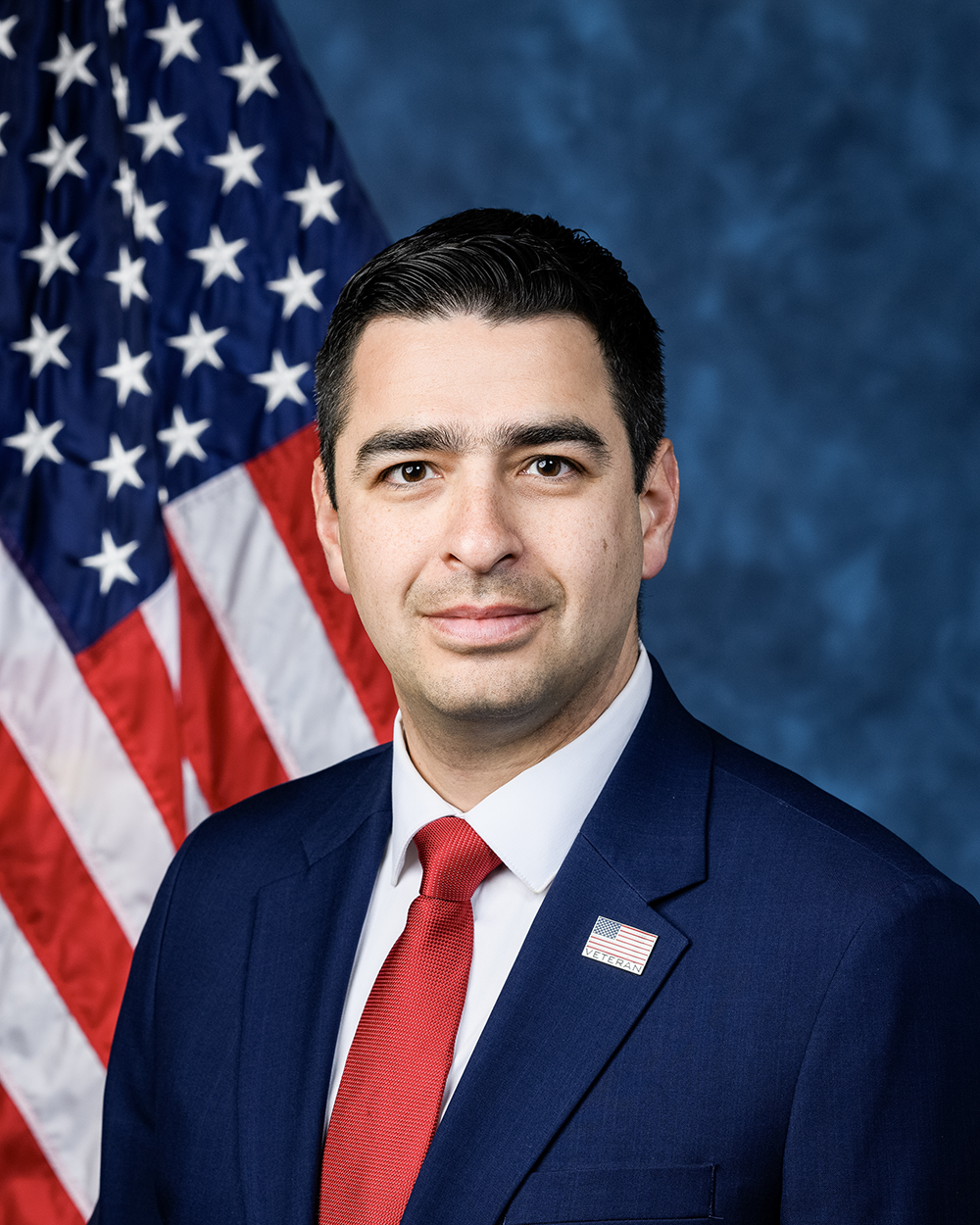
Rep. Gabe Evans
Sponsored bills
Maddy summaryThis bill establishes a new payment system for skin substitute products (materials applied to wounds that remain within the wound bed) under Medicare, setting specific payment amounts and annual updates based on inflation. It requires the creation of a new billing code for these products by January 2026, ensures equal reimbursement regardless of where treatment occurs, and creates oversight for providers with unusually high payments. The bill also directs the FDA to review and potentially streamline approval processes for human tissue-based regenerative medicine products. These changes aim to improve access to advanced wound care while maintaining proper oversight of Medicare payments.
Maddy summaryThe SPEED Act reforms the National Environmental Policy Act (NEPA) to streamline federal environmental reviews for projects. It limits agencies to considering only "proximate" environmental effects directly tied to a specific project (not speculative or distant impacts), sets strict 180-day deadlines for court remands, and restricts judicial review to procedural errors - not environmental outcomes. This primarily affects federal agencies (like the EPA or Corps of Engineers) and project developers (e.g., for infrastructure, energy, or construction projects) by reducing review scope and accelerating approvals. The bill clarifies NEPA is purely procedural, prohibiting courts from substituting their judgment on environmental effects or delaying actions for new scientific data after deadlines.
Maddy summaryThis bill, titled "Pet and Livestock Protection Act," is misleading; it actually focuses on gray wolf management. It requires the Secretary of the Interior to reissue a 2020 rule removing gray wolves from the endangered species list within 60 days of enactment. The bill also prohibits courts from reviewing this reissuance. This directly affects gray wolf populations and management policies in states where wolves are present, shifting regulatory control away from federal endangered species protections.
Essential Caregivers Act of 2025 This bill prohibits certain health care facilities from limiting the access of essential caregivers to residents of those facilities, including during designated emergency periods. Specifically, the bill generally prohibits Medicare skilled nursing facilities, Medicaid nursing facilities, Medicaid intermediate care facilities, and associated inpatient rehabilitation facilities from restricting the access of essential caregivers to residents of the facilities, including during emergency periods in which visitation rights are otherwise restricted. During emergency periods, facilities may restrict access for an initial period of up to seven days and for one additional maximum seven-day period (if the additional period is approved by the state health department). Facilities may restrict access for a total of 7 days (or 14 days with the approval of the state health department) during an emergency period. Essential caregivers must agree to comply with any safety protocols set by the facility, which may be no more stringent for caregivers compared to those for staff. Caregivers who fail to comply with these requirements may be denied access, subject to an appeals process.
Maddy summaryHR 3628, the State Planning for Reliability and Affordability Act, requires states to ensure reliable electricity generation for 10 years by amending the Public Utility Regulatory Policies Act of 1978. It mandates state-regulated electric utilities to include specific reliability measures in their integrated resource planning, defining "reliable generation facilities" as those providing continuous power for 30+ days (with on-site fuel, contracts, or emergency capabilities) and grid support like frequency regulation. States must begin reviewing these standards within one year of the bill’s enactment and finalize determinations within two years. Existing state actions meeting comparable standards before enactment are exempt from these new timelines. The bill directly affects state utility regulators and electric utilities operating under state oversight.
Miracle on Ice Congressional Gold Medal Act This act provides for the award of Congressional Gold Medals to the members of the 1980 U.S. Olympic men's ice hockey team in recognition of the team's achievement at the 1980 Winter Olympic Games.
Maddy summaryHR 6670 creates a new nonimmigrant visa category ("family purpose visas") allowing relatives of U.S. citizens or lawful permanent residents to visit temporarily for family events. It requires applicants to provide proof of financial support, short-term medical insurance covering U.S. travel, and a sworn statement to depart within 90 days per calendar year. The bill restricts petitioners from previously sponsoring relatives who overstayed their visas, and explicitly states that these visits do not count toward permanent residency eligibility. This directly affects extended family members (including grandparents, siblings, and nieces/nephews) seeking short-term U.S. visits for social or major life events.
Maddy summaryHR 6259, the "No Fentanyl on Social Media Act," requires the Federal Trade Commission (FTC) to produce a detailed report within one year of enactment. The report must examine how minors access fentanyl (including pressed pills) through social media platforms, covering sellers' methods, health risks, platform design impacts, and current measures by platforms, law enforcement, and medical professionals. It specifically asks for recommendations to reduce this access and mandates consultation with stakeholders like parents and medical experts. The bill does not ban fentanyl sales or create new penalties; it solely focuses on gathering information to inform future policy.
ePermit Act This bill establishes requirements related to digitizing environmental reviews conducted under the National Environmental Policy Act of 1969 (NEPA). The Council on Environmental Quality (CEQ) must develop, publish, and iteratively update data standards for the collection and curation of certain data related to environmental reviews. CEQ must also design, test, and build prototype tools for environmental reviews. Additionally, CEQ must publish guidance to assist relevant agencies in implementing such standards as well as certain minimum functional requirements, such as data sharing that enables automated transfer of relevant data among federal agencies. Federal agencies responsible for environmental reviews or authorizations must implement the data standards and such minimum functional requirements. To the maximum extent practicable, CEQ and such agencies must iteratively develop and maintain a unified interagency data system consisting of interconnected federal agency systems and shared services for environmental reviews and authorizations, including a common interactive, digital, cloud-based authorization portal. Within a year, CEQ must oversee a pilot of shared services for environmental reviews and authorizations, including the portal. To the maximum extent practicable, CEQ must develop and implement the unified interagency data system by December 1, 2027.