

Maddy summaryThis bill exempts certain less-than-lethal projectile devices from federal sales taxes and National Firearms Act restrictions. It directly affects manufacturers, importers, and producers of these devices, which are defined as non-lethal tools (like rubber bullets or beanbag rounds) designed not to cause serious injury and unable to be easily converted to use standard firearm ammunition. Key mechanisms include a 90-day classification process for manufacturers seeking exemption, an annual public list of approved devices, and annual congressional reports on devices excluded from the exemption. The policy change applies to devices meeting specific safety criteria, such as projectile velocity limits and design features preventing misuse as conventional weapons.
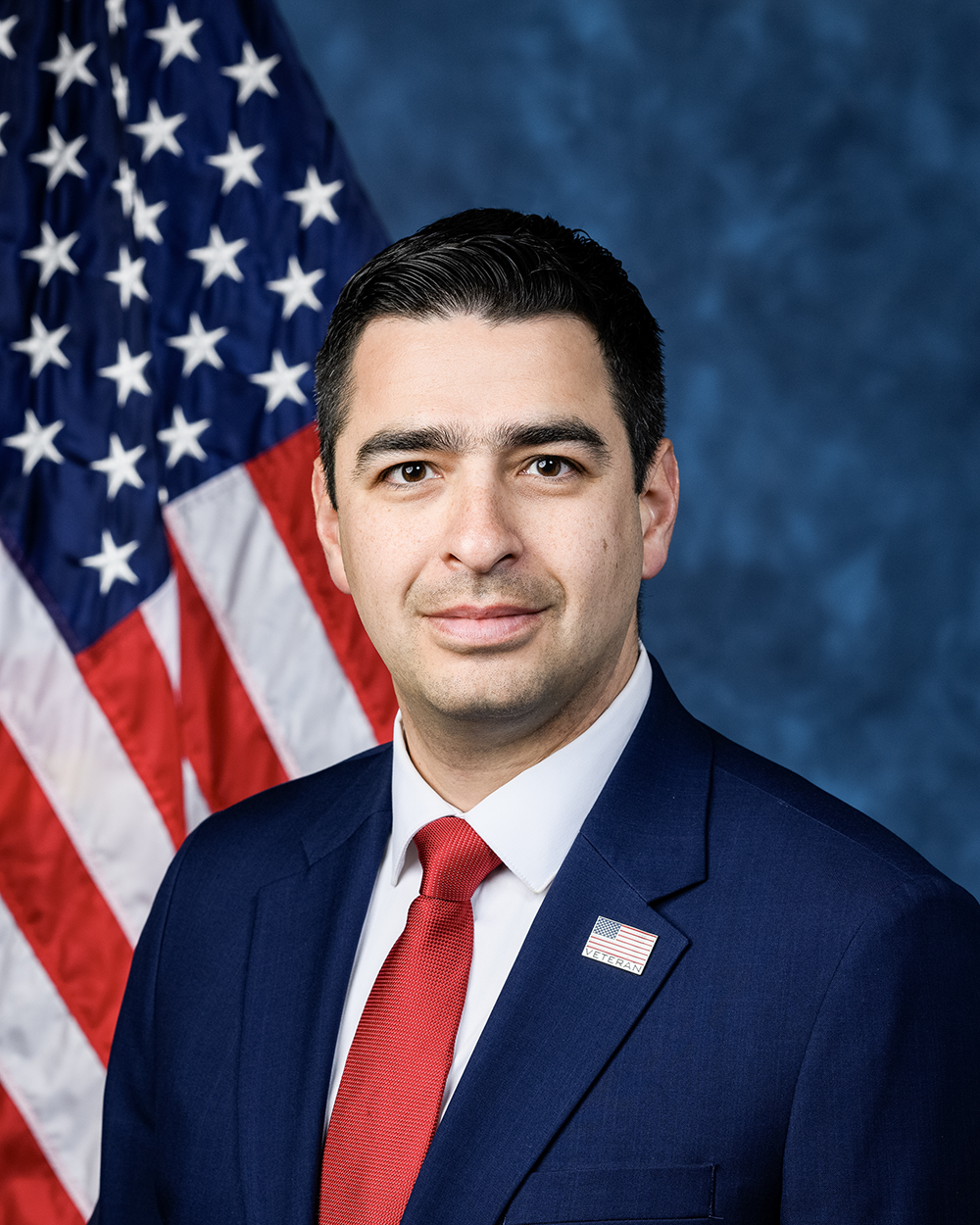
Rep. Gabe Evans
Sponsored bills
Maddy summaryHR 7282, the FRAMER Act, requires states to reimburse builders for the cost difference between their own energy efficiency standards and the Department of Housing and Urban Development’s (HUD) minimum standard for new homes built in Opportunity Zones. It directly affects residential builders in Opportunity Zones (designated tax-advantaged areas) by providing payments for exceeding HUD’s baseline energy requirements. The bill mandates that builders disclose to homebuyers the cost difference covered by the reimbursement and any price reduction tied to the payment. The program expires after 7 years, and the government must report annually on reimbursement amounts and cost differences across states and localities.
Maddy summaryHR 4255, the Enhancing Safety for Animals Act of 2025, would remove the Mexican wolf (Canis lupus baileyi) from the U.S. Endangered Species Act protections. It directly affects ranchers in the Mexican Wolf Experimental Population Area, who report livestock losses and safety concerns, and shifts regulatory authority from the U.S. Fish and Wildlife Service to state and local management. Key provisions include formally delisting the wolf, nullifying two existing federal rules governing the species, and prohibiting future consideration of Mexican wolf populations in Mexico when making ESA decisions. The bill aims to streamline livestock compensation for ranchers by changing evidentiary standards for wolf depredation claims.
Maddy summaryHR 7145 defines "essential health systems" as hospitals serving large numbers of Medicaid and low-income patients, specifically targeting non-Federal, nonprofit, or government-run hospitals that meet one of three criteria for at least two of the past three years (e.g., high Medicaid patient percentage, high uncompensated care, or top 16th percentile in state rankings for low-income care). The bill requires MACPAC to annually publish an "essential health system index" ranking qualifying hospitals nationally, by state, and within local areas, using data from Medicare reporting. Hospitals designated as essential health systems receive a five-year designation, renewable if they maintain eligibility. This framework aims to identify facilities providing critical community care for vulnerable populations through standardized metrics.
Maddy summaryHR 7034 would remove the current $250,000 (single filers) and $500,000 (married couples) tax exclusion limit for capital gains when selling a primary residence. This change would allow all homeowners to exclude their full profit from federal income tax upon selling their main home, regardless of the sale price. The bill amends Section 121 of the Internal Revenue Code to eliminate the dollar caps and adjusts related provisions to reflect this change. It directly affects homeowners who sell their primary residence, making the tax exclusion fully unlimited for qualifying sales after the bill's enactment.
Maddy summaryThe Rural Recovery Act of 2025 establishes a federal technical assistance program to help rural communities recover after federally declared disasters. It directly affects eligible rural communities - defined as census-designated places with under 20,000 residents (or areas waived by the Agriculture Secretary) - that experience disasters covered by the Robert T. Stafford Act. The program provides free support for disaster recovery planning, applying for federal/state funding (e.g., FEMA, Economic Development Administration), addressing application denials, and implementing funded projects, with a focus on infrastructure like water systems, housing, energy, and local facilities. It allocates $50 million annually for 3 years per affected community, with funding distributed based on population impacted, as determined by census data. The assistance period begins when a disaster is declared and may be extended for an additional 3 years on a case-by-case basis.
Maddy summaryHR 4782, the Local Farmers Feeding our Communities Act, establishes a USDA program to connect local farmers with food distribution networks. It requires eligible entities (like state agriculture agencies) to use funds to purchase unprocessed or minimally processed local foods from covered producers - including at least 25% from small-size, mid-size, beginning, or veteran farmers - while providing technical assistance for food safety and supply chains. The bill allocates $200 million annually (2026-2030) from the Commodity Credit Corporation, mandating 10% for Tribal governments and 1% per state before distributing remaining funds. This directly supports regional food security by boosting economic opportunities for local farmers and improving access to fresh, nutritious food through established distribution channels.
Maddy summaryHR 909, the Crime Victims Fund Stabilization Act of 2025, modifies how funds from the False Claims Act are deposited into the Crime Victims Fund. It specifies that from 2025 through 2029, certain False Claims Act proceeds (specifically those for qui tam plaintiff payments and government damage reimbursements) cannot be deposited into the fund. This change directly affects the composition of the Crime Victims Fund by excluding these specific revenue streams during the specified period. The bill does not create new benefits or alter victim services; it only adjusts fund allocation rules for existing False Claims Act revenues.
Maddy summary# Summary of Reserve Component Duty Consolidation Legislation This legislation is a comprehensive revision of military reserve component terminology and definitions throughout the U.S. Code. The primary purpose is to replace the outdated term "inactive duty training" with the more accurate and consistent term "reserve component duty" across all relevant sections of federal law. ## Key Provisions: 1. **Terminology Change**: - Replaces "inactive duty training" with "reserve component duty" in over 50 sections of the U.S. Code (primarily Titles 10, 32, and 37) - Also replaces related terms like "inactive duty" and "inactive duty for training" with "reserve component duty" 2. **Repeals**: - Repeals Chapter 13 of Title 10 - Repeals Sections 10147, 10148, 12406, 12503, 12552 of Title 10 - Repeals Sections 114, 115, and 328 of Title 32 3. **Definition Updates**: - Creates new definitions for "reserve component duty" and "remote assignment" in Title 10 - Defines "Active Guard and Reserve functions" more precisely - Clarifies that reserve component duty includes: * Training as described in sections 552(a) and 553(a) of Title 32 * Support activities authorized for members of the reserve components * Duty prescribed under sections 543 of Title 32 4. **Transition Provisions**: - Establishes a 10-year transition period from the date of enactment - Allows for earlier implementation if all relevant departments (Defense, Homeland Security, Veterans Affairs) certify readiness - Provides for early TRICARE eligibility for members ordered to active duty or full-time National Guard duty 5. **Conforming Amendments**: - Makes numerous technical changes to ensure consistent terminology throughout the U.S. Code - Updates references to training requirements, pay, and benefits to reflect the new terminology This legislation represents a significant effort to modernize military reserve component terminology, eliminate confusing and outdated references, and create a more consistent framework for understanding and managing reserve component service obligations and benefits.
Maddy summaryHR 6968, the *Immersive Technology for the American Workforce Act of 2025*, provides $50 million annually (2026-2035) for federal grants to fund training programs using virtual reality, augmented reality, and similar immersive technologies. The bill directly affects eligible entities like community colleges, industry partnerships, and career schools that create career pathways for workers in high-demand fields, including veterans, individuals with disabilities, and those in rural areas or declining industries. Key provisions require grantees to align programs with state workforce plans, report on participant outcomes, and prioritize partnerships with employers hiring program graduates. The law aims to expand access to tech-enhanced training for economic self-sufficiency, with grants lasting up to 5 years and requiring public sharing of best practices.