

Maddy summaryThis bill creates a federal grant program to help states and tribal governments improve their licensing systems for firearms dealers. To qualify for funding, a state or tribe must already require dealers to hold a license, pass an application process, renew their license every three years, and submit to inspections. If a dealer breaks the rules, the state must be able to suspend or revoke their license and impose fines or criminal charges. The Attorney General will award up to $2.5 million per year in competitive grants to eligible applicants who submit plans for developing or improving these programs. Recipients must report annually on the number of inspections, violations, and licenses issued, renewed, or revoked, while the Attorney General will provide a public report on all grants awarded and denied.
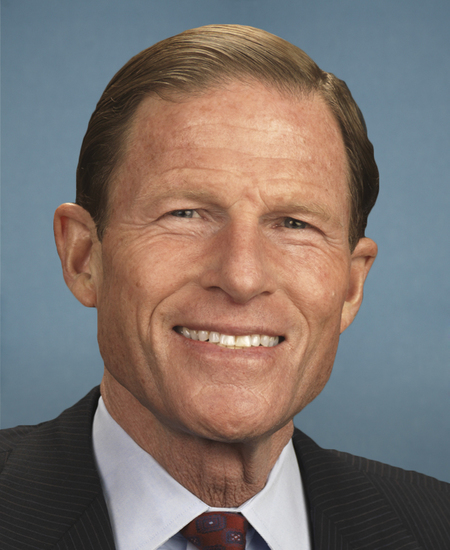
Sen. Richard Blumenthal
Sponsored bills
Maddy summaryThe Reproductive Health Travel Fund Act of 2026 authorizes $350 million over five years to provide grants to nonprofit organizations for covering travel and practical support costs associated with accessing abortion services. These funds can be used for round-trip transportation, lodging, meals, childcare, translation services, and other logistical needs, but they explicitly cannot pay for the abortion procedure itself. The legislation prioritizes grants for groups serving people in states with abortion bans or those traveling across state lines and requires that recipients do not discourage individuals from seeking abortions. Additionally, the bill includes provisions to prevent federal agencies from cooperating with anti-abortion legal proceedings and mandates annual reporting to Congress without revealing individual identities.
Maddy summaryThe Wage Theft Prevention and Wage Recovery Act aims to combat unpaid wages by strengthening penalties, improving worker protections, and funding community enforcement efforts. It directly affects employers who may underpay workers and employees who face wage theft, particularly low-wage workers, immigrants, and minorities. Key provisions require employers to provide detailed pay stubs and final payments within 14 days of termination, while also granting workers the right to full compensation as agreed in employment contracts. The bill increases civil fines and criminal penalties for violations, extends the time limit for filing wage claims, and establishes a grant program to support partnerships between the Department of Labor and community organizations.
Maddy summaryThe MOMMIES Act expands Medicaid and CHIP coverage for low-income pregnant individuals by extending postpartum benefits from 60 days to one year and mandating full coverage of oral health services during this period. To support these changes, the bill includes a maintenance of effort provision that prevents states from reducing eligibility standards or benefit levels for pregnant individuals until 2027, alongside a 100 percent federal funding match for states that increase spending on this population. A major component is a five-year demonstration project that provides grants to states to implement maternity care home models, which coordinate comprehensive medical and social support services like housing assistance and mental health care to improve birth equity and outcomes. The legislation also requires the Centers for Medicare & Medicaid Services to issue guidance on covering doula services and directs the Government Accountability Office to study the use of telehealth and gaps in coverage for pregnant and postpartum people.
Maddy summaryThe Medicare Cost Cap Act of 2026 establishes a $5,000 annual limit on out-of-pocket costs for Medicare fee-for-service beneficiaries starting in 2028, after which Medicare will cover 100% of additional covered expenses. This protection applies to all individuals enrolled in Medicare Part A or Part B and includes tracking mechanisms to notify patients and providers once the cap is reached. The bill also modifies eligibility rules for low-income assistance programs, aligning income thresholds between Medicare Savings Programs and Medicaid and expanding data sharing to streamline enrollment for qualifying beneficiaries.
Maddy summaryThe Right to Vote Act establishes federal protections ensuring that citizens can vote in elections for federal office without undue burdens or substantial impairments. It prohibits governments from making voting more difficult unless they can prove that such restrictions are the least restrictive way to achieve an important government interest. The bill creates a specific legal pathway for voters to challenge voting rules in court, requiring officials to provide strong evidence justifying any limitations on the voting process. Additionally, it mandates that courts handle these cases quickly and allows for the recovery of attorney fees for successful plaintiffs. These measures apply to all U.S. states, territories, and the District of Columbia for elections occurring on or after September 1, 2026.
Maddy summaryThe Let Doctors Provide Reproductive Health Care Act prohibits states and their officials from restricting or penalizing health care providers who offer reproductive health services that are legal in the state where they are performed. This includes banning laws that stop doctors, nurses, pharmacists, or their staff from providing abortion, contraception, or other reproductive care, as well as preventing the denial of professional liability insurance based on these services. The bill establishes a private right of action allowing providers to sue in federal court to challenge such restrictions and mandates that the federal government cannot use funds to support legal cases against providers acting within state law. Additionally, the legislation appropriates $80 million in grants to support legal defense funds for providers facing lawsuits and to improve physical and cybersecurity measures at health care facilities.
Maddy summaryThe NO FAKES Act of 2026 establishes a new property right for individuals to control the creation and use of their digital voice and visual likeness replicas, extending protection to both living people and their heirs for up to 70 years after death. The bill requires companies and platforms that distribute these digital replicas or sell tools to create them to obtain explicit authorization from the right holder, while also setting up a notification system for online services to remove unauthorized content. Additionally, the law preempts existing state laws regarding digital likeness rights and includes specific penalties and safe harbor protections for platforms that comply with the new requirements.
Maddy summaryTristan's Law aims to improve the safety of children near frozen dessert trucks by directing federal funding to states that adopt specific safety measures. The bill requires these trucks to be equipped with flashing red signal lamps, a stop signal arm with "STOP IF SAFE THEN GO" signage, a front convex mirror, and a reflective crossing arm to alert drivers. Additionally, it mandates that drivers come to a complete stop before passing a stationary dessert truck and directs the federal government to conduct a study on pedestrian injuries related to these vehicles. States that implement these regulations will receive grants to help enforce the new safety standards starting in fiscal year 2026.
Maddy summaryThe Small Farm Conservation Act creates a dedicated subprogram within the Environmental Quality Incentives Program to provide financial and technical assistance specifically for small-scale agricultural producers. This new initiative allocates at least 30 percent of program funds between 2027 and 2031 to support farms that are smaller than their state's median size, with special eligibility for socially disadvantaged groups, veterans, and those in high-poverty areas. Key provisions include a minimum payment of $2,500, a 50 percent bonus for soil health management on operations of 50 acres or less, and a streamlined application process designed to reduce administrative burdens. To ensure effective delivery, the bill requires the Natural Resources Conservation Service to hire and train staff familiar with small farm challenges, designate coordinators in every state, and publish outreach materials in multiple languages.