

Maddy summaryThe Living Wage For All Act aims to raise the federal minimum wage to a living standard by establishing a tiered increase schedule that targets $25 per hour over five years for large corporations and twelve years for smaller employers. The bill defines large employers as those with at least $1 billion in annual revenue or 500 employees, requiring them to lead the transition while providing smaller businesses more time to adjust. It also phases out the separate, lower minimum wage for tipped employees and youth workers, eventually aligning all workers under the same rate, and gradually eliminates special minimum wage certificates for individuals with disabilities. Once the general minimum wage reaches $25 per hour, the law mandates that future adjustments be tied annually to the national median hourly wage to ensure the standard keeps pace with economic growth.
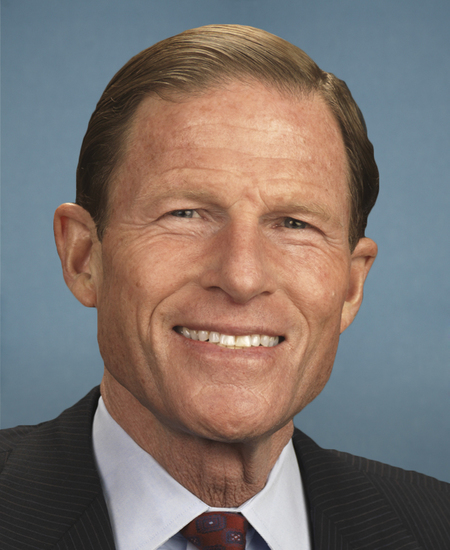
Sen. Richard Blumenthal
Sponsored bills
Maddy summaryThe Medical Bankruptcy Fairness Act of 2026 amends federal bankruptcy laws to create a new category called "medically distressed debtor" for individuals whose debt is primarily caused by medical issues, such as illness, injury, or a loss of income due to caring for a sick family member. Under this bill, people in this category would receive special protections, including an additional $250,000 exemption for their primary home or burial plots and a waiver of certain financial tests required to file for Chapter 7 or Chapter 13 bankruptcy. To qualify, a debtor must show that unpaid medical expenses exceeded a specific threshold relative to their income or that their financial situation was directly impacted by a health crisis or national emergency. The legislation also requires debtors to submit a sworn statement detailing their medical costs and ensures that bankruptcy records for these individuals are excluded from their consumer credit reports. These changes apply to bankruptcy cases filed after the law is enacted.
Maddy summaryThe Outpatient Surgery Access Act of 2026 changes how Medicare calculates payment updates for ambulatory surgical centers starting in 2027. It requires the Centers for Medicare & Medicaid Services to use the same annual price increase factors applied to other outpatient services, rather than a separate calculation. Additionally, the bill removes a specific rule that previously limited these payment updates to keep total spending flat, allowing for more consistent price adjustments. These changes directly affect hospitals and clinics that perform surgeries on an outpatient basis and the patients who receive those services under Medicare.
Maddy summaryThis joint resolution seeks to formally disapprove a specific rule issued by the Centers for Medicare & Medicaid Services regarding the Affordable Care Act and the Basic Health Program for 2027. If passed, the measure would nullify the rule, preventing it from taking legal effect. The bill directly impacts the administration of healthcare benefits and payment parameters for the upcoming year. It is sponsored by a group of Democratic senators and is intended to halt the implementation of the agency's proposed changes.
Maddy summaryThis resolution expresses support for designating July 10, 2026, as Journeyman Lineworkers Recognition Day to honor the workers who maintain the nation's electricity grid. The bill honors these employees for their critical role in keeping power running daily and for their dangerous work restoring service during disasters and extreme weather. It also commemorates the 130th anniversary of the death of Henry Miller, the first president of the International Brotherhood of Electrical Workers, who died while restoring power. Finally, the resolution encourages Americans to observe this day with reflection on the sacrifices made by lineworkers over the past century.
Maddy summaryThis Senate resolution honors the 27th anniversary of the Supreme Court's Olmstead v. L.C. decision, which established that states must offer community-based services to individuals with disabilities rather than forcing them into institutions. The bill affirms the legal requirement that people with disabilities should live in the most integrated settings possible and salutes those who have expanded home and community support services. It also condemns a recent Department of Justice opinion that challenges this integration mandate and calls on the department to rescind that opinion. Additionally, the resolution criticizes cuts to the Medicaid program and urges Congress to restore funding to protect the health and independence of people with disabilities.
Maddy summaryThis Senate resolution formally recognizes June 2026 as LGBTQ Pride Month to honor the history, contributions, and ongoing struggles of lesbian, gay, bisexual, transgender, and queer individuals in the United States. The document outlines the community's achievements in civil rights and public service while highlighting persistent challenges such as discrimination in employment and housing, as well as hate crimes. It also acknowledges the global context of LGBTQ rights, noting both international progress and the persecution faced by individuals in various countries. Ultimately, the resolution expresses support for equal treatment and encourages the public to use the month to learn about and celebrate the LGBTQ community.
Maddy summaryThe Investor Choice Act of 2026 aims to give retail investors more control over how they resolve disputes with financial companies by banning mandatory arbitration clauses. Specifically, the bill prohibits stock exchanges from listing securities issued by companies that force shareholders into arbitration, and it makes it illegal for brokers, dealers, and investment advisers to require clients to use arbitration or restrict their ability to join class-action lawsuits. These rules apply to new agreements made after the law is passed, while existing contracts are only voided if no arbitration process has already started. By removing these forced arbitration requirements, the legislation allows investors to choose whether to settle disputes in court or through arbitration based on their own judgment.
Maddy summaryThe STOP Frontovers Act of 2026 directs the Secretary of Transportation to create a new federal safety standard for motor vehicles designed to prevent low-speed accidents where a driver strikes a person or object in their blind spot while moving forward. To achieve this, the bill mandates that vehicles be equipped with advanced detection systems capable of identifying pedestrians, cyclists, and other vulnerable road users, alongside driver alerts and active braking or steering interventions. Manufacturers would be required to install these crash avoidance technologies in new passenger vehicles within two years of the final rule taking effect, with a potential staggered rollout based on vehicle type. Additionally, the law requires the National Highway Traffic Safety Administration to update its data tracking systems to specifically record and report incidents classified as frontovers and backovers.
Maddy summaryThe Defenders of Bataan and Corregidor Congressional Gold Medal Act authorizes Congress to award a gold medal to individuals who fought for or with the United States in the Pacific theater during World War II and were taken as prisoners of war. This recognition specifically honors those who participated in the defense of Bataan and Corregidor, including Filipino soldiers and civilians who served alongside American forces, as well as nurses and other personnel who endured the Bataan Death March and subsequent imprisonment. The bill directs the Secretary of the Treasury to design and strike the medal, which will be presented to the Smithsonian Institution for display, while also permitting the sale of bronze duplicates to cover production costs.