

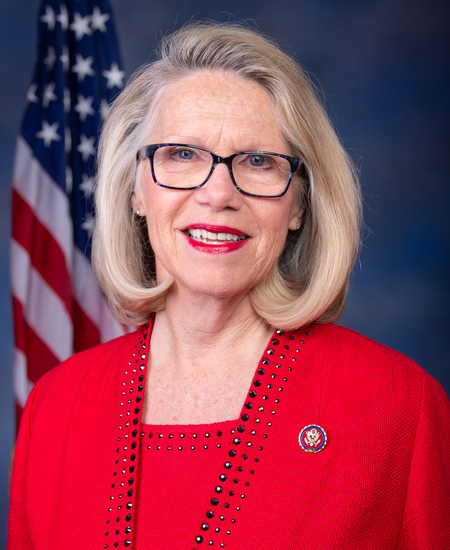
Photo of Carol D. Miller
R United States House · District 1 · West Virginia On the 2026 ballot

Rep. Carol D. Miller

Compare
Total votes
2,818
all sessions
Attendance
97%
85 missed
Lower than 80% of chamber peers
With party
97%
of cast votes
Near the chamber average
Bipartisan score
2%
crosses aisle rarely
Near the chamber average
Sponsored
887
bills & resolutions
Near the chamber average
Committees
3
assignments
887 bills and resolutions

Sponsored bills

Total
887
Primary
91
Co-sponsor
796
This page
887
matching current filters
Co-sponsor HR 8730
In committee · Florida House · Co-sponsor
Connected Vehicle Security Act of 2026

Maddy summaryThe Connected Vehicle Security Act of 2026 restricts the importation, sale, and manufacture of vehicles and related technology from specific countries, including China, Russia, Iran, and North Korea, to address national security concerns. The law defines prohibited items as connected vehicles, their software, and hardware components and sets different effective dates, with vehicle bans starting in 2027 and hardware restrictions beginning in 2030. A government official can grant exceptions for specific items after reviewing security risks and notifying Congress, while the agency must publish annual reports on enforcement actions and compliance.

In committee May 11, 2026 1 co-sponsor
Co-sponsor HR 1163
In committee · Florida House · Co-sponsor
Prove It Act

Maddy summaryThis bill requires federal agencies to analyze indirect economic costs on small businesses when creating new rules, including costs affecting businesses that interact with regulated entities (like suppliers or partners). It creates a new process allowing small businesses to petition the Small Business Administration's Chief Counsel to review agency certifications claiming a rule won't significantly impact them. Agencies must then provide detailed cost analyses, publish guidance online for small business feedback, and face penalties if they fail to cooperate with reviews. The bill does not change existing regulations but adds new review steps for small business input.

In committee May 4, 2026 1 co-sponsor
Co-sponsor HR 7959
Passed · Florida House · Co-sponsor
IRS Whistleblower Program Improvement Act

Maddy summaryThis bill, the IRS Whistleblower Program Improvement Act, aims to strengthen protections and incentives for individuals who report tax violations to the Internal Revenue Service. It directly affects whistleblowers who submit information about tax evasion or avoidance schemes and the IRS officials who evaluate those reports. Key changes include requiring Tax Court reviews of whistleblower awards to be conducted de novo based on the original administrative record, granting whistleblowers anonymity before the Tax Court unless a societal interest outweighs potential harm, and adding interest to award amounts if the IRS delays providing preliminary recommendations. The legislation also modifies IRS annual reports to include descriptions of top tax avoidance schemes disclosed by whistleblowers and corrects a provision regarding attorney fee deductions for whistleblowers.

Passed Apr 28, 2026 1 co-sponsor
Co-sponsor HR 4930
Passed · Florida House · Co-sponsor
To expand the sharing of information with respect to suspected violations of intellectual property rights in trade.

Maddy summaryThis bill amends rules for sharing information about suspected intellectual property violations in trade. It requires U.S. Customs and Border Protection to have a reasonable suspicion before sharing data, and permits sharing nonpublic details with online marketplaces, shipping companies, freight forwarders, and other entities involved in U.S. merchandise imports. It also allows CBP to share such information with additional parties (e.g., importers or rights holders) as determined appropriate by the Commissioner. The changes aim to improve coordination between enforcement and industry for intellectual property protection.

Passed Apr 28, 2026 1 co-sponsor
Co-sponsor HR 161
In committee · Florida House · Co-sponsor
New Source Review Permitting Improvement Act

New Source Review Permitting Improvement Act This bill modifies terminology for purposes of the New Source Review (NSR) permitting program of the Environmental Protection Agency (EPA). In order for a change to a stationary source to be a modification (a change to a stationary source that increases the air pollutant emissions or results in new pollutants) for purposes of the NSR permitting program, the maximum hourly emission rate achievable by such source must be higher than the maximum hourly rate achievable by such source during any hour in the 10-year period preceding the change. A change at a stationary source is not considered to be a modification under the bill if it is designed to (1) reduce the amount of any air pollutant emitted; or (2) restore, maintain, or improve the reliability of operations at, or safety of, the source. However, such changes are not excepted if the EPA determines the increase in the maximum achievable hourly emission rate from such change would cause an adverse effect on human health or the environment. Construction , in connection with a major emitting facility (a type of stationary source), does not include a change at such a facility that does not result in a significant emissions increase or a significant net emissions increase. In relation to major emitting facilities in nonattainment areas, the terms modifications and modified do not include changes at such facilities that do not result in a significant emissions increase or a significant net emissions increase.

In committee Apr 28, 2026 1 co-sponsor
Co-sponsor HR 8415
In committee · Florida House · Co-sponsor
Small Business Tax Cut Act

Maddy summaryThe Small Business Tax Cut Act increases the qualified business income deduction from 20 percent to 23 percent for eligible taxpayers, directly affecting small business owners and investors. The bill modifies income thresholds that limit this deduction for higher earners and extends the phase-in rules for taxable income above certain limits. Additionally, it allows dividends from qualified business development companies to be treated similarly to qualified REIT dividends for deduction purposes. These changes apply to taxable years beginning after December 31, 2026.

In committee Apr 21, 2026 1 co-sponsor
Co-sponsor HRES 1196
In committee · Florida House · Co-sponsor
Recognizing April as Cancer Prevention and Early Detection Month.

Maddy summaryHRES 1196 is a House Resolution that formally designates April as "Cancer Prevention and Early Detection Month." The resolution expresses the House of Representatives' support for the goals and ideals of this month, affirming a national commitment to educating the public on disease prevention and commending advancements in multi-cancer early detection efforts.

In committee Apr 20, 2026 1 co-sponsor
Co-sponsor HR 8376
In committee · Florida House · Co-sponsor
Concurrent Care for Comfort Act

Maddy summaryThe Concurrent Care for Comfort Act modifies Medicare rules to allow individuals with end-stage renal disease who elect hospice care to continue receiving palliative dialysis services. Under this bill, these patients can receive up to ten sessions of dialysis focused on comfort rather than treatment or maintenance, with payments made separately from the standard hospice care bundle. The legislation establishes a new payment methodology for these services starting in 2026 and grants the Secretary of Health and Human Services the authority to adjust the session limit based on future data and stakeholder feedback. Additionally, the act clarifies that patients must still meet standard Medicare cost-sharing requirements, such as deductibles and coinsurance, for these specific palliative dialysis sessions.

In committee Apr 20, 2026 1 co-sponsor
Co-sponsor HR 8319
In committee · Florida House · Co-sponsor
KIDNEY Remote Monitoring Act

Maddy summaryThe KIDNEY Remote Monitoring Act (H.R. 8319) aims to ensure Medicare payment for remote physiologic monitoring services provided to individuals with end-stage renal disease (ESRD) who receive home dialysis. The bill amends the Social Security Act to direct that these monitoring services, when furnished by a physician, will be paid for under Medicare Part B. This change would take effect for services provided on or after January 1, 2028, aligning their payment with the standard fee schedule for physician services.

In committee Apr 16, 2026 1 co-sponsor
Co-sponsor HRES 1156
Passed · Florida House · Co-sponsor
Expressing support for tax policies that support working families.

Maddy summaryThis resolution expresses support for the Working Families Tax Cuts, a law already enacted in July 2025 that provides various tax benefits to American taxpayers. The bill directly affects individuals and families by recognizing specific provisions that reduce tax liability, including expanded child tax credits, increased standard deductions, and tax relief for tipped workers and overtime pay. Key provisions include making a four-person household earning under $73,000 generally face zero federal income tax, increasing the child tax credit to $2,200 per child, and allowing 529 accounts to cover K-12 and trade school expenses. The resolution also acknowledges tax relief for seniors, auto loan interest deductions for American-made vehicles, and expanded health savings account access. This is a procedural measure that formally acknowledges existing tax policies rather than creating new legislation.

Passed Apr 16, 2026 1 co-sponsor
Showing 41 to 50 of 887 bills
Previous 1 4 5 6 89 Next