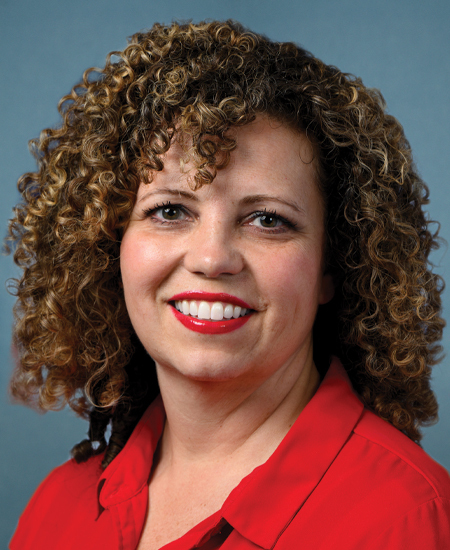
Photo of Celeste Maloy
R United States House · District 2 · Utah On the 2026 ballot

Rep. Celeste Maloy

Compare
Total votes
1,213
all sessions
Attendance
64%
666 missed
Higher than 76% of chamber peers
With party
96%
of cast votes
Near the chamber average
Bipartisan score
3%
crosses aisle rarely
Near the chamber average
Sponsored
252
bills & resolutions
Lower than 84% of chamber peers
Committees
7
assignments
252 bills and resolutions

Sponsored bills

Total
252
Primary
41
Co-sponsor
211
This page
252
matching current filters
Co-sponsor HR 8524
In committee · Florida House · Co-sponsor
Kenya Merritt Renewing our PACT Act of 2026

Maddy summaryThis bill, titled the Kenya Merritt Renewing our PACT Act of 2026, establishes a legal presumption that specific diseases are caused by exposure to open burn pits and other toxic hazards for certain federal employees. It directly affects workers in departments such as Defense, State, and Homeland Security who spent at least 30 days in foreign contingency operations on or after August 2, 1990. Under the new rules, eligible employees can receive disability or death compensation for listed illnesses without needing to prove that the disease was recorded during their time of exposure. The Secretary of Labor is tasked with maintaining an updated list of covered diseases and submitting a progress report to Congress within one year of the law's enactment.

In committee Apr 27, 2026 1 co-sponsor
Co-sponsor HJRES 140
Signed into law · Florida House · Co-sponsor
Providing for congressional disapproval under chapter 8 of title 5, United States Code, of the rule submitted by the Bureau of Land Management relating to Public Land Order No. 7917 for Withdrawal of Federal Lands; Cook, Lake, and Saint Louis Counties, MN.

Maddy summaryHJRES 140 is a procedural resolution seeking congressional disapproval of a Bureau of Land Management (BLM) rule published in the Federal Register (88 Fed. Reg. 6308, January 31, 2023). The resolution targets Public Land Order No. 7917, which proposed withdrawing federal lands in Cook, Lake, and Saint Louis Counties, Minnesota. If passed, this resolution would block the BLM rule from taking effect by invoking the disapproval process under Chapter 8 of Title 5, U.S. Code. It directly affects the implementation of the land withdrawal proposal but does not alter the underlying land status or create new policy.

Signed into law Apr 27, 2026 1 co-sponsor
Co-sponsor HR 8384
In committee · Florida House · Co-sponsor
To provide for the conveyance of certain property to the Utah National Guard located in Lehi, Utah, and for other purposes.

Maddy summaryThis bill authorizes the transfer of three specific parcels of federal land in Lehi, Utah, to the Utah National Guard for use as a state armory. The property includes various strips and irregularly shaped lots, and the transfer is subject to existing easements and restrictions that are currently in place. To ensure the land remains dedicated to military training, the agreement includes a clause allowing the federal government to reclaim the property if it is no longer used for National Guard readiness activities. Additionally, the bill requires the State of Utah to cover the costs associated with the transfer, such as environmental reviews and administrative fees, without using federal funds for these expenses.

In committee Apr 20, 2026 1 co-sponsor
Co-sponsor HR 8380
In committee · Florida House · Co-sponsor
To amend the Congressional Budget and Impoundment Control Act of 1974 to establish certain procedures for consideration of annual appropriation bills, and for other purposes.

Maddy summaryHR 8380 amends the Congressional Budget and Impoundment Control Act of 1974 to establish new procedures for how the Senate and House of Representatives consider annual appropriation (spending) bills. In the Senate, the bill applies existing rules for budget resolutions to these spending bills and limits debate on them to a maximum of 20 hours. For the House of Representatives, it prohibits adjourning for more than three calendar days during the month of July until all annual appropriation bills for the upcoming fiscal year have been approved by the House. These changes directly affect how members of Congress manage and approve federal spending legislation.

In committee Apr 20, 2026 1 co-sponsor
Co-sponsor HR 1897
In committee · Florida House · Co-sponsor
ESA Amendments Act of 2025

Maddy summaryThe ESA Amendments Act of 2025 makes significant changes to the Endangered Species Act of 1973 to streamline conservation efforts and reduce regulatory burdens. It establishes a national listing work plan with priority classifications for species to better allocate resources, and creates "Candidate Conservation Agreements with Assurances" that provide private landowners with regulatory certainty in exchange for conservation actions. The bill also requires the government to publish the basis for listings online, streamlines permitting processes for projects that comply with conservation measures, and modifies critical habitat designation to better accommodate existing conservation plans on private lands. These changes aim to improve conservation outcomes while reducing delays for landowners, developers, and federal agencies working with listed species.

In committee Apr 20, 2026 1 co-sponsor
Primary HR 8204
In committee · Florida House · Lead sponsor
Western Refined Fuel Reserve Act of 2026

Maddy summaryThis bill establishes a new Refined Fuel Storage Reserve in eight Western States to store gasoline, diesel, and jet fuel as part of the national Strategic Petroleum Reserve. The Energy Department must identify and select one storage location within six months of enactment, prioritizing areas dependent on imported fuel or likely to face shortages, and must fill the reserve to at least 75 percent capacity over five years using existing federal funding. The reserve can be used during emergencies or supply disruptions, and the Energy Secretary may partner with state and local governments to store non-federal fuel in the facility. The bill also requires annual reports to Congress on the reserve's establishment, operations, and future recommendations.

In committee Apr 6, 2026 0 co-sponsors
Primary HRES 1144
In committee · Florida House · Lead sponsor
Supporting recognition of 2026 as the "International Year of Rangelands and Pastoralists".

Maddy summaryThis resolution expresses support for the United Nations designation of 2026 as the International Year of Rangelands and Pastoralists. It recognizes the economic, social, and ecological importance of rangelands and the ranchers, farmers, and land managers who steward them. The measure encourages federal agencies, universities, and organizations to promote education, research, and outreach related to rangeland management during this designated year.

In committee Mar 27, 2026 0 co-sponsors
Co-sponsor HR 8117
In committee · Florida House · Co-sponsor
Fair Treatment of Religious Organizations Act of 2026

Maddy summaryThis bill, titled the Fair Treatment of Religious Organizations Act of 2026, establishes rules for how religious organizations are treated under federal tax law and financial assistance programs. It directs the IRS to determine whether an organization's purpose is religious without considering its specific beliefs about marriage, sexuality, or gender identity, even if those beliefs conflict with current laws. The legislation also prohibits federal agencies from discriminating against religious employers that receive federal funding if those employers hire staff based on their religious standards. These protections apply to religious corporations, associations, educational institutions, and societies, ensuring they can maintain employment practices aligned with their faith when receiving government support.


In committee Mar 26, 2026 1 co-sponsor
Primary HR 8113
In committee · Florida House · Lead sponsor
To direct the Secretary of the Interior to carry out a feasibility study on a selective water withdrawal system at Glen Canyon Dam, and for other purposes.

Maddy summaryThis bill directs the Secretary of the Interior to conduct a feasibility study on installing a selective water withdrawal system at Glen Canyon Dam. The study aims to balance hydropower generation with preventing invasive species from being drawn into the dam's intake, following existing environmental management plans. If the study finds the system feasible and power contractors agree, construction could begin after the 18-month study period. The bill allocates federal funds for the study and requires identifying funding sources within 90 days of enactment.

In committee Mar 26, 2026 0 co-sponsors
Showing 31 to 40 of 252 bills
Previous 1 3 4 5 26 Next