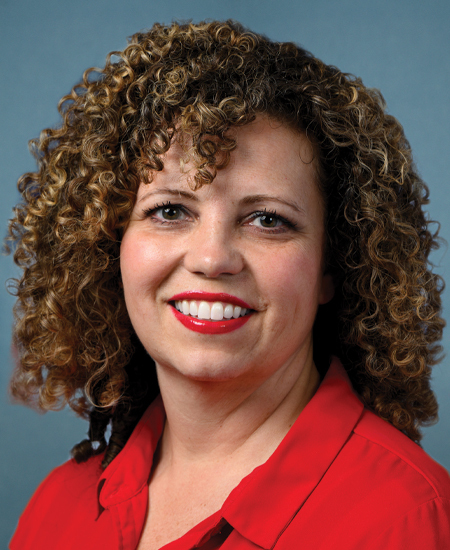
Photo of Celeste Maloy
R United States House · District 2 · Utah On the 2026 ballot

Rep. Celeste Maloy

Compare
Total votes
1,213
all sessions
Attendance
64%
666 missed
Higher than 76% of chamber peers
With party
96%
of cast votes
Near the chamber average
Bipartisan score
3%
crosses aisle rarely
Near the chamber average
Sponsored
252
bills & resolutions
Lower than 84% of chamber peers
Committees
7
assignments
252 bills and resolutions

Sponsored bills

Total
252
Primary
41
Co-sponsor
211
This page
252
matching current filters
Co-sponsor HR 1799
In committee · Florida House · Co-sponsor
Financial Reporting Threshold Modernization Act

Maddy summaryHR 1799, the Financial Reporting Threshold Modernization Act, raises reporting thresholds for financial institutions handling large cash transactions. It increases the threshold for currency transaction reports from $10,000 to $30,000 and adjusts suspicious activity report thresholds from $5,000/$2,000 to $10,000/$3,000. The bill requires automatic updates to these thresholds every five years using the Consumer Price Index to account for inflation. This directly affects banks, money services businesses, and other entities that must file these reports under U.S. financial regulations.

In committee Mar 19, 2026 1 co-sponsor
Co-sponsor HR 4716
In committee · Florida House · Co-sponsor
To transfer administrative jurisdiction of certain Federal land in Saratoga Springs, Utah, from the Secretary of the Interior to the United States Postal Service for construction of a post office, and for other purposes.

Maddy summaryHR 4716 transfers approximately 20.32 acres of federal land in Saratoga Springs, Utah (Parcel #58:022:0021) from the Secretary of the Interior to the U.S. Postal Service. The bill requires the Postal Service to construct and operate a new post office on this land within two years of the bill's enactment. This procedural bill directly affects the USPS by providing specific land for a facility, with no broader policy changes or impacts on the general public.

In committee Mar 18, 2026 1 co-sponsor
Co-sponsor HR 4294
Passed · Florida House · Co-sponsor
MAWS Act of 2026

Maddy summaryThe MAWS Act of 2026 establishes a 3-year pilot program (2027-2029) to purchase invasive blue catfish from watermen and seafood processors within the Chesapeake Bay Watershed. It authorizes $2 million annually to fund covered entities - manufacturers of pet food, animal feed, or aquaculture feed - to buy blue catfish caught in the watershed, requiring certification of origin and setting minimum prices based on market factors. The program mandates detailed reporting on environmental impacts, economic effects on watermen, and market responses to inform future policy. This directly supports watermen and processors by creating a market for invasive blue catfish while collecting data for potential expansion to other watersheds.

Passed Mar 18, 2026 1 co-sponsor
Primary HR 3073
Passed · Florida House · Lead sponsor
Shivwits Band of Paiutes Jurisdictional Clarity Act

Shivwits Band of Paiutes Jurisdictional Clarity Act This bill confers legal jurisdiction to the State of Utah over certain civil cases involving the Shivwits Band of Paiutes. It also allows the tribe to lease its land held in trust. The tribe is located in southwestern Utah. Specifically, the bill confers jurisdiction to the State of Utah over any civil cause of action (1) to which the Shivwits Band of Paiutes is a party, and (2) that arises on or within Indian lands. Under the bill, Indian lands are lands of the tribe that are (1) held in trust for the benefit of the tribe, or (2) subject to restrictions by the United States against alienation (i.e., sale or transfer). Additionally, the bill specifies that any cause of action arising from any contract or agreement (including a lease) to which the tribe is party or that affects or arises on these Indian lands shall be deemed a civil cause of action. Therefore, this bill allows the tribe and third parties to resolve contract disputes in state court. The bill also authorizes the tribe to lease its land held in trust for a term of up to 99 years.

Passed Mar 17, 2026 0 co-sponsors
Co-sponsor HR 1422
Passed · Florida House · Co-sponsor
Enhanced Iran Sanctions Act of 2025

Enhanced Iran Sanctions Act of 2025 This bill imposes sanctions on certain foreign persons (individuals and entities) that are involved in Iran's petroleum sector as well as certain associated persons. The bill also requires or authorizes actions to facilitate the enforcement of sanctions on Iran. Specifically, the bill requires the President to impose visa- and property-blocking sanctions on any foreign person that, after the bill's enactment, knowingly engages in any transaction related to the processing, export, or sale of oil, condensates, gas, liquefied natural gas, or other petrochemical products in whole or in part from Iran. The President must also impose sanctions on certain foreign persons associated with a sanctioned individual or entity. For example, the President must sanction the subsidiaries and corporate officers of a sanctioned business. The bill provides certain exceptions to these sanctions, including specifying that sanctions do not apply to the importation of goods or to conducting or facilitating transactions for humanitarian assistance. The Department of State must establish an interagency working group that shall seek to establish a multilateral contact group to coordinate international efforts to enforce sanctions on Iran. The bill expands the State Department rewards program to authorize a reward payment to any individual who furnishes information leading to the identification of a person (1) subject to sanctions under this bill, or (2) that has attempted or is attempting to evade sanctions under this bill.


Passed Mar 17, 2026 1 co-sponsor
Primary HJRES 151
In committee · Florida House · Lead sponsor
Providing for congressional disapproval under chapter 8 of title 5, United States Code, of the rule submitted by the Bureau of Land Management relating to "Grand Staircase-Escalante National Monument Record of Decision and Approved Resource Management Plan".

Maddy summaryH.J. Res. 151 seeks to block a Bureau of Land Management (BLM) rule that established management guidelines for Utah's Grand Staircase-Escalante National Monument. The resolution, introduced in March 2026, uses the Congressional Review Act to request Congress disapprove the rule, which was issued in January 2025 and submitted for review. If enacted, the resolution would prevent the rule from taking effect, meaning the BLM would not be required to follow the specific management plan outlined in that rule. This action directly affects the monument's management, as the rule governed activities like land use and conservation within the protected area.

In committee Mar 4, 2026 0 co-sponsors
Co-sponsor HR 755
Passed · Florida House · Co-sponsor
Critical Mineral Consistency Act of 2025

Critical Mineral Consistency Act of 2025 This bill modifies the Energy Act of 2020 to expand the definition of  critical minerals to include critical materials designated by the Department of Energy (DOE). Under current law, DOE's critical materials list contains certain materials that are essential for energy, including those on the critical minerals list of the U.S. Geological Survey (USGS). The USGS's list, which contains certain minerals that are essential to the nation's economic or national security, is not required to include the materials on DOE's list. Currently, both lists include minerals with a high risk of supply chain disruptions, and both DOE and USGS must conduct a variety of efforts to ensure a secure and reliable supply chain of the minerals.  By expanding the definition of critical minerals , this bill requires the USGS to include on its list the materials on DOE's list. Within 45 days of DOE adding a  mineral, element, substance, or material to its critical materials list, the USGS must update its list to include such mineral, element, substance, or material.

Passed Mar 4, 2026 1 co-sponsor
Primary HR 7739
In committee · Florida House · Lead sponsor
Rural Emergency Response Support Act

Maddy summaryHR 7739, the Rural Emergency Response Support Act, amends the Fair Labor Standards Act to exempt rural employers of emergency medical technicians (EMTs) and paramedics from standard overtime requirements. It specifically applies to public agencies (like counties or towns) with fewer than 100,000 residents and private entities contracted by them. The key provision removes these employers from FLSA overtime violations when employing EMTs or paramedics, easing compliance for small rural emergency response teams. This directly affects rural EMS providers in smaller communities by allowing flexibility in scheduling without triggering overtime pay obligations under current law.

In committee Feb 26, 2026 0 co-sponsors
Co-sponsor HR 7678
In committee · Florida House · Co-sponsor
Gun Owner Registration Information Protection Act

Maddy summaryHR 7678, the Gun Owner Registration Information Protection Act, prohibits federal funding for state or local databases that track lawfully owned firearms or their owners. The bill allows federal funding for databases recording lost or stolen firearms but bans it for databases listing legal gun ownership. This means states cannot use federal money to create or maintain systems that compile information about legally owned guns. The bill directly affects state and local governments that rely on federal funds for firearm ownership databases.

In committee Feb 25, 2026 1 co-sponsor
Co-sponsor HR 2189
Passed · Florida House · Co-sponsor
To modernize Federal firearms laws to account for advancements in technology and less-than-lethal weapons, and for other purposes.

Law-Enforcement Innovate to De-Escalate Act This bill removes less-than-lethal projectile devices (e.g., certain TASERs) from regulation under the Gun Control Act. The term less-than-lethal projectile device means a device that (1) is not designed or intended to expel (and may not be readily converted to discharge) commonly used ammunition or projectiles exceeding a velocity of 500 feet per second; (2) is designed and intended to be used in a manner not likely to cause death or serious bodily injury; and (3) does not accept (and cannot be readily modified to accept) an ammunition feeding device. The bill also requires the Bureau of Alcohol, Tobacco, Firearms and Explosives to determine whether a device satisfies the definition of a less-than-lethal projectile device within 90 days of a request.

Passed Feb 24, 2026 1 co-sponsor
Showing 41 to 50 of 252 bills
Previous 1 4 5 6 26 Next