Maddy summaryThe CLEAR Act (HR 4218) amends the Clean Air Act to streamline state compliance with air quality standards. It extends the review cycle for national air quality standards from five to ten years, requires states to consider economic feasibility alongside technical achievability when developing plans, and gives states up to three years (instead of two) to fix deficiencies before federal intervention. The bill also creates a new exception for wildfire mitigation actions like prescribed fires, allowing states to exclude wildfire-related air quality data from violation determinations. These changes primarily affect states responsible for implementing air quality plans under federal oversight.
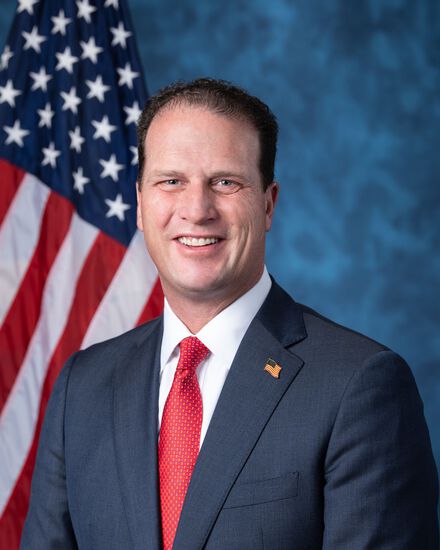
Rep. August Pfluger
Sponsored bills
Maddy summaryThis resolution (HRES 998) is a symbolic House of Representatives commendation honoring President Trump, U.S. military/intelligence agencies, and Justice Department personnel for the alleged success of "Operation Absolute Resolve" in apprehending Venezuelan leader Nicolás Maduro. It cites Maduro's charges (including narcoterrorism conspiracy) and the Maduro regime's alleged dismantling of Venezuelan democracy, state-sponsored drug trafficking, and human rights abuses. The resolution expresses support for Venezuela's democratic transition but contains no new policy, funding, or legal changes. As a procedural resolution, it does not directly affect any individuals or alter laws.
Maddy summaryHR 5010, the Farm Credit Adjustment Act, amends the Farm Credit Act of 1971 to allow the Farm Credit Administration (FCA) to extend examination cycles for low-risk Farm Credit System institutions to a maximum of 24 months. This change directly affects rural banks, credit unions, and other Farm Credit System institutions deemed low-risk by the FCA. The key provision removes a previous restriction ("in no event") and gives the FCA discretion to conduct examinations every 24 months instead of more frequently for these institutions. The amendment takes effect on October 1, 2026.
Maddy summaryHR 909, the Crime Victims Fund Stabilization Act of 2025, modifies how funds from the False Claims Act are deposited into the Crime Victims Fund. It specifies that from 2025 through 2029, certain False Claims Act proceeds (specifically those for qui tam plaintiff payments and government damage reimbursements) cannot be deposited into the fund. This change directly affects the composition of the Crime Victims Fund by excluding these specific revenue streams during the specified period. The bill does not create new benefits or alter victim services; it only adjusts fund allocation rules for existing False Claims Act revenues.
Maddy summaryHRES 987 is a symbolic House resolution denouncing Venezuela's Nicolás Maduro as an "authoritarian, despotic, and murderous regime" and commending former President Trump for ordering a January 3, 2026, operation to arrest Maduro. It references prior congressional efforts to address Maduro's alleged human rights abuses and election interference. The resolution expresses support for the operation described as targeting Maduro's "brutal narcoterrorism and crimes against humanity." As a non-binding resolution, it does not create new policy but serves as a formal statement of congressional position.
Maddy summary# Summary of Reserve Component Duty Consolidation Legislation This legislation is a comprehensive revision of military reserve component terminology and definitions throughout the U.S. Code. The primary purpose is to replace the outdated term "inactive duty training" with the more accurate and consistent term "reserve component duty" across all relevant sections of federal law. ## Key Provisions: 1. **Terminology Change**: - Replaces "inactive duty training" with "reserve component duty" in over 50 sections of the U.S. Code (primarily Titles 10, 32, and 37) - Also replaces related terms like "inactive duty" and "inactive duty for training" with "reserve component duty" 2. **Repeals**: - Repeals Chapter 13 of Title 10 - Repeals Sections 10147, 10148, 12406, 12503, 12552 of Title 10 - Repeals Sections 114, 115, and 328 of Title 32 3. **Definition Updates**: - Creates new definitions for "reserve component duty" and "remote assignment" in Title 10 - Defines "Active Guard and Reserve functions" more precisely - Clarifies that reserve component duty includes: * Training as described in sections 552(a) and 553(a) of Title 32 * Support activities authorized for members of the reserve components * Duty prescribed under sections 543 of Title 32 4. **Transition Provisions**: - Establishes a 10-year transition period from the date of enactment - Allows for earlier implementation if all relevant departments (Defense, Homeland Security, Veterans Affairs) certify readiness - Provides for early TRICARE eligibility for members ordered to active duty or full-time National Guard duty 5. **Conforming Amendments**: - Makes numerous technical changes to ensure consistent terminology throughout the U.S. Code - Updates references to training requirements, pay, and benefits to reflect the new terminology This legislation represents a significant effort to modernize military reserve component terminology, eliminate confusing and outdated references, and create a more consistent framework for understanding and managing reserve component service obligations and benefits.

Maddy summaryHR 6988, the Trade Transparency Unit Strategy Act, requires U.S. agencies to develop a strategy within 180 days for expanding Trade Transparency Units (TTUs). The strategy must improve information sharing between U.S. agencies (like Customs and Border Protection, Homeland Security Investigations, and Treasury's FinCEN) and foreign customs agencies to combat international money laundering. It mandates coordination among the Homeland Security, State, Commerce, and Treasury Secretaries, with a follow-up assessment by the Comptroller General. This bill directly affects U.S. federal agencies and their international counterparts involved in trade enforcement.
Maddy summaryThe DEFEND Act requires the Department of Homeland Security to produce annual assessments (starting 270 days after enactment) on terrorism threats posed by foreign adversaries and terrorist groups using drones. These assessments must analyze how adversaries acquire, deploy, and technologically enhance drones for surveillance, attacks on infrastructure, or mass casualties - including emerging tactics like AI-driven swarms or chemical payloads - and include lessons from global conflicts. The reports, submitted to Congress and accompanied by classified briefings, also mandate DHS to develop training for law enforcement on recognizing and responding to drone threats. This bill directly affects DHS operations, congressional oversight, and state/local law enforcement preparedness, without creating new regulations or funding.
Maddy summaryHR 6909, the China AI Threat Assessment Act, requires the Director of National Intelligence to produce a report within 180 days of enactment assessing risks posed by Chinese-developed artificial intelligence systems. The report must evaluate whether these systems embed biases targeting ethnicity, religion, or political views, analyze their data and design, and assess potential uses for surveillance or influence operations against the U.S. or allies. This bill directly affects the intelligence community, mandating a specific study to evaluate threats to U.S. national security and democratic institutions. It does not impose new regulations but directs an assessment of existing AI systems' risks.
Maddy summaryThis bill establishes a pilot program (the Warfighter Traumatic Brain Injury Diagnostics Project) to support the development of new diagnostic tools for traumatic brain injury (TBI) among active-duty military members, particularly during deployments and combat. The program directs the Secretary of Defense to assess diagnostic technologies' ability to distinguish TBI severity, integrate with existing medical tools, and improve military readiness, while awarding grants to eligible research entities with priority for those with proven experience in TBI diagnostics. It authorizes $5 million annually (2026-2029) for research, development, and testing, requiring a congressional report on results and recommendations by 2029. The initiative directly affects service members with potential TBI, military medical providers, and research organizations developing diagnostic technologies for military use.