

Miracle on Ice Congressional Gold Medal Act This act provides for the award of Congressional Gold Medals to the members of the 1980 U.S. Olympic men's ice hockey team in recognition of the team's achievement at the 1980 Winter Olympic Games.
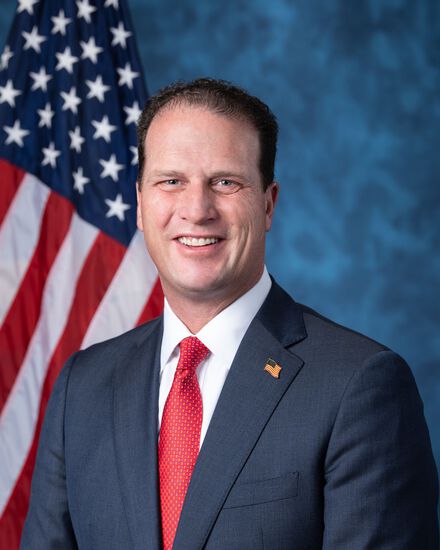
Rep. August Pfluger
Sponsored bills
Maddy summaryHR 6643, the American Border Story Memorial Act, authorizes a nonprofit organization ("The American Border Story") to establish a commemorative memorial on federal land in Washington, D.C., to honor U.S. citizens and legal residents who died due to crimes committed by individuals unlawfully present in the U.S. The bill prohibits the use of federal funds for the memorial's creation or maintenance, requiring all costs to be covered by private donations. Any remaining funds after project costs must be deposited into specific federal or National Park Foundation accounts, as outlined in the Commemorative Works Act. This is a procedural memorial bill with no direct policy or regulatory changes.
Maddy summaryThis bill amends the Clean Air Act to clarify when certain plastic conversion facilities are excluded from the definition of "solid waste incineration units." It directly affects companies operating facilities that transform plastic or post-use polymers (via methods like pyrolysis) into usable materials, provided at least 50% of the output by mass is a "product" (e.g., usable substances for sale or manufacturing), not energy or ash. Key mechanisms include adding a specific exclusion for qualifying conversion units (Section 2(A)(iv)) and creating a 180-day petition process for other similar units to seek exclusion (Section 2(B)). The bill defines "product" to exclude electricity, heat, or ash but include materials with commercial applications.
Maddy summaryThis bill would allow states to waive certain Affordable Care Act requirements for health insurance starting in 2026, provided they maintain a high-risk insurance pool. Residents in participating states would receive funds directly into "Trump Health Freedom Accounts" instead of traditional premium tax credits, which could be used to purchase health insurance with restrictions on coverage for gender transition procedures and abortion services. The bill also modifies tax credits for small employers in participating states and requires better price transparency and outcomes reporting from healthcare providers. It would directly affect residents and small businesses in states that choose to participate in the waiver program.
Maddy summaryHR 6524, the HIRE Act, extends the Work Opportunity Tax Credit (WOTC) through 2030 and adds a new provision to incentivize hiring individuals receiving Social Security disability benefits. The bill directly affects employers who hire people certified as eligible for disability insurance benefits under the Social Security Act within 60 days before employment. Key provisions include modifying the tax credit to cover "qualified social security disability insurance beneficiaries" and requiring certification by a local agency for eligibility. The changes apply to new hires beginning work after December 31, 2025, with the credit extension applying through 2030.
Maddy summaryThis bill amends the Natural Gas Act to give the Federal Energy Regulatory Commission (FERC) exclusive authority to approve U.S. LNG export terminal projects, requiring FERC to deem such exports consistent with the public interest. It directly affects natural gas companies seeking to build or expand export facilities and streamlines FERC's review process by removing prior requirements for interagency coordination. The bill clarifies that FERC's decisions won't override existing sanctions laws, including restrictions on trade with countries designated as state sponsors of terrorism under current law. This change aims to accelerate domestic LNG export projects while maintaining legal safeguards for national security and foreign policy.
Skinny Labels, Big Savings Act This bill provides a statutory safe harbor from patent infringement claims for generic or biosimilar manufacturers that seek or obtain approval for skinny labels of their drugs. Under current law, the Food and Drug Administration (FDA) may approve generic and biosimilar drugs through a process known as skinny labeling, which allows a generic manufacturer to seek approval only for approved uses of the drug that are no longer protected by patents. However, in GlaxoSmithKline LLC v. Teva Pharmaceuticals USA, Inc. , a court held that a generic manufacturer may sometimes be liable for patent infringement when it markets skinny label generics. The bill specifically lists the following as actions that are not considered infringement of a method of use claim in a patent under the Federal Food, Drug, and Cosmetic Act: submitting or seeking approval of a skinny label for a generic or biosimilar drug; promoting or commercially marketing a drug with skinny labeling approved by the FDA; or describing a drug product approved by the FDA as a generic of, or therapeutically equivalent to, the branded drug. The bill also applies the safe harbor to similar actions under the Public Health Service Act.
Maddy summaryHR 6466, the Forced Abortion Prevention and Accountability Act, prohibits non-consensual administration of abortion drugs (like mifepristone or misoprostol) to pregnant women without their informed consent. It criminalizes this act with penalties up to 25 years in prison and allows victims to sue for triple damages, psychological/physical injury compensation, and attorney fees. The bill directly affects pregnant women who might face coerced procedures and medical providers or others who administer such drugs without consent. Key provisions include criminal penalties for the act itself, enhanced penalties for serious injury or death, and a civil remedy framework for victims seeking compensation.
Maddy summaryHR 6423, the HELP Copays Act, requires health insurance plans and coverage to count financial assistance from non-profits or drug manufacturers toward patient cost-sharing limits like deductibles and copayments. This directly affects patients enrolled in health insurance who receive such assistance for prescription drugs, ensuring the help they get reduces their out-of-pocket costs faster. The bill amends key health laws to mandate that these payments are included when calculating whether a patient has met their deductible or copayment threshold. The change applies to all prescription drugs, including specialty drugs and those subject to prior authorization, but does not alter how insurers manage drug access through tools like step therapy. It takes effect for plan years starting in 2026.
Maddy summaryThe Rx ACCESS Act improves prescription drug access for TRICARE beneficiaries, including military service members, retirees, and their families, by establishing fair reimbursement standards for pharmacies and expanding medication choice. It requires pharmacies to be reimbursed at actual drug costs (or the national average drug cost for certain medications) plus a standard dispensing fee, while banning hidden fees like point-of-sale charges. Starting October 1, 2026, beneficiaries can choose how they receive non-generic medications for ongoing health conditions. The law also mandates annual audits to verify reimbursement fairness and ensure pharmacy networks provide accessible care, especially in rural and underserved areas.