Maddy summaryThis bill amends the Passport Act of 1920 to exempt Purple Heart and Medal of Honor recipients from standard U.S. passport application and renewal fees. It directly affects veterans who have received these specific military decorations. The key provision adds a new fee exemption category (subparagraph D) for these individuals in the passport fee structure. The bill also requires the State Department to create a verification process with the Defense Department to confirm eligibility using military service records. This is a straightforward administrative change to reduce costs for honored veterans.
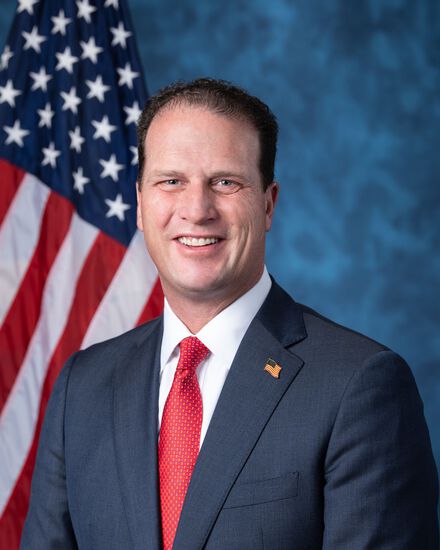
Rep. August Pfluger
Sponsored bills
Maddy summaryThe Pipeline Cybersecurity Preparedness Act (HR 7272) establishes a voluntary program under the Department of Energy to improve cybersecurity and physical security for natural gas pipelines, hazardous liquid pipelines, and liquefied natural gas facilities. It requires the Department to create coordination councils, lead incident response planning, develop voluntary cybersecurity tools and training, and run pilot projects with industry partners. The bill directly affects pipeline operators and energy sector stakeholders by providing technical resources to assess and enhance their security capabilities without mandating changes. Key mechanisms include developing workforce training curricula, offering evaluation tools, and facilitating collaboration between federal agencies, states, and the energy sector. The act explicitly states it does not alter existing authority of other federal agencies regarding pipeline security.
Maddy summaryThis bill modifies federal budget rules for unspent agency funds. It requires federal agencies to allocate 49% of unused funds to the next fiscal year, 49% toward paying the national debt, and 2% for retention bonuses (capped at 10% of an employee's base pay). Agencies must also limit future budget requests to the previous year's amount adjusted for inflation. The bill directly affects all executive branch agencies (excluding the Red Cross), altering how they manage leftover budget authority. It does not create new savings programs for individuals but changes government fiscal management procedures.
Maddy summaryThis bill prevents state or local governments from banning or restricting energy connections (like installation, modification, or access) based on the type or source of energy, such as electricity, natural gas, or renewable fuels. It directly affects consumers choosing energy providers and energy companies seeking to offer services. The key provision prohibits local laws, regulations, or policies that limit energy services sold in interstate commerce, covering all energy types listed in the bill’s definitions. It does not create new programs but limits regulatory authority at the state or local level. The law aims to ensure open access to diverse energy sources without source-based restrictions.
Maddy summaryThis bill requires Medicare plans (including Medicare Advantage and prescription drug plans) to base coverage decisions on medical necessity and evidence-based standards. It mandates that plans seek input from practicing physicians when creating or changing coverage rules, post all preauthorization requirements online in plain language, and publicly share statistics on approvals and denials. The bill also requires that adverse coverage decisions be made by licensed, board-certified physicians and prohibits denying coverage solely due to lack of evidence-based standards when none exist for a service. These changes aim to reduce unnecessary delays in care for Medicare beneficiaries by increasing transparency and clinical input in coverage decisions.
Maddy summaryThe Make Elections Great Again Act (HR 7300) would require voters to present photo identification to cast ballots in person or by mail for federal elections, with limited exceptions for religious objections or military voters. It would establish new requirements for proving U.S. citizenship during voter registration, including documentary proof of citizenship and proof of state residency. The bill would change mail-in ballot procedures by requiring voters to request mail-in ballots (rather than universal mail-in voting), implementing barcode tracking for mail-in ballots, and setting strict deadlines for ballot receipt. These provisions would apply to all states for federal elections held in 2027 or later, affecting how voters register, vote in person, and submit mail-in ballots for federal office elections.
Safeguard American Voter Eligibility Act or the SAVE America Act This bill requires individuals to provide documentary proof of U.S. citizenship when registering to vote, and requires photo identification to vote, in federal elections. Specifically, the bill prohibits states from accepting and processing an application to register to vote in a federal election unless the applicant presents documentary proof of U.S. citizenship. The bill specifies what documents are considered acceptable proof of U.S. citizenship, such as identification that complies with the REAL ID Act of 2005 that indicates U.S. citizenship. Further, the bill (1) prohibits states from registering an individual to vote in a federal election unless, at the time the individual applies to register to vote, the individual provides documentary proof of U.S. citizenship; and (2) requires states to establish an alternative process to demonstrate U.S. citizenship. Each state must take affirmative steps on an ongoing basis to ensure that only U.S. citizens are registered to vote, which shall include establishing a program to identify individuals who are not U.S. citizens using information supplied by certain sources. Additionally, states must remove noncitizens from their official lists of eligible voters. The bill (1) provides for a private right of action for certain violations, and (2) establishes criminal penalties for certain offenses. Individuals voting in federal elections must present an eligible photo identification document. An individual who votes by absentee ballot must submit a copy of their identification document with both the request for, and the submission of, the absentee ballot.

Maddy summaryHR 1295, the Reorganizing Government Act of 2025, amends federal law to streamline executive branch operations. It requires all executive departments (like the Departments of Defense or Education) to eliminate unnecessary programs, reduce federal employee numbers, and cut burdensome regulations that increase compliance costs. The bill updates deadlines for reorganization plans from 1984 to 2026 and explicitly mandates that all government operations must serve the public interest. These changes apply broadly across the federal government, focusing on efficiency and cost reduction.
Maddy summaryThis bill creates a tax credit for businesses selling products made with U.S.-grown cotton. The credit equals 24% of the cotton's market value if processed only in the U.S. or in countries with U.S. trade deals, or 18% for other processing locations. To qualify, cotton must be digitally traced from U.S. farms to finished products and certified by the USDA as meeting origin requirements. It directly affects clothing and textile manufacturers selling qualifying products in the U.S. market.
Maddy summaryThe MOLD Act (HR 7188) establishes uniform health and safety standards for military housing managed by private contractors, directly affecting approximately 700,000 service members and their families living in privatized housing across 78 developments. It requires the Defense Secretary to set enforceable limits on indoor humidity (below 50%), mandate third-party inspections after tenant complaints or unit turnover, and hold contractors fully responsible for mold remediation, relocation costs, and property damage. The bill also mandates public reporting of complaints, inspection results, and remediation timelines, and requires contractors to use certified professionals for mold assessments. These provisions aim to reduce mold-related health risks and improve accountability in privatized military housing.