

Maddy summaryThis bill would restructure the Department of Homeland Security's Office of Intelligence and Analysis by moving analytic staff from a centralized Washington, DC headquarters to field locations across the country. It requires the Secretary of Homeland Security to assign at least one intelligence officer and one intelligence analyst to each fusion center and strategic location within two years of enactment. These field-based personnel would report operationally to regional directors while maintaining functional oversight from headquarters, with a requirement that staff rotate back to headquarters after five years to prevent burnout. The legislation also mandates training on civil rights and privacy laws for field staff, requires a staffing plan within 180 days, and calls for annual reports to Congress on implementation progress and operational impacts for five years.
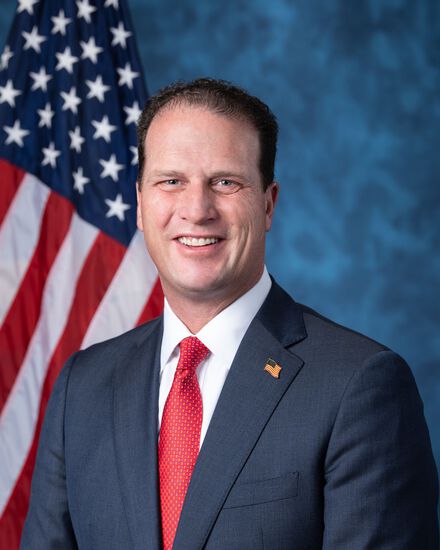
Rep. August Pfluger
Sponsored bills
Maddy summaryThis bill requires the Department of Homeland Security to verify personal and biometric information and conduct in-person interviews for all individuals evacuated from Afghanistan between January 20, 2021, and January 20, 2022, excluding U.S. citizens and military members. It mandates the creation of a database tracking these individuals' vetting status, criminal records, and receipt of unemployment compensation or federal benefits. Afghan evacuees who do not provide the required information or complete the in-person vetting process would be ineligible to receive unemployment compensation or other federal means-tested public benefits. The bill also requires quarterly reports to Congress on compliance and independent audits by the Government Accountability Office to verify implementation.
Maddy summaryHR 7742, the Keep It Moving Act, sets strict deadlines for the Federal Communications Commission (FCC) to review and approve applications for telecom license transfers or spectrum lease control changes. It requires the FCC to make a completeness determination within 15 days, issue a final approval decision within 180 days (or 1 year for complex cases), and automatically deem applications complete if deadlines are missed. If the FCC fails to meet these timelines, applicants can seek a court order forcing approval or a hearing to justify denial. The bill excludes minor "pro forma" transactions (like routine transfers) that don’t require prior FCC approval.
Maddy summaryHR 7678, the Gun Owner Registration Information Protection Act, prohibits federal funding for state or local databases that track lawfully owned firearms or their owners. The bill allows federal funding for databases recording lost or stolen firearms but bans it for databases listing legal gun ownership. This means states cannot use federal money to create or maintain systems that compile information about legally owned guns. The bill directly affects state and local governments that rely on federal funds for firearm ownership databases.
Maddy summaryHRES 1076 is a House resolution recognizing the 10th anniversary of the first U.S. liquefied natural gas (LNG) export shipment from the lower 48 states, which occurred on February 24, 2016. The resolution celebrates this milestone as a historic achievement in American energy production, highlighting its role in supporting over 273,000 annual jobs and $400 billion in economic growth over the past decade. It honors the workers and communities involved and acknowledges LNG exports' contribution to U.S. economic growth, energy security, and global partnerships. The resolution has no binding effect or policy changes - it solely expresses recognition of a past event.
Maddy summaryThis bill directs U.S. agencies to support Iranian people's access to uncensored information and hold Iranian officials accountable for human rights abuses. It requires the State Department and FCC to report on technologies (like satellite networks and mesh systems) that could bypass internet restrictions in Iran, and authorizes $2 million annually to develop such tools. The bill also establishes a new "Iran Kleptocracy Initiative" at FinCEN to track corruption, freeze assets of Iranian regime officials and state-owned businesses, and coordinate with international partners. These measures apply to U.S. policy toward Iran but do not alter Iran's domestic laws; they focus on U.S. sanctions, technology development, and anti-corruption efforts targeting the Iranian regime.
Maddy summaryHR 7592 requires key energy regulatory agencies - including the Department of Energy, Bureau of Land Management, Bureau of Ocean Energy Management, Bureau of Safety and Environmental Enforcement, Office of Surface Mining, and Federal Energy Regulatory Commission - to set expiration dates for specific energy-related regulations. Existing regulations must expire within one year of enactment, while new regulations expire after five years unless renewed. Renewal requires public comment on costs/benefits and agency determination that the regulation has a "net deregulatory effect," with extensions limited to five years per renewal. If not renewed, regulations cease to be enforceable and are removed from federal rules. The bill directly affects how these agencies manage energy and environmental regulations under specific statutes like the Energy Policy Act and Surface Mining Control Act.
Maddy summaryThis bill establishes the United States-Israel Defense Technology Cooperation Initiative to accelerate joint development and integration of defense technologies between the two countries. It directs the U.S. Secretary of Defense, with Israel’s agreement, to identify Israeli-origin technologies for rapid adoption into U.S. military systems, focusing on areas like counter-drone systems, missile defense (including "Golden Dome for America"), AI, cyber defense, and directed energy. The initiative requires annual congressional reporting on progress, partnerships with industry, and technology transitions, while authorizing $150 million annually for fiscal years 2027-2029. It aims to strengthen bilateral defense innovation and streamline the use of Israeli technologies within U.S. military programs.
Maddy summaryThe Undersea Cable Protection Act of 2025 prohibits the National Marine Sanctuaries Act from requiring additional authorizations for undersea fiber optic cables that already have federal or state permits. It directly affects cable operators who have obtained licenses, leases, or permits from any federal or state agency for cable installation or maintenance in national marine sanctuaries. The bill prevents the Secretary from blocking or demanding new permits for these cables once they have valid existing authorization. This simplifies regulatory processes by eliminating redundant federal oversight for cables already approved by other agencies.
Maddy summaryThe No Tax Dollars for Terrorists Act requires the U.S. State Department to identify foreign countries and organizations receiving U.S. foreign aid that have provided financial or material support to the Taliban, including the amounts of aid they receive and the support they give to the Taliban. It mandates a strategy to use U.S. aid to discourage such support, with initial and follow-up reports to Congress on the strategy and its implementation. The bill also demands detailed reports on U.S. cash assistance programs in Afghanistan and the Afghan Fund, explaining how funds are transferred (including traditional money transfer systems) and how safeguards prevent Taliban access.