

Ensuring Patient Access to Critical Breakthrough Products Act of 2021 This bill provides for Medicare coverage of medical devices that are approved under the Food and Drug Administration (FDA) Breakthrough Devices Program. (Under the program, manufacturers work with the FDA to expedite the review and approval of certain medical devices that provide for more effective treatment or diagnosis of life-threatening or irreversibly debilitating human diseases or conditions.) The bill allows designated medical breakthrough devices to be temporarily covered under Medicare during a four-year transitional period. The Centers for Medicare & Medicaid Services (CMS) must assign payment codes for such devices within three months of FDA approval. The CMS must also establish a process to allow for continued coverage after the transitional period has expired, taking into account any additional evidence or data the CMS deems necessary. The CMS must also provide for temporary and, where appropriate, permanent Medicare coverage of breakthrough devices for which there is no existing benefit category (i.e., classification).
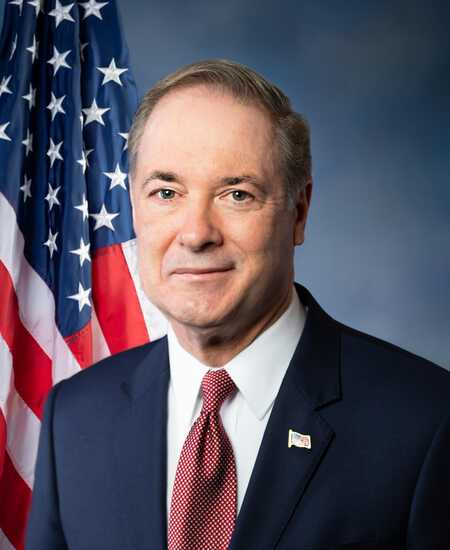
Rep. John Joyce
Sponsored bills
Advancing Facial Recognition Technology Act This bill requires the Department of Commerce to study and report on the impact of facial recognition technology on U.S. businesses conducting interstate commerce. Such study shall involve, among other things, (1) listing industry sectors that develop, promote, and use facial recognition technology and public-private partnerships focused on promoting the development, adoption, and use of such technology; (2) establishing a list of federal agencies asserting jurisdiction over such industry sectors and entities; (3) assessing risks and trends in the marketplace and supply chain of facial recognition technology; and (4) identifying potential harms to individuals related to the use of such technology. Commerce must report to Congress the results of such study and any recommendations to promote the adoption of facial recognition technology.
Campus Free Speech Restoration Act This bill addresses expressive activities (e.g., peacefully assembling, distributing literature, or carrying signs) on college campuses. First, the bill generally prohibits a public institution of higher education (IHE) that participates in federal student-aid programs from restricting noncommercial expressive activities on campus. Further, the bill prohibits a public IHE from receiving federal funds if the Department of Education determines that the public IHE (1) maintains a policy that infringes upon the expressive rights of students; or (2) maintains or enforces time, place, or manner restrictions on expressive activities, except in limited circumstances. In addition, the bill prohibits retaliation against an individual because the individual reported or complained about restrictions on expressive activities or participated in an investigation or hearing. The bill also requires a private IHE that receives federal funds to provide students with its policies related to expressive rights. The bill also establishes a framework for investigating complaints and for IHEs to regain eligibility for federal funds.
Reopening to address Every COmplete Record request for Devoted Servicemembers Act of 2021 or the RECORDS Act of 2021 This bill directs the Office of the Archivist of the United States to take specified steps to address record request backlogs. Specifically, the office must take actions to ensure that (1) the number of individuals employed by the National Personnel Records Center is equal to or exceeds the number of such individuals employed on March 2, 2020, and (2) the percentage of such individuals regularly reporting to work in person is equal to or exceeds the percentage of such individuals regularly reporting to work in person on that date. The office shall submit to specified congressional committees a report that provides a comprehensive plan to address the record request backlog of the National Personnel Records Center and improve the efficiency and responsiveness of operations at the center, identifies measurable goals with respect to the comprehensive plan and metrics for tracking progress toward such goals, and describes strategies to prevent future record request backlogs.
Toxic Exposure in the American Military Act or the TEAM Act This bill requires the Department of Veterans Affairs (VA) to expand health care, benefits, and resources for veterans with conditions related to exposure to toxic substances. Specifically, the bill expands eligibility for VA hospital care, medical services, and nursing home care to include veterans who (1) were exposed to toxic substances, radiation, or other conditions, and were awarded certain medals (e.g., the Armed Forces Service Medal); (2) are eligible for inclusion in the Airborne Hazards and Open Burn Pit Registry; or (3) have been identified by the Department of Defense to have been possibly exposed during service to an open burn pit, toxic substance, or specified hazardous sites. (A burn pit is an area used for burning solid waste in open air without equipment.) The bill establishes a presumption of service-connection for diseases associated with exposure to certain toxic substances and that become manifest within a certain time period; the VA must specify such diseases and requirements through regulations. Under a presumption of service-connection, specific conditions diagnosed in certain veterans are presumed to have been caused by the circumstances of their military service. Health care benefits and disability compensation may then be awarded. The bill also requires the VA to take specified actions to (1) evaluate scientific evidence regarding associations between diseases and exposure to toxic substances; (2) train its health care personnel on identifying, treating, and assessing illnesses related to such exposure; and (3) provide resources to veterans exposed to toxic substances.
Pro-Growth Budgeting Act This bill requires the Congressional Budget Office and the Joint Committee on Taxation to incorporate a macroeconomic impact analysis in their cost estimates for major legislation. The macroeconomic impact analysis (commonly referred to as dynamic scoring) must include the budgetary effects of changes in economic output, employment, capital stock, tax revenues, the sources of financing new outlays, the total debt of the federal government, international trade, international capital flows, and other macroeconomic variables resulting from the legislation.
This resolution requires an analytical statement to be included in committee reports on whether, and the extent to which, the increased budget authority, outlays, or revenue produced by the enactment of a bill or joint resolution may have an inflationary impact on prices and costs in the operation of the national economy and the purchasing power of low- and middle-income families.
Advancing Gig Economy Act This bill requires the Department of Commerce to study and report on the impact of the gig economy on U.S. businesses conducting interstate commerce. Such study shall involve, among other things, (1) outreach to participating entities to establish a list of industry sectors that take part in the gig economy, (2) surveying federal activity on the gig economy to develop a list of agencies asserting jurisdiction over entities in and sectors of the gig economy, and (3) surveying state laws regulating the gig economy to determine their impact on both the gig economy and the U.S. economy. Commerce must report to Congress the results of such study and any recommendations to promote the growth of the gig economy.
Pediatricians Accelerate Childhood Therapies Act of 2021 or the PACT Act of 2021 This bill requires the National Institutes of Health (NIH) to make awards to support early-career pediatric researchers. It also provides statutory authority for the Trans-NIH Pediatric Research Consortium to coordinate pediatric research across national health research institutions.
This joint resolution recognizes and affirms the sovereign and unilateral authority of states to defend themselves against invasion.