School Milk Nutrition Act of 20 21 This bill revises requirements for milk provided by the National School Lunch Program of the Department of Agriculture. The bill permits schools participating in the program to offer students low-fat flavored milk.
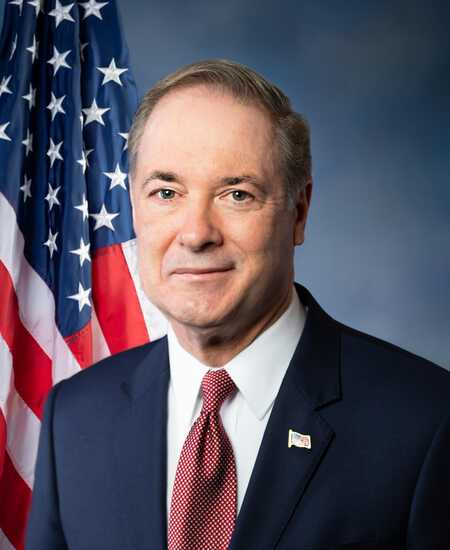
Rep. John Joyce
Sponsored bills
Care That's Fair Act This bill authorizes and provides funds for a grant program to analyze racial and ethnic disparities or other factors that may affect health outcomes for Medicaid enrollees. Specifically, the Centers for Medicare & Medicaid Services may award grants to states to analyze (1) variations in health care outcomes and utilization that are related to race and ethnicity for clinically similar enrollees, or (2) clinical and social factors that contribute to poor infant and maternal health outcomes for enrollees.
Strengthening the Vaccines for Children Program Act of 2021 This bill modifies vaccination programs and coverage for children under Medicaid and the Children's Health Insurance Program (CHIP). Specifically, the bill expands and otherwise modifies the Vaccines for Children Program, which provides free vaccinations to individuals 18 years of age or younger who are uninsured or underinsured (i.e., with limited or no insurance for vaccines), are eligible for Medicaid, or are American Indians or Alaskan Natives. The bill expands the program to include children enrolled in CHIP and temporarily provides for additional payments to incentivize provider participation. The Government Accountability Office must report on the related effects of the bill's changes. The bill also expands coverage under Medicaid and CHIP to include vaccine counseling and educational services for children and temporarily requires payments to be made at a rate that is no less than the rate under Medicare for equivalent services. It also temporarily increases the Federal Medical Assistance Percentage (i.e., federal matching rate) for states that conduct culturally appropriate outreach regarding the benefits of vaccinations for children.
Entrepreneurs Need Timely Replenishment (for) Eating Establishments Act or the ENTRÉE Act This bill provides FY2021 supplemental appropriations for the Restaurant Revitalization Fund and modifies requirements related to administration of the fund. The fund was established in response to COVID-19 to make grants to eligible food and beverage purveyors for covering specified costs such as payroll, operational expenses, and paid sick leave. The bill correspondingly rescinds unobligated amounts previously made available for the Economic Injury Disaster Loan Program and coronavirus state and local fiscal recovery funds. Further, the bill requires the Small Business Administration (SBA) to (1) review and process grant applications in the order in which they are received; (2) impose requirements on applicants that reduce waste, fraud, and abuse; and (3) submit and report monthly on an oversight and audit plan outlining the SBA's policies, procedures, and activities with respect to these grants.
Facilitating Innovative Nuclear Diagnostics Act of 2021 This bill establishes separate payment requirements for diagnostic radiopharmaceuticals under the Medicare prospective payment system for hospital outpatient department services. The bill's requirements apply to diagnostic radiopharmaceuticals that have an average daily cost of $500 or more in 2022 and as adjusted based on a specified fee schedule factor in each year thereafter.
Essential Caregivers Act of 2021 This bill requires skilled nursing facilities, nursing facilities, intermediate care facilities for the intellectually disabled, and nearby inpatient rehabilitation facilities to establish an essential caregivers program during a public health emergency. Under the program, facilities must allow each resident to select up to two essential caregivers to provide daily living assistance, emotional support, or companionship during the emergency. Facilities must afford such caregivers 12 hours of access to residents each day (or unlimited access for end-of-life care), and caregivers must agree to follow facility protocols for staff safety. Facilities may deny access to caregivers who violate protocols, subject to certain notification requirements; the Centers for Medicare & Medicaid Services must establish an appeals process relating to such decisions and may take specified enforcement actions against facilities that violate the bill's requirements.

Appalachian Regional Energy Hub Initiative Act This bill authorizes the Appalachian Regional Commission through FY2026. It also requires the commission to provide technical assistance and grants to individuals or entities in the Appalachian region for projects and activities (1) to conduct research and analysis regarding the impact of an ethane storage hub in the region, (2) with the potential to significantly contribute to the economic resilience of the area where the project is located, and (3) that will help establish a regional energy hub in the region for natural gas and natural gas liquids.
Finish the ADHS Act This bill sets aside funding from the Highway Trust Fund for the Appalachian development highway system (a network of highways linking the region to national interstates) and prescribes a method to allocate the funding.
This resolution requires an analytical statement to be included in committee reports on whether, and the extent to which, the increased budget authority, outlays, or revenue produced by the enactment of a bill or joint resolution may have an inflationary impact on prices and costs in the operation of the national economy and the purchasing power of low- and middle-income families.
Foreign Gain-of-Function Research Prevention Act of 2021 This bill prohibits the use of federal funds to conduct or support gain-of-function research involving potential pandemic pathogens by China, Russia, Iran, North Korea, or other foreign adversaries. Gain-of-function research is any research that is anticipated to confer an attribute on a pathogen to enhance its pathogenicity or transmissibility in mammals. If the Department of State finds that an entity has used funds for prohibited research, the entity may not receive any federal funding for a period of five years.