

Finding Federal Savings Committee Resolution This resolution establishes the House Committee on the Elimination of Nonessential Federal Programs to analyze underperforming or nonessential federal programs and recommend actions to modify or eliminate those programs. The resolution also establishes expedited procedures for legislation reported by the committee to eliminate programs or rescind funding. The committee shall cease to exist at the end of the 119th Congress.
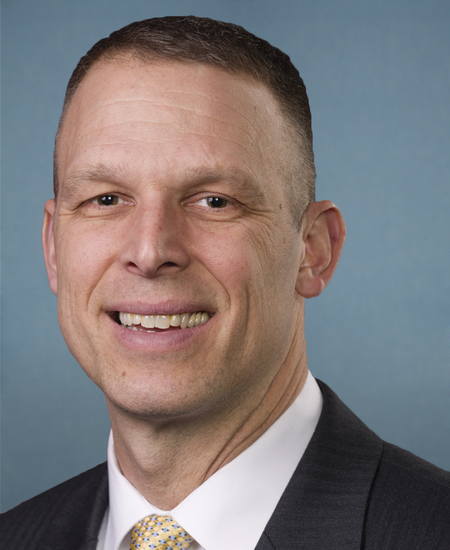
Rep. Scott Perry
Sponsored bills
Taiwan PLUS Act This bill provides Taiwan with preferential treatment when receiving U.S. defense articles and services. Specifically, Taiwan shall be subject to the requirements and procedures that apply to certain U.S. partners and allies, such as North Atlantic Treaty Organization (NATO) member countries, South Korea, and Australia. Under this bill, certain defense transfers to Taiwan shall be subject to less stringent requirements, such as shorter waiting periods and higher minimum value thresholds before various oversight requirements kick in. Taiwan shall also be eligible to receive certain fee reductions and waivers related to defense transfers. Taiwan shall receive such treatment for the five-year period starting from this bill's enactment, and the Department of State may extend this treatment for additional five-year periods if doing so would support U.S. national security interests.
Whole Milk for Healthy Kids Act of 2021 This bill revises requirements for milk provided by the National School Lunch Program of the Department of Agriculture (USDA). Currently, schools participating in the program must provide milk that is consistent with the most recent Dietary Guidelines for Americans; USDA regulations require milk to be fat-free or low-fat and allow only fat-free milk to be flavored. The bill removes these restrictions and instead permits schools to offer students whole, reduced-fat, low-fat, and fat-free flavored and unflavored milk.
This resolution removes Representative Eric Swalwell from the House Permanent Select Committee on Intelligence.
Protecting American Jobs Act This bill limits the authority of the National Labor Relations Board. Specifically, it repeals the authority of the General Counsel ofthe board to issue, and prosecute before the board, complaints of unfair labor practices. The bill also limits the board's rulemaking authority to rules concerning the internal functions of the board and prohibits the board from promulgating regulations affecting the substantive or procedural rights of any person, employer, employee, or labor organization, including rules concerning unfair labor practices and representation elections. Not later than six months after this bill is enacted, the board must review existing regulations and revise or rescind such regulations as necessary to implement these modifications to the board's rulemaking authority. In addition, the bill repeals the board's authority to issue orders preventing unfair labor practices, replacing it with a more limited authority to investigate allegations of such practices. Finally, it repeals the board's authority to petition courts for enforcement of its orders, seek injunctions, or hold hearings on jurisdictional strikes.
Let States Cut Taxes Act This bill removes a prohibition on states and territories using COVID-19 (i.e., coronavirus disease 2019) relief funding under the American Rescue Plan Act of 2021 to offset a reduction in revenue resulting from a reduction in taxes or a delay in the imposition of a tax or tax increase.
Unauthorized Spending Accountability Act of 2021 This bill establishes a three-year budgetary level reduction schedule for unauthorized programs funded through the annual appropriations process. Under the bill, a budgetary level is an allocation provided to the congressional appropriations committees under Section 302(a) of the Congressional Budget Act of 1974 by a congressional budget resolution or a deeming resolution. The schedule applies to programs included in the Congressional Budget Office's annual report listing programs that are funded through the appropriations process and have an authorization of appropriations that has either expired or will expire during the year. For the first year after a program's authorization has expired, the bill requires the budgetary level to be reduced by 10% of the funds appropriated for the program in the expiring fiscal year. The bill then requires reductions of 15% in the second and third years before terminating the program at the end of the third unauthorized year. Programs that are reauthorized during the three-year period are exempt from the budgetary level reductions if the reauthorization contains a sunset provision limiting the authorization of appropriations period to no more than three years. The bill establishes the Spending and Accountability Commission to review all mandatory spending programs and submit to Congress a legislative proposal to establish an authorization cycle for discretionary spending programs. The commission may recommend legislation to replace the budgetary level reductions required by this bill with reductions in mandatory spending. The commission's reauthorization schedule must limit reauthorizations to three years, include the budgetary level reductions established by this bill, and establish a mechanism for replacing the budgetary level reductions with reductions to mandatory spending programs. The House of Representatives must consider the commission's proposal using specified expedited legislative procedures.
No Taxpayer-Funded Checks for Prisoners Act This bill prohibits individuals who were incarcerated in a federal prison on the enactment date of the American Rescue Plan Act of 2021 from receiving the recovery rebates provided by that Act.
Do Your Job Act of 2021 This bill eliminates the use of official time by federal employees. Official time is paid time off from assigned duties to perform labor-management relations activities.
Pharmacy Benefit Manager Accountability Study Act of 2021 This bill requires the Government Accountability Office to report on the role of pharmacy benefit managers in the pharmaceutical supply chain and recommend legislative actions to lower the cost of prescription drugs. The report must address the use of rebates and fees, the average prior authorization approval time, and the use of step therapy within the 10 largest pharmacy benefit managers.