

This resolution expresses the sense of the House of Representatives that the global COVID-19 (i.e., coronavirus disease 2019) outbreak is a direct result of China's human rights abuses and propaganda campaign and that China should be held accountable for its handling of the outbreak.
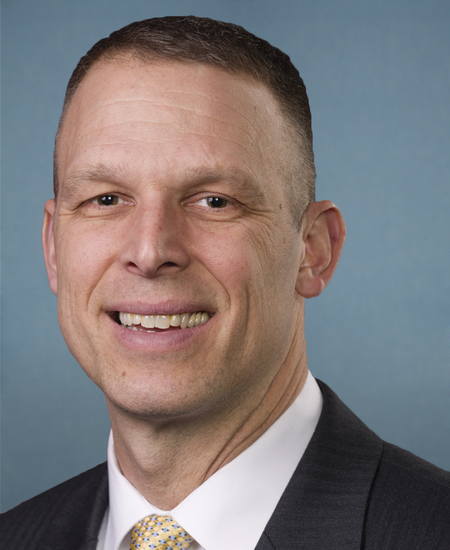
Rep. Scott Perry
Sponsored bills
Developing Responsible Individuals for a Vibrant Economy Act or the DRIVE-SAFE Act This bill directs the Department of Transportation to promulgate regulations to implement an apprenticeship program for licensed commercial motor vehicle drivers under the age of 21. Under the program, an apprentice must complete two probationary periods that total 400 hours of on-duty time, of which at least 240 hours must be driving time in a commercial motor vehicle. Additionally, the apprentice must be accompanied in the cab of the commercial motor vehicle by an experienced driver. Further, the bill requires all commercial motor vehicles used in the program for training to be equipped with safety technology such as active braking collision mitigation systems and video event capturing systems. An employer shall not knowingly allow, require, permit, or authorize a driver under the age of 21 to operate a commercial motor vehicle unless the driver is participating in, or has completed, an apprenticeship program that meets the requirements set forth in this bill.
Fair Access to Banking Act This bill restricts certain banks, credit unions, and payment card networks from refusing to do business with a person who is in compliance with the law. Restrictions include prohibiting the use of certain lending programs, initiating the process of terminating an institution's depository insurance, and instituting specified civil penalties.
Energy Sovereignty Act This bill repeals section 115 of the Clean Air Act, which addresses the remediation of international air pollution that originates from sources in the United States.
Death Tax Repeal Act This bill repeals the estate and generation-skipping transfer taxes. It also makes conforming amendments related to the gift tax.
Donald Payne Sr. Colorectal Cancer Detection Act of 2021 This bill provides for Medicare coverage and payment, subject to specified frequency limits, of certain colorectal cancer screening blood-based tests.
Treatment and Relief through Emerging and Accessible Therapy for PTSD Act or the TREAT PTSD Act This bill requires the Department of Veterans Affairs (VA) and the Department of Defense (DOD) to furnish stellate ganglion block to certain veterans or members of the Armed Forces (including reserve components) diagnosed with post-traumatic stress disorder (PTSD). Blocking the stellate ganglion (a group of nerves at the base of the neck) by injecting a local anesthetic is a treatment that may alleviate PTSD symptoms. The bill authorizes this treatment for any veteran or member of the Armed Forces who (1) is enrolled in the VA health care system or TRICARE program, (2) has been diagnosed with PTSD, and (3) has elected to receive stellate ganglion block after being informed by a physician of the risks and benefits. Such treatment may be furnished at a VA medical center, DOD medical facility, or through health care provider under the Veterans Community Care Program or TRICARE health insurance program. The bill also requires the VA and DOD to update the VA/DOD Clinical Practice Guideline (CPG) for the Management of PTSD to ensure that information about stellate ganglion block is included.
No Wireless Installations in Federal Instruments for Voting Act or the No WIFI Act This bill prohibits a voting system used in a federal election from containing wireless components.
Token Taxonomy Act of 2021 This bill specifies that digital tokens, such as those used in virtual currencies, are not securities for regulatory purposes. The bill also provides for the tax treatment of virtual currencies, including by excluding from gross income any gains from virtual currency transactions up to $600, retroactive to January 1, 2021.
This joint resolution proposes a constitutional amendment repealing the Twenty-third Amendment to the Constitution (allowing citizens residing in the District of Columbia to vote for presidential electors, who in turn vote in the electoral college for the President and Vice President).