

Maddy summaryThe Comprehensive Paid Leave for Federal Employees Act expands paid family and medical leave benefits for federal workers, including those in the Executive Office of the President, the Postal Service, and the District of Columbia courts. Key provisions increase the standard leave entitlement to 12 weeks plus any accrued annual or sick leave, while also extending coverage to include pregnancy loss, fertility issues, and failed adoptions. The bill specifically adds a new category of leave allowing employees to take time off to address the needs of family members who are victims of dating violence, domestic violence, sexual assault, stalking, or sex trafficking. To fund this expanded coverage, the legislation requires employees to agree to work for a period equal to the time taken off, with exceptions made for death or serious health conditions.
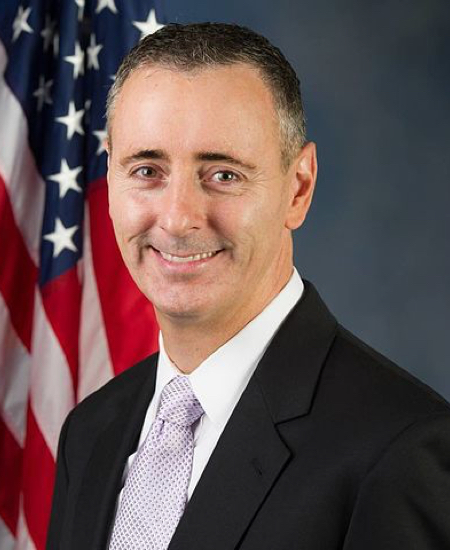
Rep. Brian K. Fitzpatrick
Sponsored bills
Maddy summaryThe GRACE for Military Survivors Act extends the deadline for contributing military death benefits to Roth IRAs and Coverdell education savings accounts from one year to three years. This change directly benefits families of service members who receive these death benefits, giving them more time to save for retirement or education. The law applies to benefits received after the bill is enacted and includes a special rule allowing contributions made within a specific window for benefits received between 2001 and the enactment date. By amending the Internal Revenue Code, the bill ensures that eligible funds can be deposited into these tax-advantaged accounts without losing their value due to time limits.
Maddy summaryThis bill authorizes Congress to award a Congressional Gold Medal to individuals who fought for or with the United States in the Pacific theater during World War II and subsequently became prisoners of war. The legislation specifically recognizes the service and sacrifice of those who defended locations such as Bataan and Corregidor, including Filipino soldiers and civilians who served alongside U.S. forces. To implement this award, the Speaker of the House and the President pro tempore of the Senate will arrange for the creation of a gold medal by the Secretary of the Treasury, which will be presented to the Smithsonian Institution for display. The act also allows for the production of duplicate bronze medals to cover the costs of the original gold medals, with any proceeds from these sales deposited into the United States Mint Public Enterprise Fund.
Maddy summaryThis bill directs the National Institute of Standards and Technology to create task forces that develop technical standards for labeling content created by artificial intelligence. These groups will work with technology companies, social media platforms, and privacy experts to establish methods for watermarking images and videos, as well as tagging text, to help users distinguish AI-generated material from human-made content. The legislation requires these task forces to include representatives from various sectors, including developers, media organizations, and labor groups, and mandates regular reporting to Congress on their progress. Additionally, the bill emphasizes the need to protect user privacy when implementing these new tracking and labeling systems.
Creating Resources for Every American To Experiment with Artificial Intelligence Act of 2025 or the CREATE AI Act of 2025 This bill establishes a national program to provide U.S. researchers, educators, and students with access to artificial intelligence (AI) data, computational resources, educational tools and services, and testbeds. The program, to be known as the National Artificial Intelligence Research Resource (NAIRR), must be established by the National Science Foundation (NSF) to improve U.S. AI research capacity and spur the strategic development of AI capabilities. NAIRR may accept and use donated resources from the private sector and federal agencies. Those eligible to use NAIRR resources are (1) researchers, educators, and students based in the United States and affiliated with a U.S. institution of higher education, nonprofit, executive agency, or other specified entity; and (2) employees of U.S. executive agencies or federally funded research and development centers with a demonstrable mission need. NSF must select a nongovernmental organization to operate NAIRR (i.e., an operating entity ) through a competitive and transparent process. The operating entity must ensure that a significant percentage of the annual allotment of computational resources is provided to projects primarily focused on AI privacy, ethics, safety, security, risk mitigation, or trustworthiness. The operating entity must also establish minimum security requirements for all individuals interacting with NAIRR. The operating entity may establish a fee schedule for access to NAIRR, which must include a free tier of access and must ensure that the primary purpose of NAIRR is to support research.
Maddy summaryThe SABER Act of 2026 expands the allowable uses of the Ukraine Support Fund to include purchases of defense articles and services aimed at responding to and recovering from Russian aggression. This change directly affects the Government of Ukraine by permitting it to use these funds for a broader range of military and recovery needs beyond previously specified categories. The bill achieves this by amending an existing section of the Rebuilding Economic Prosperity and Opportunity for Ukrainians Act to add new permissible expenditures.
Maddy summaryThe Countering Russian Trafficking Act authorizes the President to impose sanctions on Russian government officials, religious organizations, private adoption agencies, and other entities involved in the forced transfer and indoctrination of Ukrainian children. This legislation designates these individuals and groups as participants in transnational criminal activity and requires the President to apply existing financial blocking measures to their assets within 180 days. The bill also mandates that an interim list of sanctioned persons be submitted to Congress within 120 days and establishes a process for congressional committees to request specific determinations on whether foreign entities meet the criteria for sanctions.
Maddy summaryThe Public Service Accountability Act restricts Members of Congress, the President, Vice President, and various federal officials from owning or trading specific financial investments, including commodities and derivatives. To comply, these individuals must divest existing holdings within 180 days of the law's enactment or 90 days after becoming covered officials, while also excluding certain assets like widely held funds, government bonds, and small business interests. The bill establishes penalties for violations, including fines equal to 10% of the investment value and the disgorgement of profits, which cannot be paid using campaign funds or official allowances. Additionally, the law requires ethics offices to issue certificates of divestiture and publish details of any fines assessed on their public websites.
Maddy summaryThis bill authorizes the presentation of Congressional Gold Medals to the four crew members of the Artemis II mission to recognize their historic achievement in advancing human space exploration. The legislation directs the Speaker of the House and the President pro tempore of the Senate to arrange for the medals, which will feature the faces of the astronauts and be struck by the Secretary of the Treasury. In addition to the gold medals, the bill permits the minting and sale of duplicate bronze versions to help cover production costs, with any proceeds returned to the United States Mint Public Enterprise Fund.