

Maddy summaryThis bill redesignates the existing National Parks and Public Land Legacy Restoration Fund as the America's Legacy Restoration Fund to address deferred maintenance on federal lands. It directs revenue from recreation fees and a portion of energy development income into the fund, which must be used primarily for repairing critical infrastructure like roads, trails, and buildings managed by agencies such as the National Park Service and the Forest Service. The legislation establishes strict rules requiring that most funds go toward non-transportation projects, mandates transparency through public dashboards tracking project status, and sets aside a small percentage for matching private donations. Additionally, the bill increases entrance fees for foreign visitors to ensure they contribute to the fund, while prohibiting the use of these specific funds for land acquisition or employee bonuses.
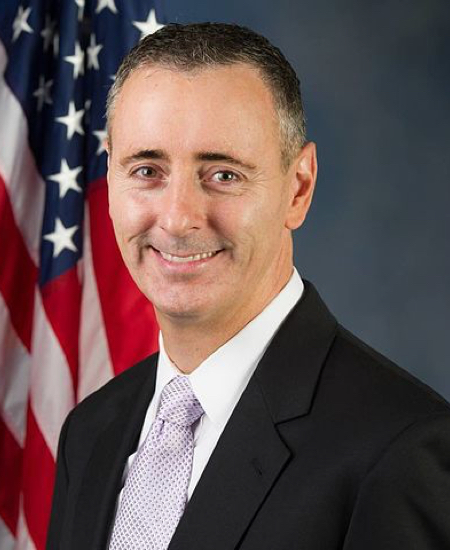
Rep. Brian K. Fitzpatrick
Sponsored bills
Maddy summaryThe Military Family Limb Loss Support Act directs the Department of Defense to create a new program starting in fiscal year 2028 to assist military dependents who have lost a limb or have a limb difference. This initiative will provide peer mentoring, education on limb care, and support for community reintegration through partnerships with experienced organizations. The law requires the Secretary of Defense to submit an implementation plan within 180 days and submit annual reports detailing the number of families served, services provided, and any gaps in coverage.
Maddy summaryThe Stop Scamming Americans Act requires the U.S. State Department to provide specialized training for diplomats assigned to countries known for significant online scam activity targeting Americans. This training will cover transnational criminal organizations, the role of human trafficking within scam centers, and instances of foreign government corruption or complicity. Additionally, the program aims to teach diplomatic methods for identifying, preventing, and responding to these international scams. The bill directly affects Foreign Service officers and chiefs of mission who work in regions where such cybercrime is prevalent.
Maddy summaryThe Next Mission Act establishes a three-year pilot program that awards multiyear grants to private, nonprofit organizations to help military service members and their spouses transition to civilian careers. Eligible organizations must demonstrate a history of successful job training, rigorous evaluation methods, and the ability to offer online services to reach rural participants. These grants fund free services such as career assessments, mock interviews, industry-specific training pathways, and job placement assistance, with priority given to entities verified by third parties. The Department of Defense will track performance using metrics like job placement rates and median salaries, and must submit a final report to Congress after the program concludes.
Maddy summaryThe Latonya Reeves Freedom Act of 2026 strengthens the Americans with Disabilities Act to ensure individuals with long-term service and support needs have a federally protected right to live in their communities rather than institutions. It requires states and insurance providers to offer community-based services that allow people to maintain independence, control their own care, and access affordable, integrated housing. The bill mandates that public entities and insurers create enforceable transition plans to move people out of institutions, conduct self-evaluations to identify barriers, and establish clear grievance procedures for resolving complaints. Enforcement is handled by the Department of Justice, which can investigate violations, while individuals may also file civil lawsuits to seek damages or court orders preventing institutionalization.
Maddy summaryThis bill allows veterans diagnosed with Parkinson's disease or similar movement disorders to access boxing-based exercise classes as part of their medical treatment. Under the new provisions, eligible veterans enrolled in the VA health care system can receive these classes directly at a VA facility or get reimbursement to attend them at a non-VA location. The policy change takes effect 180 days after the bill is enacted, providing a specific therapeutic option for managing the symptoms of these neurological conditions.
Maddy summaryThis bill, titled the Ending Stolen SNAP Benefits Act of 2026, aims to help households recover food assistance funds lost to identity theft and skimming. It requires the federal government to create new rules that make it easier for states to identify stolen benefits and reissue them to victims without placing a heavy burden on them to prove the crime occurred. Additionally, the legislation provides states with 90 percent funding to cover the administrative costs of upgrading their electronic benefit transfer cards to more secure chip-enabled technology. The bill also mandates regular reports to Congress on how many benefits are being recovered and sets a deadline for these specific cost-sharing provisions to end in 2031.
Maddy summaryThis bill directs the government auditor (Comptroller General) to study how wildfire prevention programs operate across different land ownerships - including federal, state, tribal, and private lands. The study will examine current federal rules, funding access, and specific wildfire mitigation activities from the 2003 Healthy Forests Restoration Act. It will identify barriers and opportunities to improve cross-boundary collaboration, with a report due to Congress within two years. The bill itself does not create new programs or funding, only requiring this analysis.
Maddy summaryThis resolution designates the second Friday of June as National Service and Conservation Corps Day to honor the work of over 140 organizations that engage young adults and veterans in community and environmental projects. These programs, which are descendants of the Civilian Conservation Corps, provide participants with skills training, stipends, and opportunities to work on conservation, disaster response, and infrastructure improvements. The bill formally recognizes the contributions of these groups and encourages citizens to value civic engagement as the nation approaches its 250th anniversary.
Maddy summaryThe Stop Crypto ATM Scams Act requires digital asset kiosk operators to register their locations with the Treasury Department and makes this information publicly available. To combat fraud and money laundering, the bill mandates strict identity verification, transaction limits of $2,000 per day for new customers, and the use of blockchain analytics to monitor suspicious activity. Operators must also provide clear, standardized disclosures about fees and risks, display scam warnings, offer live customer support, and issue detailed receipts to users. Additionally, the law sets federal transaction limits that supersede state restrictions while allowing states to issue compliance decals and maintain their own licensing requirements.