

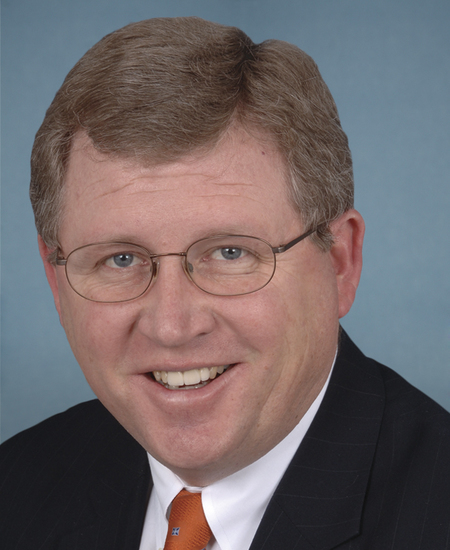
Photo of Frank D. Lucas
R United States House · District 3 · Oklahoma On the 2026 ballot

Rep. Frank D. Lucas

Compare
Total votes
2,818
all sessions
Attendance
97%
90 missed
Near the chamber average
With party
93%
of cast votes
Near the chamber average
Bipartisan score
4%
crosses aisle rarely
Near the chamber average
Sponsored
375
bills & resolutions
Lower than 97% of chamber peers
Committees
7
assignments
375 bills and resolutions

Sponsored bills

Total
375
Primary
47
Co-sponsor
328
This page
375
matching current filters
Co-sponsor HR 1004
In committee · Florida House · Co-sponsor
Love Lives On Act of 2025

Love Lives On Act of 2025 This bill extends entitlement for various benefit programs and services for surviving spouses of deceased members of the Armed Forces or veterans. The bill provides that the remarriage of a surviving spouse must not bar the furnishing of dependency and indemnity compensation or special pension benefits to such spouse. Additionally, the Department of Defense may not terminate the payment of an annuity for a surviving spouse under the Survivor Benefit Plan solely because the surviving spouse remarries. The bill also expands the definition of a dependent under TRICARE to include a remarried widow or widower whose subsequent marriage has ended due to death, divorce, or annulment.

In committee Mar 26, 2026 1 co-sponsor
Primary HR 8087
In committee · Florida House · Lead sponsor
Main Street Depositor Protection Act

Maddy summaryThis bill, the Main Street Depositor Protection Act, expands deposit insurance coverage for noninterest-bearing transaction accounts at banks and credit unions to help protect everyday consumers' savings. It allows the Federal Deposit Insurance Corporation to set a maximum insurance limit for these accounts between the standard $250,000 and $5 million, with the exact amount determined by rules that consider banking stability and economic growth. The expansion applies to smaller community banks and credit unions with assets of $10 billion or less, which are exempt from special assessments during a transition period. Over a 10-year period, the insurance coverage for these accounts will gradually increase to cover the full amount up to the established limit, while larger banks and foreign bank branches remain excluded from this new coverage.

In committee Mar 25, 2026 0 co-sponsors
Primary HR 6967
In committee · Florida House · Lead sponsor
Public Company Advisory Committee Act of 2026

Maddy summaryHR 6967, the Public Company Advisory Committee Act of 2026, establishes a new advisory committee within the Securities and Exchange Commission (SEC) to provide input on regulatory matters affecting public companies. The committee, composed of 10-20 members including public company executives, industry association leaders, and professional advisers (like lawyers and accountants), will advise the SEC on corporate governance, shareholder meetings, capital formation, and market rules - excluding enforcement actions. The SEC must publicly respond to each committee recommendation but is not required to adopt any suggestions. The committee operates without federal advisory committee regulations and cannot overlap with existing SEC advisory groups.

In committee Mar 19, 2026 0 co-sponsors
Co-sponsor HR 1422
Passed · Florida House · Co-sponsor
Enhanced Iran Sanctions Act of 2025

Enhanced Iran Sanctions Act of 2025 This bill imposes sanctions on certain foreign persons (individuals and entities) that are involved in Iran's petroleum sector as well as certain associated persons. The bill also requires or authorizes actions to facilitate the enforcement of sanctions on Iran. Specifically, the bill requires the President to impose visa- and property-blocking sanctions on any foreign person that, after the bill's enactment, knowingly engages in any transaction related to the processing, export, or sale of oil, condensates, gas, liquefied natural gas, or other petrochemical products in whole or in part from Iran. The President must also impose sanctions on certain foreign persons associated with a sanctioned individual or entity. For example, the President must sanction the subsidiaries and corporate officers of a sanctioned business. The bill provides certain exceptions to these sanctions, including specifying that sanctions do not apply to the importation of goods or to conducting or facilitating transactions for humanitarian assistance. The Department of State must establish an interagency working group that shall seek to establish a multilateral contact group to coordinate international efforts to enforce sanctions on Iran. The bill expands the State Department rewards program to authorize a reward payment to any individual who furnishes information leading to the identification of a person (1) subject to sanctions under this bill, or (2) that has attempted or is attempting to evade sanctions under this bill.

Passed Mar 17, 2026 1 co-sponsor
Co-sponsor HR 6553
In committee · Florida House · Co-sponsor
TIER Act of 2025

Maddy summaryThe TIER Act of 2025 adjusts financial regulatory thresholds to account for economic growth. It raises key asset thresholds for large banks and financial institutions - from $250 billion to $370 billion in most cases (e.g., in the Federal Reserve Act and Financial Stability Act). The bill also establishes a new mechanism requiring periodic, automatic adjustments to these thresholds every five years based on U.S. GDP growth, starting in 2031. These changes directly affect large bank holding companies and financial firms subject to federal oversight under current regulations. The adjustments aim to keep regulatory standards aligned with the evolving size of the economy.

In committee Feb 25, 2026 1 co-sponsor
Co-sponsor HR 3682
Passed · Florida House · Co-sponsor
Financial Stability Oversight Council Improvement Act of 2025

Maddy summaryThis bill amends the process for the Financial Stability Oversight Council (FSOC) when considering actions against U.S. nonbank financial companies. It requires the FSOC to first determine that alternative solutions - such as new regulatory standards, agency actions, or a company's written plan - are not possible or insufficient to protect financial stability before voting on a formal determination. The change directly affects the FSOC and large nonbank financial companies that could face regulatory scrutiny. The key provision adds a new step to ensure the Council explores other options before taking significant action. (Procedural bill; summary limited to 3 sentences as specified.)

Passed Feb 11, 2026 1 co-sponsor
Co-sponsor HR 3390
Passed · Florida House · Co-sponsor
Bringing the Discount Window into the 21st Century Act

Maddy summaryHR 3390, the "Bringing the Discount Window into the 21st Century Act," requires the Federal Reserve Board to review and potentially modernize its discount window operations - the facility banks use to borrow during liquidity crises. Within 240 days, the Fed must assess the window's effectiveness, technology, cybersecurity, communications, oversight, and operating hours, including public input. The Fed must then develop a remediation plan with specific actions, timelines, and measures to maintain improvements, and submit a report to Congress within one year. Annual follow-up reports on progress will also be required. This bill directly affects the Federal Reserve’s operations and the banks relying on the discount window during financial stress.

Passed Feb 11, 2026 1 co-sponsor
Primary HR 1531
Passed · Florida House · Lead sponsor
PROTECT Taiwan Act

Maddy summaryThe PROTECT Taiwan Act requires U.S. agencies to bar representatives of China from attending meetings of six major international financial organizations (including the Bank for International Settlements and Financial Stability Board) if the President declares that China's actions threaten Taiwan's security or U.S. interests. It directs the Treasury, Federal Reserve, and SEC to implement this exclusion policy. The law expires automatically after five years unless the President notifies Congress that continuing it serves U.S. national interests. This is a procedural policy change affecting U.S. participation in international financial forums, not a direct economic or security measure.

Passed Feb 11, 2026 0 co-sponsors
Co-sponsor HR 7391
In committee · Florida House · Co-sponsor
Community Health Center Drug Pricing Protection Act

Maddy summaryHR 7391, the Community Health Center Drug Pricing Protection Act, requires that Federally Qualified Health Centers (FQHCs) pay the discounted 340B ceiling price for covered drugs **at the time of purchase**, not later through rebates or adjustments. This directly affects FQHCs, which rely on 340B discounts to provide affordable care to low-income patients. The bill amends the Public Health Service Act to prohibit manufacturers from entering agreements where FQHCs initially pay more than the ceiling price, with later reimbursement. It takes effect immediately upon enactment for all new drug purchases and applies to existing agreements starting then.

In committee Feb 5, 2026 1 co-sponsor
Showing 11 to 20 of 375 bills