

Maddy summaryThis bill amends the Natural Gas Act to give the Federal Energy Regulatory Commission (FERC) exclusive authority to approve U.S. LNG export terminal projects, requiring FERC to deem such exports consistent with the public interest. It directly affects natural gas companies seeking to build or expand export facilities and streamlines FERC's review process by removing prior requirements for interagency coordination. The bill clarifies that FERC's decisions won't override existing sanctions laws, including restrictions on trade with countries designated as state sponsors of terrorism under current law. This change aims to accelerate domestic LNG export projects while maintaining legal safeguards for national security and foreign policy.
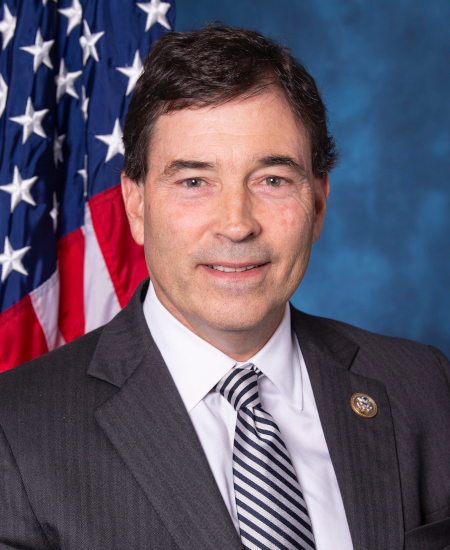
Rep. Troy Balderson
Sponsored bills
Maddy summaryThe CLEAR Act of 2025 prevents repeated lawsuits challenging the same energy project after a final court ruling. It establishes a "single action rule": once a court rules on an authorization for an energy project (like a permit for a wind farm or pipeline), no further lawsuits about that project can be filed in federal or state courts, regardless of the party or type of claim. Exceptions include legal actions about operational violations after the project begins producing energy or enforcement actions by government agencies. The bill also limits courts to remanding approvals for correction within 180 days and requires lawsuits to be filed within 150 days of public agency action, unless a shorter timeframe applies.
Give Kids a Chance Act of 2025 This bill expands the Food and Drug Administration’s (FDA’s) authority with respect to research on rare pediatric diseases, including by permitting the FDA to take enforcement action against drug sponsors that fail to satisfy pediatric study requirements and by reauthorizing programs that support pediatric research. Specifically, the bill modifies requirements relating to molecularly targeted pediatric cancer investigations to permit research on new drugs in combination with active ingredients that have already been approved, provided certain conditions are met; permits the FDA to take enforcement action against drug sponsors that fail to comply with pediatric study requirements, if such sponsors demonstrated a lack of due diligence in satisfying the requirement; renews the FDA’s authority to award priority review vouchers to sponsors of new products intended to treat rare pediatric diseases through September 30, 2029; and reauthorizes through FY2027 certain funding for the National Institutes of Health to support priority pediatric research. The bill also provides statutory authority for the FDA’s interpretation of the orphan drug exclusivity period. The bill specifies, consistent with FDA regulations, that the seven-year market exclusivity period for drugs for rare diseases or conditions (i.e., orphan drugs) prohibits the approval of the same drug for the same approved use or indication with respect to the disease or condition. (In Catalyst Pharmaceuticals, Inc. v. Becerra , a court rejected the FDA’s interpretation and held that orphan drug exclusivity extends to all uses or indications for the disease or condition.)
Maddy summaryHR 5563, the DRIVE-SAFE Act, creates a structured apprenticeship program for commercial drivers under age 21. It requires employers to provide a two-phase training program: a 120-hour probationary period focused on basic driving skills (like traffic navigation and safety awareness), followed by a 280-hour period covering advanced tasks (such as pre-trip inspections and load management). During both phases, apprentices must operate vehicles equipped with automatic transmissions, collision mitigation systems, and video capture, and must be accompanied by an experienced driver (26+ years old with no recent accidents or violations). The bill does not change existing commercial driver’s license requirements and mandates employers to maintain records and provide remediation for preventable accidents or violations during training.
Maddy summaryHR 5888, the UNtaxed Act, prohibits the United Nations or its affiliated bodies from imposing taxes, tariffs, or fees on U.S. citizens or companies without a Senate-approved agreement. It also blocks U.S. funding for any United Nations activities related to implementing or enforcing a global carbon tax, which is defined as a tax on vessel emissions under a worldwide fuel system. The bill directly affects U.S. businesses and citizens who might face UN levies, and it restricts federal resources from supporting international carbon tax initiatives. This legislation aims to prevent unilateral UN taxation and funding of carbon-related policies without congressional oversight.
Maddy summaryThe Supplemental Benefits for Individuals Act of 2025 amends Section 2791(c)(4) of the Public Health Service Act to include individual health insurance coverage as an "excepted benefit." This change allows health insurance plans purchased directly by individuals (not through employers) to be classified as excepted benefits, meaning they would not need to cover essential health benefits required of standard health plans under the Affordable Care Act. The bill directly affects individuals who buy health insurance on their own by expanding the types of coverage available without meeting full ACA requirements. The key mechanism is a technical update to the definition of excepted benefits in federal law.
Maddy summaryHR 5765, the Affordable, Reliable, Clean Energy Security Act of 2025, is a procedural bill directing federal energy agencies to adopt specific definitions for "affordable," "reliable," and "clean" energy in their regulations and policies. It requires the Departments of Energy, Interior, and the EPA to identify existing rules needing updates within 90 days, publish these findings online, and fully incorporate the definitions into agency work within 180 days. The bill does not create new programs or alter energy production but mandates agencies to use these standardized definitions when making future decisions about energy policy. This affects how federal agencies evaluate and manage energy-related programs and funding.
Maddy summaryThis bill adds Medicare coverage for multi-cancer early detection screening tests (blood or biological tests analyzing cell-free DNA) starting January 1, 2028. It directly affects Medicare beneficiaries aged 68 and older (starting in 2028, with the age limit increasing by 1 year annually), requiring tests to be FDA-cleared and deemed reasonable/necessary by the Secretary for early cancer detection across multiple organ sites. Payment will initially match current stool DNA test rates before 2031, then shift to a lower rate or new payment system after 2031, with limits preventing more than one test per year. The bill explicitly states it does not alter coverage for existing cancer screenings like breast, colorectal, or prostate cancer tests.
Maddy summaryThis bill would require all states to recognize valid concealed carry permits issued by other states, allowing permit holders to carry concealed handguns (excluding machine guns) in any state that either issues such permits or doesn't prohibit concealed carry. It directly affects law-abiding gun owners with valid permits from their home state, ensuring they can carry in states with similar permit systems or no prohibitions. Key provisions include treating valid permit documents as proof of legal carry (reducing officer stops), shifting the burden of proof to prosecutors if challenged, and allowing civil lawsuits for violations with attorney's fee awards. The bill does not override state laws restricting firearms on private property or government land, nor does it affect federal gun restrictions like those in section 922(q).
Maddy summaryHRES 719 is a House resolution honoring Charles "Charlie" James Kirk, the founder of Turning Point USA who was assassinated on September 10, 2025. The resolution condemns his assassination and all political violence, extends condolences to his family, and calls on Americans to reject violence while promoting civil discourse. It specifically recognizes Kirk's legacy as a defender of constitutional principles and his role in inspiring youth through free speech and faith-based civic engagement. As a commemorative resolution, it does not enact policy changes but formally expresses the House's stance on honoring his life and legacy.