

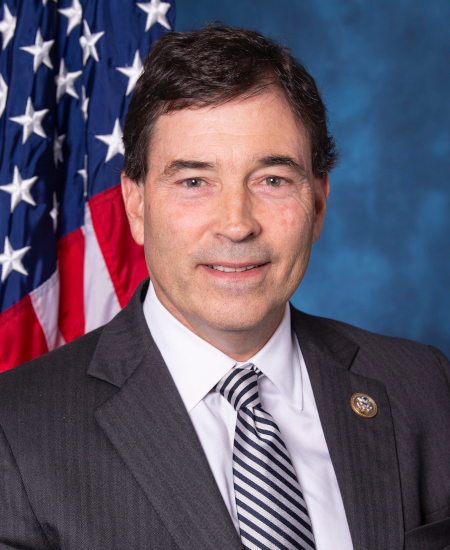
Photo of Troy Balderson
R United States House · District 12 · Ohio On the 2026 ballot

Rep. Troy Balderson

Compare
Total votes
2,818
all sessions
Attendance
99%
20 missed
Near the chamber average
With party
96%
of cast votes
Near the chamber average
Bipartisan score
2%
crosses aisle rarely
Near the chamber average
Sponsored
795
bills & resolutions
Lower than 76% of chamber peers
Committees
4
assignments
795 bills and resolutions

Sponsored bills

Total
795
Primary
52
Co-sponsor
743
This page
795
matching current filters
Co-sponsor HR 4218
In committee · Florida House · Co-sponsor
CLEAR Act

Maddy summaryThe CLEAR Act (HR 4218) amends the Clean Air Act to streamline state compliance with air quality standards. It extends the review cycle for national air quality standards from five to ten years, requires states to consider economic feasibility alongside technical achievability when developing plans, and gives states up to three years (instead of two) to fix deficiencies before federal intervention. The bill also creates a new exception for wildfire mitigation actions like prescribed fires, allowing states to exclude wildfire-related air quality data from violation determinations. These changes primarily affect states responsible for implementing air quality plans under federal oversight.

In committee Jan 21, 2026 1 co-sponsor
Co-sponsor HR 7145
In committee · Florida House · Co-sponsor
To amend title XIX of the Social Security Act to establish a definition of essential health system in statute and for other related purposes.

Maddy summaryHR 7145 defines "essential health systems" as hospitals serving large numbers of Medicaid and low-income patients, specifically targeting non-Federal, nonprofit, or government-run hospitals that meet one of three criteria for at least two of the past three years (e.g., high Medicaid patient percentage, high uncompensated care, or top 16th percentile in state rankings for low-income care). The bill requires MACPAC to annually publish an "essential health system index" ranking qualifying hospitals nationally, by state, and within local areas, using data from Medicare reporting. Hospitals designated as essential health systems receive a five-year designation, renewable if they maintain eligibility. This framework aims to identify facilities providing critical community care for vulnerable populations through standardized metrics.

In committee Jan 16, 2026 1 co-sponsor
Co-sponsor HR 7118
In committee · Florida House · Co-sponsor
Genomic Answers for Children’s Health Act of 2026

Maddy summaryHR 7118, the Genomic Answers for Children’s Health Act of 2026, requires Medicaid to cover whole genome and whole exome sequencing for Medicaid-eligible children with specific medical needs, including genetic disorders, rare diseases, congenital anomalies, developmental delays, or intellectual disabilities. It mandates that this testing be ordered as a first-tier test by a physician and paid separately, not bundled with other services. The bill also requires the Department of Health and Human Services to convene stakeholders, conduct outreach to raise awareness, and publish a report within two years detailing state payment rates and usage data. Additionally, it directs a Comptroller General report assessing implementation barriers, workforce challenges, and payment alignment with market costs. The changes take effect January 1, 2027.

In committee Jan 15, 2026 1 co-sponsor
Co-sponsor HR 4593
Passed · Florida House · Co-sponsor
SHOWER Act

Maddy summaryThe SHOWER Act updates the federal definition of "showerhead" in the Energy Policy and Conservation Act to align with the ASME A112.18.1-2024 industry standard, while explicitly excluding safety showerheads. This change clarifies which showerhead products must comply with federal energy efficiency regulations, directly affecting manufacturers and sellers of standard showerheads. The bill requires the Department of Energy to revise relevant regulations within 180 days of enactment to match this new definition. As a result, safety showerheads will no longer be subject to the same energy efficiency standards as typical residential showerheads.

Passed Jan 15, 2026 1 co-sponsor
Primary HR 3616
Passed · Florida House · Lead sponsor
Reliable Power Act

Maddy summaryThe Reliable Power Act requires the Electric Reliability Organization (ERO) to conduct annual assessments of the U.S. power grid's ability to maintain reliable electricity supply, including analyzing generation resources, transmission needs, and risks of shortages during extreme weather. If the ERO identifies a risk of insufficient generation, it notifies the Federal Energy Regulatory Commission (FERC), which then alerts federal agencies like the Environmental Protection Agency (EPA) and Department of Energy (DOE) developing regulations affecting power generation. These agencies must submit proposed regulations for FERC review before finalizing them, and FERC can recommend changes to prevent reliability risks, with agencies required to respond to FERC’s comments. The bill directly affects federal agencies creating energy-related rules and aims to prevent power shortages by integrating grid reliability into the rulemaking process.

Passed Dec 18, 2025 0 co-sponsors
Co-sponsor HR 6766
In committee · Florida House · Co-sponsor
Essential Caregivers Act of 2025

Essential Caregivers Act of 2025   This bill prohibits certain health care facilities from limiting the access of essential caregivers to residents of those facilities, including during designated emergency periods.   Specifically, the bill generally prohibits Medicare skilled nursing facilities, Medicaid nursing facilities, Medicaid intermediate care facilities, and associated inpatient rehabilitation facilities from restricting the access of essential caregivers to residents of the facilities, including during emergency periods in which visitation rights are otherwise restricted. During emergency periods, facilities may restrict access for an initial period of up to seven days and for one additional maximum seven-day period (if the additional period is approved by the state health department). Facilities may restrict access for a total of 7 days (or 14 days with the approval of the state health department) during an emergency period. Essential caregivers must agree to comply with any safety protocols set by the facility, which may be no more stringent for caregivers compared to those for staff. Caregivers who fail to comply with these requirements may be denied access, subject to an appeals process.

In committee Dec 16, 2025 1 co-sponsor
Co-sponsor HR 3668
Passed · Florida House · Co-sponsor
Improving Interagency Coordination for Pipeline Reviews Act

Maddy summaryThis bill makes the Federal Energy Regulatory Commission (FERC) the sole lead agency for environmental reviews (NEPA) of natural gas pipeline projects, replacing the current multi-agency process. It requires FERC to coordinate early with other federal, state, or tribal agencies that issue permits, sets strict 90-day deadlines for final approvals after FERC's review, and mandates that other agencies defer to FERC's environmental assessment scope. The bill also streamlines water quality reviews by shifting certification requirements to FERC coordination and requires public tracking of all agency actions and deadlines through FERC's website. Pipeline applicants, FERC, and all agencies involved in permitting (like environmental or water quality authorities) are directly affected by these coordination and timeline requirements.

Passed Dec 15, 2025 1 co-sponsor
Co-sponsor HR 452
Signed into law · Florida House · Co-sponsor
Miracle on Ice Congressional Gold Medal Act

Miracle on Ice Congressional Gold Medal Act This act provides for the award of Congressional Gold Medals to the members of the 1980 U.S. Olympic men's ice hockey team in recognition of the team's achievement at the 1980 Winter Olympic Games.

Signed into law Dec 12, 2025 1 co-sponsor
Co-sponsor HR 6600
In committee · Florida House · Co-sponsor
Main Street Lending Improvement Act of 2025

Maddy summaryHR 6600, the Main Street Lending Improvement Act of 2025, orders a study to examine how small business loans are processed across the U.S. It directs the government auditor (Comptroller General) to analyze disbursement times, approval rates, and loan amounts for small businesses in Appalachian and non-Appalachian regions from 2021 to 2024. The study will measure processing steps, accessibility, and efficiency, with a report due to Congress within two years. This bill does not change loan rules or provide funding - it only gathers data to inform potential future improvements to the small business loan system.

In committee Dec 10, 2025 1 co-sponsor
Co-sponsor HR 6566
In committee · Florida House · Co-sponsor
Recycling Technology Innovation Act

Maddy summaryThis bill amends the Clean Air Act to clarify when certain plastic conversion facilities are excluded from the definition of "solid waste incineration units." It directly affects companies operating facilities that transform plastic or post-use polymers (via methods like pyrolysis) into usable materials, provided at least 50% of the output by mass is a "product" (e.g., usable substances for sale or manufacturing), not energy or ash. Key mechanisms include adding a specific exclusion for qualifying conversion units (Section 2(A)(iv)) and creating a 180-day petition process for other similar units to seek exclusion (Section 2(B)). The bill defines "product" to exclude electricity, heat, or ash but include materials with commercial applications.

In committee Dec 10, 2025 1 co-sponsor
Showing 51 to 60 of 795 bills
Previous 1 5 6 7 80 Next