

Maddy summaryThis bill requires health plans and insurers to create a clear, timely process for patients or doctors to request exceptions when step therapy protocols (which force patients to try cheaper drugs first) might harm them. It mandates approval for exceptions in six specific cases, such as when prior treatments failed, delaying care risks severe harm, or the required drug causes adverse reactions. Plans must respond within 72 hours (24 hours for emergencies) and cover the requested drug for at least one year if approved. Additionally, health plans must report annual data on exception requests, approvals, denials, and reasons to the government for transparency.
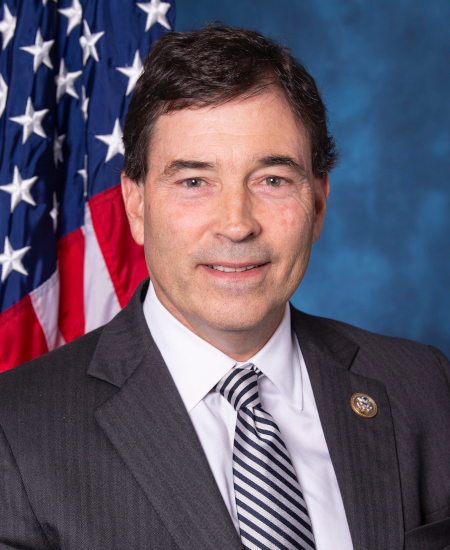
Rep. Troy Balderson
Sponsored bills
National Coal Council Reestablishment Act This bill provides statutory authority for the National Coal Council and directs the Department of Energy to reestablish the council in accordance with the charter that was in effect on November 19, 2021. Established in 1984, the council made recommendations to DOE on matters relating to coal and the coal industry. In addition, the bill removes the requirement under the Federal Advisory Committee Act for the council to be re-chartered every two years.
Maddy summaryThe GRID Power Act requires the Federal Energy Regulatory Commission (FERC) to create new rules within 180 days that streamline the process for connecting new "dispatchable power" projects - like natural gas plants or battery storage - to the electricity grid. It allows transmission providers (such as utilities and grid operators) to propose prioritizing these projects in the interconnection queue if they demonstrate how the projects improve grid reliability or resilience, with public input required before submission. FERC must review such proposals within 60 days and approve or deny them, while also mandating regular reports on grid conditions and periodic rule updates every five years to address evolving challenges. This bill directly affects transmission providers and new power project developers by accelerating connections for reliable energy sources that help prevent blackouts.
Maddy summaryHRES 744 is a non-binding House resolution supporting the designation of September 21-27, 2025, as "Gold Star Families Remembrance Week." It honors families who lost members in military service (Gold Star Families) and families of veterans, recognizing their sacrifices. The resolution encourages Americans to observe the week through community service and by celebrating the lives of those who died defending the U.S. It does not create new laws or policies but formally recognizes these families annually. This is a commemorative measure, not a legislative change.
Maddy summaryThis bill allocates $5 million annually (2026-2030) to states for collecting de-identified stillbirth data through existing health systems, including risk factor analysis. It also provides $1 million yearly to develop standardized guidelines for healthcare providers and public educational materials about stillbirths, requiring consultation with medical professionals, bereavement organizations, and affected families. The bill mandates that all data collection complies with privacy laws and requires the Department of Health and Human Services to publish a public report on stillbirth guidelines within five years. It directly affects state health departments, healthcare providers, and families experiencing stillbirth by improving data quality and access to resources.
Maddy summaryThis bill reauthorizes federal funding for diabetes programs targeting Type 1 diabetes. It extends annual funding of $160 million for fiscal years 2026 through 2030, continuing existing support for research, treatment, and prevention initiatives. The funds remain available until expended, directly supporting programs serving people with Type 1 diabetes and the organizations delivering these services. The bill makes no changes to program eligibility or structure, only extending current funding levels.
Maddy summaryHR 3157, the State Energy Accountability Act, requires states with "intermittent energy policies" (like renewable portfolio standards) to evaluate how those policies impact electricity reliability. State regulators must publicly assess five key areas: grid reliability over 10 years, ability to meet demand during emergencies, rate impacts on consumers, replacement of removed power plants, and reliance on out-of-state energy. The bill mandates these evaluations be completed within one year of enactment and made publicly available. It directly affects state regulatory authorities and electric utilities operating under such policies, focusing on accountability for grid reliability rather than changing energy requirements.
Maddy summaryThis symbolic resolution (HRES 700) condemns the assassination of Charlie Kirk, a conservative campus advocate and founder of Turning Point USA, who was killed on September 10, 2025, at Utah Valley University. It expresses the House's deepest condolences to Kirk’s family, including his wife and children, and honors his work promoting civil discourse among college students. The resolution does not create new laws or policies but serves as a formal expression of the House’s stance on the incident. It directly affects no individuals or groups through legislative action, as it is purely a ceremonial statement.
Maddy summaryHRES 702 is a symbolic resolution condemning the September 10, 2025, assassination of Charlie Kirk, founder of Turning Point USA and a conservative political activist. It expresses condolences to his family, praises first responders, and reaffirms the right to peaceful assembly. As a non-binding resolution, it does not create new laws or policies but serves as a formal statement of condemnation. The resolution directly addresses the House of Representatives' stance on this event, with no direct impact on constituents or legislation.
Maddy summaryThe RESULTS Act (HR 5269) changes how Medicare calculates payment rates for clinical diagnostic laboratory tests. It requires Medicare to collect data on private payor rates for widely available non-Advanced Diagnostic Laboratory Tests (non-ADLTs) from a qualifying independent claims data entity (a national nonprofit organization meeting specific criteria) rather than relying on data reported directly by laboratories. For tests where data is unavailable, the bill establishes default payment rates based on previous years' rates adjusted for inflation. The law also requires Medicare to publicly explain payment rates with supporting data, affecting Medicare beneficiaries, clinical laboratories, and private payors that provide services covered by Medicare.