

Maddy summaryHR 941, the Small LENDER Act, creates a 3-year compliance period and a subsequent 2-year penalty-free period for small lenders required to report small business lending data under a new rule. It directly affects financial institutions that originated at least 500 small business loans in each of the previous two years (defined as loans to businesses with under $1 million annual revenue). The bill delays full enforcement of new data reporting requirements, giving lenders time to adjust without penalties during the grace periods. This changes how the Consumer Financial Protection Bureau enforces reporting rules for smaller lenders focused on small business loans.
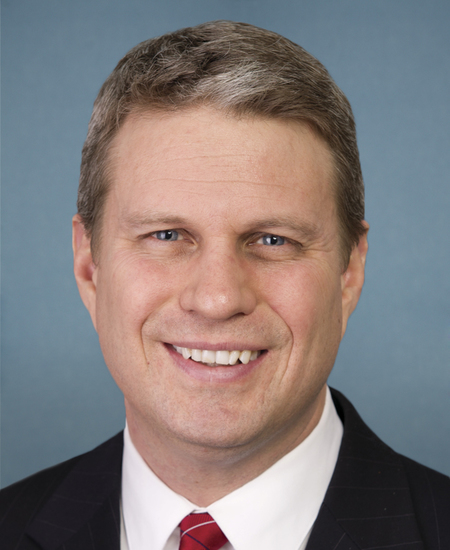
Rep. Bill Huizenga
Sponsored bills
Repealing Big Brother Overreach Act This bill repeals the Corporate Transparency Act. The act requires existing companies and newly created companies to report beneficial ownership information to the Department of the Treasury’s Financial Crimes Enforcement Network for purposes of addressing the financing of terrorism and money laundering.
Maddy summaryThis bill requires the Department of Veterans Affairs to create a public list of healthcare providers who have completed annual, evidence-based training on preventing veteran suicide. To qualify for this preferred provider list, providers must either finish VA-sponsored training or demonstrate completion of substantially similar external training that meets military healthcare standards. The VA must review this list annually to ensure compliance and submit regular reports to Congress detailing participation numbers and the effectiveness of the program in influencing veteran care choices.
Maddy summaryThe DOMINANCE Act aims to reduce U.S. reliance on strategic competitors like China for critical minerals by building international partnerships to secure diversified supply chains. It establishes a Minerals Security Partnership to coordinate diplomatic, development, and financial support for critical mineral projects with allies, creates a new Office of Energy Security Compacts to develop multi-year agreements with partner countries, and sets up a new Assistant Secretary position for Energy Security at the State Department. The bill also includes education programs like the Critical Mineral Mining Fellowship Program to build U.S. workforce capacity in mining. These measures are designed to enhance U.S. national security and economic competitiveness by ensuring reliable access to critical minerals needed for defense, technology, and energy systems.
United States Commission on International Religious Freedom Reauthorization Act of 2026 This bill reauthorizes the U.S. Commission on International Religious Freedom through 2028. The commission is an independent federal commission tasked with monitoring international religious freedom conditions, reviewing U.S. government policy, and making policy recommendations. (Under current law, the commission is authorized through FY2026.)
Maddy summaryThis resolution honors the contributions of automotive workers across the United States, with specific emphasis on those employed in Michigan's manufacturing sector. It formally designates September 2026 as "American Automotive Worker Recognition Month" to acknowledge the industry's role in supporting millions of jobs and national economic stability. The measure expresses support for policies that strengthen domestic production and supply chains while commending the skill and dedication of workers in plants, supply chains, and dealerships. As a symbolic gesture, the bill does not create new laws or funding but serves to recognize the historical and economic importance of the automotive workforce.
Maddy summaryThis resolution expresses the House of Representatives' support for keeping the words 'one Nation under God' in the Pledge of Allegiance. It highlights historical events, such as the 1954 amendment and recent 250th anniversary celebrations, to emphasize the phrase's role in American civic tradition. The bill does not change any laws or alter the Pledge itself; instead, it serves as a formal statement of the House's position on the matter.
Maddy summaryThe American Manufacturing Revitalization Exchange Program Act of 2026 establishes a new international exchange program designed to address skilled labor shortages in the U.S. manufacturing sector by sending American workers to allied nations for training. Administered by the Assistant Secretary for Educational and Cultural Affairs within the Department of State, the program will select up to 10 participants annually who must be U.S. citizens with prior apprenticeship or higher education experience in manufacturing fields. These selected individuals will travel to allied countries for up to 12 months to gain hands-on expertise in strategic industries such as robotics, semiconductors, and aerospace, while also serving as cultural ambassadors. Upon returning to the United States, participants are expected to share their newly acquired skills and knowledge with domestic employers and training institutions, and the program will conclude two years after its enactment.
Maddy summaryThis bill, titled the Deport the Terrorists Act of 2026, aims to remove from the United States any naturalized citizen convicted of specific terrorism-related crimes. It directly affects individuals who have already become U.S. citizens by automatically revoking their citizenship and declaring their naturalization certificates void upon conviction of offenses such as using weapons of mass destruction or providing material support to terrorists. The law also designates these individuals as deportable aliens and requires the Department of Homeland Security to prioritize their removal from the country. By amending existing immigration laws, the bill ensures that courts have the authority to cancel citizenship immediately following a conviction for these designated offenses.
Maddy summaryHR 1041, the Veterans 2nd Amendment Protection Act, prevents the Department of Veterans Affairs (VA) from automatically sending veterans' personal information to the national background check system (NICS) solely because a court has appointed a fiduciary (like a guardian) to manage their benefits. This directly affects veterans who have a fiduciary appointed due to mental health or cognitive challenges but are not deemed a danger to themselves or others. The bill requires a court order finding the veteran poses a danger before any such information can be shared with the NICS. It changes VA procedures to block unnecessary barriers to firearm ownership for veterans who qualify for fiduciary support without a judicial determination of danger.