

Protecting Privacy in Purchases Act This bill prohibits payment card networks from using merchant codes that distinguish firearms retailers from general-merchandise retailers or sporting-goods retailers. The Department of Justice must enforce this bill and report annually on the resulting investigations and cases.
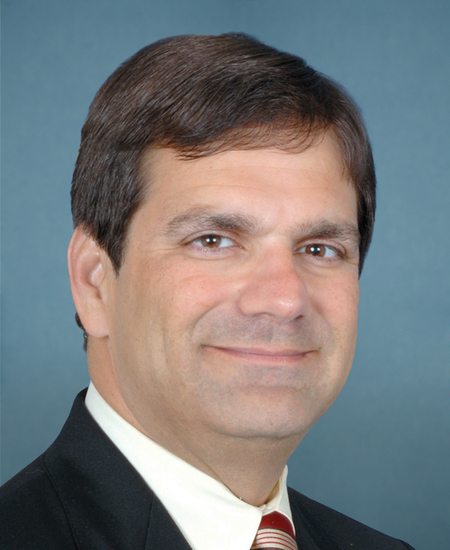
Rep. Gus M. Bilirakis
Sponsored bills
Maddy summaryThis bill directs the U.S. Secretary of State to create and execute a plan to end the operations of the United Nations Relief and Works Agency for Palestine Refugees in the Near East (UNRWA) across the Middle East. The legislation requires a detailed strategy that assesses current programs like education and healthcare, identifies new organizations to take over these services, and outlines how to fund and oversee the transition without interrupting aid. Once the plan is submitted to Congress, the State Department must begin implementing it within a year while coordinating with host countries and international partners. The bill emphasizes maintaining service continuity and ensuring that any successor groups meet strict standards for transparency and accountability.
Maddy summaryThis resolution expresses the House of Representatives' support for the goals of Alzheimer's and Brain Awareness Month, which takes place in June. It aims to raise public awareness about Alzheimer's disease and other forms of dementia while encouraging individuals to educate themselves and advocate for better research and care services. The document highlights the significant impact of these conditions on millions of Americans and calls for increased support for patients, their families, and caregivers.
Maddy summaryThe FIREWALL Act prevents the use of federal funds administered by the FCC and NTIA to buy fiber-optic cable from companies owned by designated countries of concern or their officials. This restriction applies to all purchases made 90 days after the law is enacted and covers both solid-core and hollow-core fiber technology. The bill aims to limit financial support for telecommunications infrastructure that could be controlled by foreign adversaries, directly affecting individuals and entities seeking federal funding for cable projects.
Maddy summaryHR 4398, the Veteran Burial Timeliness and Death Certificate Accountability Act, requires Veterans Affairs (VA) physicians or nurse practitioners to certify the death of a veteran who dies of natural causes within 48 hours of learning of the death. This directly affects veterans' families, who previously faced delays of up to eight weeks in burial and access to survivor benefits due to slow death certifications. The bill mandates annual reports to Congress on VA compliance with the 48-hour rule, including statistics on delays and their causes. The key change is establishing a strict timeline for death certification to prevent unnecessary delays in honoring veterans' final arrangements.
Maddy summaryThe Homeownership Eligibility Reform Act restricts access to government-backed and private mortgage insurance for single-family homes to individuals who are U.S. citizens. Specifically, the bill amends laws governing the Federal Housing Administration, Fannie Mae, and Freddie Mac to require that borrowers for one-to-four-unit properties must be citizens to qualify for their mortgage products. This change directly affects foreign nationals and non-citizen residents who currently might purchase homes with these types of financing, effectively limiting their eligibility for these specific mortgage programs.
Maddy summaryThe Medicaid RAC Improvement Act of 2026 strengthens oversight of the Medicaid Recovery Audit Contractor program to better detect and recover incorrect payments. It requires the Centers for Medicare and Medicaid Services to establish clear communication rules for when state program exceptions expire and mandates detailed annual reports on audit results, including amounts recovered and underpayments. The bill also expands the program to include Medicaid managed care plans, requiring these organizations to allow audits of their claims and cooperate with recovery efforts. Additionally, the legislation directs the government to study barriers preventing states from participating in the program and to run a five-year demonstration project to increase state involvement. Finally, it clarifies that audits can review payments made up to four years prior to the current fiscal year.
Maddy summaryThis bill redesignates the existing National Parks and Public Land Legacy Restoration Fund as the America's Legacy Restoration Fund to address deferred maintenance on federal lands. It directs revenue from recreation fees and a portion of energy development income into the fund, which must be used primarily for repairing critical infrastructure like roads, trails, and buildings managed by agencies such as the National Park Service and the Forest Service. The legislation establishes strict rules requiring that most funds go toward non-transportation projects, mandates transparency through public dashboards tracking project status, and sets aside a small percentage for matching private donations. Additionally, the bill increases entrance fees for foreign visitors to ensure they contribute to the fund, while prohibiting the use of these specific funds for land acquisition or employee bonuses.
Repealing Big Brother Overreach Act This bill repeals the Corporate Transparency Act. The act requires existing companies and newly created companies to report beneficial ownership information to the Department of the Treasury’s Financial Crimes Enforcement Network for purposes of addressing the financing of terrorism and money laundering.
Maddy summaryThe DOMINANCE Act aims to reduce U.S. reliance on strategic competitors like China for critical minerals by building international partnerships to secure diversified supply chains. It establishes a Minerals Security Partnership to coordinate diplomatic, development, and financial support for critical mineral projects with allies, creates a new Office of Energy Security Compacts to develop multi-year agreements with partner countries, and sets up a new Assistant Secretary position for Energy Security at the State Department. The bill also includes education programs like the Critical Mineral Mining Fellowship Program to build U.S. workforce capacity in mining. These measures are designed to enhance U.S. national security and economic competitiveness by ensuring reliable access to critical minerals needed for defense, technology, and energy systems.