

Maddy summaryThis bill would amend federal law to strengthen penalties for organized retail crime by expanding definitions of theft to include digital goods, gift cards, and setting a $5,000 aggregate value threshold for charges over a 12-month period. It would establish a new "Organized Retail and Supply Chain Crime Coordination Center" under Homeland Security to coordinate Federal, State, local, and Tribal law enforcement efforts against cross-jurisdictional theft groups. The Center would share information with retailers, transportation companies, and law enforcement agencies, track crime trends, and produce annual reports on organized retail crime. This legislation directly affects retailers, supply chain businesses, and law enforcement agencies, while targeting organized crime groups responsible for a 93% increase in larceny incidents and rising safety concerns for retail employees. The bill aims to address significant financial losses and supply chain disruptions noted in the National Retail Federation's 2023 data.
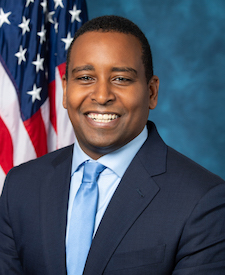
Rep. Joe Neguse
Sponsored bills
Maddy summaryThe Pregnant Women in Custody Act establishes new federal standards to protect the health and rights of pregnant women held in Bureau of Prisons facilities, immigration detention centers, and refugee shelters. It mandates comprehensive medical care, including mandatory pregnancy testing, access to contraception, and specialized dietary and housing accommodations tailored to pregnancy needs. A central provision prohibits the use of restrictive housing and physical restraints during pregnancy, labor, and the postpartum recovery period, with limited exceptions only for immediate safety threats. The legislation also requires facilities to provide nursery programs allowing mothers and infants to remain together, offers education on parental rights, and mandates regular reporting on health outcomes and the use of restrictive measures.
Maddy summaryThe Assault Weapon Financing Accountability Act prohibits the use of "Buy Now, Pay Later" loans to purchase semiautomatic assault weapons. This ban applies to both lenders offering these short-term credit products and dealers who accept such loans for firearm sales. The bill defines "semiautomatic assault weapons" based on specific physical features like pistol grips, forward grips, and high-capacity magazines, and sets a civil penalty of $100,000 for violations by lenders or sellers.
Maddy summaryHR 2137, the Review Every Veterans Claim Act of 2025, prevents the Department of Veterans Affairs (VA) from denying benefit claims solely because a veteran misses a required medical exam. It amends Section 5103A of Title 38, U.S. Code, to prohibit automatic denials for missed exams and requires the VA to consider other factors. This directly affects veterans filing claims for VA benefits who skip scheduled medical evaluations. The bill ensures veterans cannot be rejected for a claim based only on non-attendance, while allowing denials for other valid reasons.
Maddy summaryThis resolution expresses support for National Fentanyl Awareness Day in 2026 and highlights the dangers of counterfeit pills that look like legitimate prescription medications. It notes that these fake pills often contain lethal doses of fentanyl and have been found in all 50 states, posing a significant risk to families and young people. The document also acknowledges the efforts of law enforcement agencies in seizing millions of these dangerous pills and encourages continued prevention efforts.
Maddy summaryThis resolution expresses support for designating April 2026 as National Native Plant Month to highlight the importance of indigenous plant species. The measure recognizes that native plants are essential for healthy ecosystems, helping to clean air, filter water, and support wildlife habitats. It also notes the decline of over 200 native plant species due to habitat loss and other environmental challenges. As a symbolic gesture, the bill does not create new laws or funding but serves to raise awareness about conserving these plants.
Maddy summaryThis bill, titled the Protecting Human Rights and Public Health in Foreign Assistance Act, aims to cancel specific regulations issued by the Department of State. It directly affects the federal government by prohibiting any department or agency from enforcing, implementing, or proposing rules related to protecting life, combating discriminatory equity ideology, and combating gender ideology in foreign aid programs. The legislation treats these cancelled rules as if they never existed, effectively nullifying their impact on future foreign assistance policies.
Maddy summaryThe Disaster Declaration Transparency Act of 2026 requires the President to submit a written explanation to Congress within 24 hours if they refuse a major disaster declaration requested by a governor, specifically when that refusal contradicts FEMA's recommendation or established precedent. This bill establishes a streamlined legislative process allowing Congress to override such refusals by passing a joint resolution that cannot be amended and is subject to limited debate time in both the House and Senate. The measure also includes specific rules to expedite committee consideration and waive certain procedural objections to ensure the resolution moves quickly through the legislative process.
Farmer to Farmer Education Act of 2026 This bill expands the authority of the Department of Agriculture (USDA) to provide technical assistance for farmer-to-farmer networks. USDA must use annual appropriations provided for Natural Resources Conservation Service conservation operations to implement this program. A farmer-to-farmer network means any affiliation or association of farmers that share information, technical assistance, or any other type of mutually beneficial support. Under the bill, USDA may enter into cooperative agreements with eligible entities to (1) provide assistance to farmer-to-farmer networks to build network capacity, connect farmers with mentors or group learning opportunities, and support goal setting; (2) increase technical assistance for farmers, ranchers, and forest owners who use different farming models, practices, and scales; (3) establish and steward the networks; and (4) establish reporting requirements for these activities. Those eligible for the program include nonprofit entities, farmer-to-farmer networks, tribal entities, local governments, institutions of higher education, and states. USDA must prioritize agreements with entities that seek to meet the specific needs of certain farmers, ranchers, and forest owners who are historically underserved or operating in high-poverty areas. The bill also provides for subawards to plan and conduct events, as well as to identify and develop innovative activities, in order to increase farmer access to farmer-to-farmer assistance.
Maddy summaryThe Public Lands Workforce Stability Act prevents the Department of the Interior and the United States Forest Service from firing employees or cutting jobs between now and September 30, 2030, unless specific conditions are met. Under this law, agencies cannot reduce staff numbers or separate employees for reasons like poor performance or misconduct without first getting approval from the chairs and ranking members of both the House and Senate Appropriations Committees. This restriction applies to all federal funds used for these actions and aims to maintain workforce stability within these agencies for the next several years.