

Maddy summaryThis bill, known as the Precision Agriculture Workforce Training and Development Act, aims to expand educational programs that prepare students for careers in precision agriculture. It directly affects universities, research institutions, and public or private partners by authorizing new grants to support workforce training initiatives. The legislation modifies existing federal funding rules to explicitly include cooperative education programs focused on improving skills in modern farming technologies. By adding these specific categories to research and extension grants, the bill ensures that financial resources are available for developing specialized training partnerships.
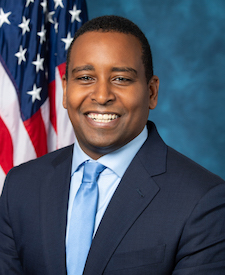
Rep. Joe Neguse
Sponsored bills
Maddy summaryThis House Resolution supports designating April 2026 as "National County Government Month." It encourages counties nationwide to raise public awareness about their essential services and workforce, and asks Members of Congress to help educate residents about the vital role of county governments.
Maddy summaryHouse Resolution 1208 expresses the House of Representatives' support for honoring Earth Day and its historical role in promoting environmental protection and action. It encourages American citizens to engage in environmental stewardship and urges the President and the U.S. Government to take immediate action to address climate change, environmental injustices, and rejoin international climate agreements.
Maddy summaryThis bill mandates that the Secretary of Homeland Security grant temporary protected status (TPS) to Haitian nationals already residing in the United States. It requires the designation to begin on August 3, 2025, and last for 18 months, allowing eligible individuals to legally stay and work during that period. The bill directly affects Haitian nationals in the U.S. who qualify under TPS criteria, providing them temporary relief from deportation. The key provision is the mandatory 18-month TPS period with a specific start date, overriding other legal provisions that might otherwise prevent such a designation.
Maddy summaryThis resolution commemorates the 27th remembrance of the Columbine High School shooting and the 10th anniversary of the Columbine Day of Service. It honors the victims, survivors, and their families, while also encouraging U.S. citizens to remember the victims and participate in acts of community service.
Maddy summaryThe Momnibus Act is a comprehensive legislative bill designed to improve maternal health outcomes across the United States by addressing social determinants of health, expanding access to care, and reducing disparities among pregnant and postpartum individuals. The bill establishes a federal task force to coordinate efforts between agencies and stakeholders to eliminate preventable maternal mortality and severe morbidity, while providing sustained funding to community-based organizations to address nonclinical factors like housing, nutrition, and transportation. Key provisions include extending WIC eligibility to 24 months postpartum, creating grants to grow and diversify the perinatal workforce, implementing respectful maternity care training for all healthcare employees, and establishing compliance programs to track and address bias in maternity care settings. The legislation also includes specific measures for incarcerated mothers, veterans, and vulnerable populations affected by climate change, alongside funding for maternal mental health services and technology-enabled care models to expand access in underserved areas.
Maddy summaryThis resolution expresses the sense of the House of Representatives that former President Donald Trump, his Special Envoy Steven Witkoff, and all federal officials must comply with the Constitution's Foreign Emoluments Clause. It specifically calls for them to immediately turn over to the Department of the Treasury any payments received from the United Arab Emirates or other foreign states. Furthermore, the resolution urges them to divest from all business interests linked to foreign governments, including those tied to United Arab Emirates officials.
Maddy summaryThis resolution expresses the House of Representatives' opinion that the Department of Justice and other federal agencies should not administratively settle legal claims for money filed against the United States by a sitting President, specifically referencing President Donald Trump. The House believes that such settlements would violate the Domestic Emoluments Clause of the Constitution, which prevents a President from receiving payments from the government beyond their official salary. Therefore, the resolution advises the Department of Justice to refuse any administrative settlement of these claims, while clarifying that a President can still pursue lawsuits in independent courts. This position directly affects how the Department of Justice would handle such claims from a President.
Maddy summaryThis concurrent resolution (HCONRES 40) directs the President to remove U.S. military forces from hostilities with Iran, as required by the War Powers Resolution. It applies directly to U.S. Armed Forces deployed in conflict with Iran, except for forces needed to defend the U.S. or allies from imminent attack. The bill mandates removal unless the President complies with War Powers Resolution reporting requirements for self-defense actions, without needing new congressional authorization. As a procedural resolution, it does not create new law but compels executive action under existing legal framework.
Maddy summaryThe Revitalizing America’s Schoolyards Act of 2026 establishes a grant program, administered by the Department of Education, to help public elementary and secondary schools transform their outdoor spaces into "revitalized schoolyards." These new outdoor environments are designed to strengthen local ecological systems, provide hands-on learning opportunities, and promote nature play and social interaction for students and the community. Eligible entities, including local schools and partner non-profits, can apply for planning grants to design these spaces and then implementation grants to build them, with priority given to schools serving a high percentage of low-income students or those vulnerable to extreme heat or flooding. The bill requires a 20% non-federal match for implementation grants, which can be waived for high-need or tribal schools, and also directs the Secretary to maintain a clearinghouse of outdoor learning resources.